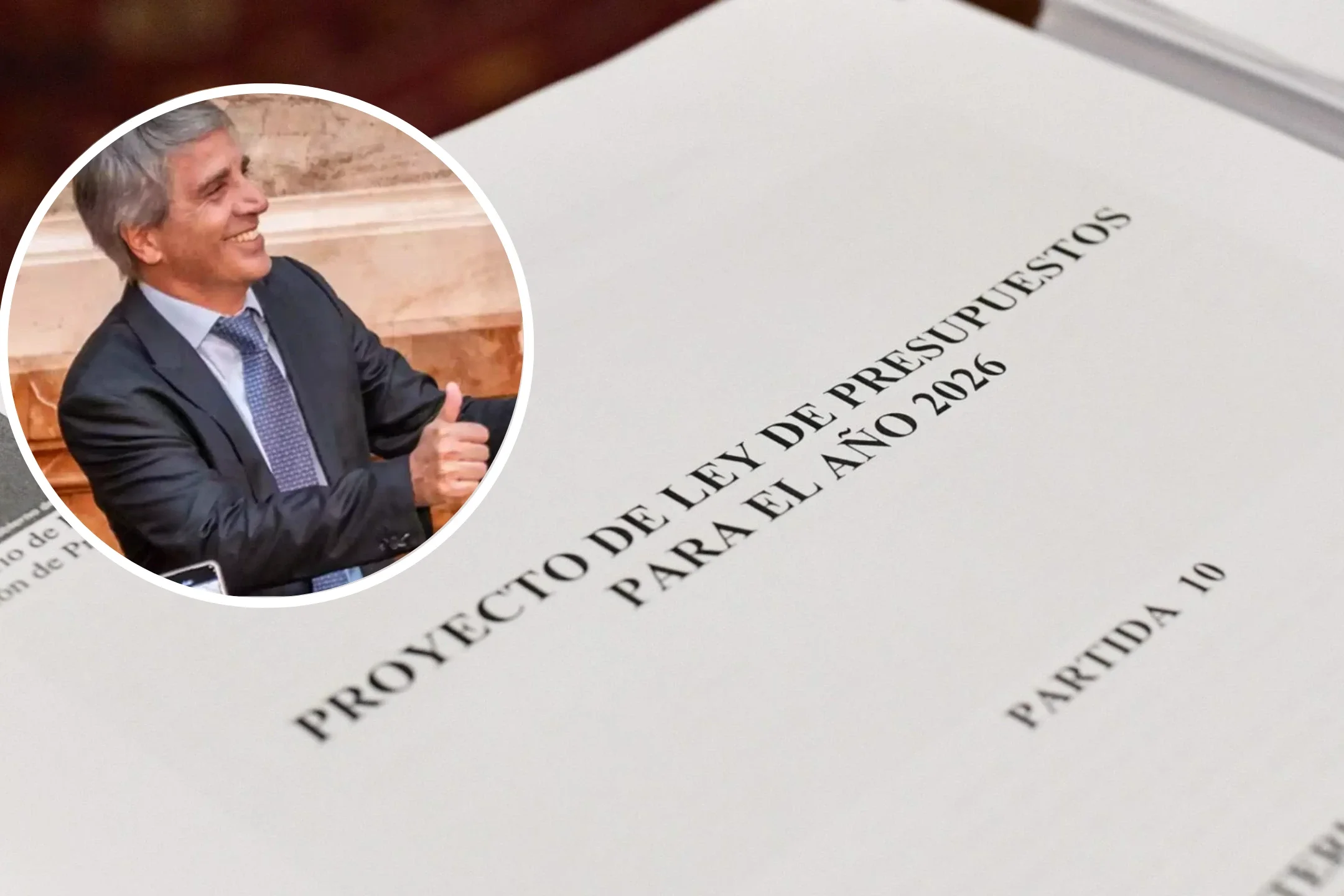
The government led by Javier Milei took a formal step in preparing the 2027 Budget by sending the mandatory progress report to Congress.
The document, signed by Economy Minister Luis Caputo and Chief of Staff Diego Santilli, reaffirms the central axes of economic policy: consolidating the slowdown of inflation, maintaining the fiscal surplus, and advancing in a new tax reduction.
The complete project must reach Congress before September 15, as established by law.
In the section on prices, the Executive anticipated its expectation of a significant slowdown in inflation, which would help strengthen the recovery of real wages and the disposable income of households. This vision is framed within the general objective of achieving greater macroeconomic stability.
Tax Relief and Economic Projections
Regarding revenue, the report forecasts a slight real annual increase during the 2027-2029 triennium, driven by improved economic activity and increased exports.
On the tax front, the government reaffirmed its intention to continue lowering the tax burden to return resources to the private sector and improve competitiveness, especially in the export sector.
Additionally, improvements are projected in the medium term, such as a decrease in the unemployment rate, progress in poverty and indigence indicators, and a better distribution of income, measured by the Gini coefficient. All of this aligns with the elimination of obstacles to private activity.
Public Investment and Budget Execution
Regarding public investment, the Investment Project Bank received requests for 1,765 projects for the 2027-2029 period, totaling 10.2 trillion pesos. This figure represents a sharp decline compared to previous years, which the report interprets as a sign of greater reasonableness in the demand for public works.
The document also reviewed the execution of the first five months of 2026. The National Public Administration showed a primary surplus of over 8.4 trillion pesos (0.7% of GDP) and a positive financial result. Total resources reached 40.1% of what was projected, while expenditures amounted to 39.2% of execution.