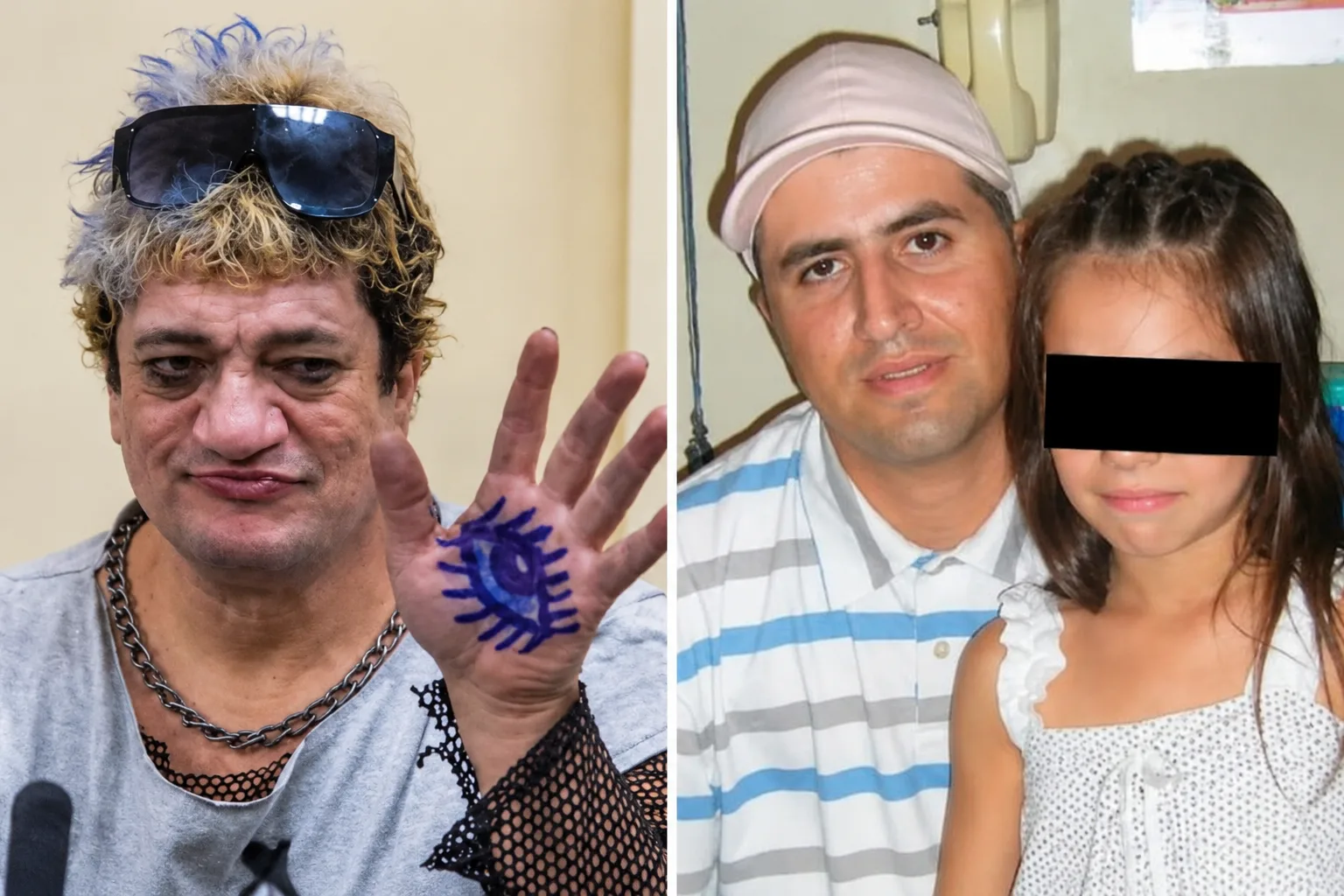

Pity Álvarez was sentenced to 12 years of house arrest for the murder of Cristian Díaz

Pity Álvarez was sentenced to 12 years of house arrest for the murder of Cristian Díaz

The Oral Court in Criminal and Correctional Matters No. 29 found the musician responsible for the aggravated homicide by the use of a firearm that occurred in 2018 in Villa Lugano

Share:

Cristian “Pity” Álvarez was sentenced this Friday, November 20, to 12 years in prison for the homicide of Cristian Maximiliano “El Gringo” Díaz, which occurred during the early morning of July 12, 2018, in the Samoré neighborhood of Villa Lugano.

The Oral Criminal and Correctional Court No. 29, composed of judges Gustavo Goerner, Hugo Navarro, and Juan Ramos Padilla, considered the former leader of Viejas Locas and Intoxicados to be the author of the crime of homicide aggravated by having been committed with a firearm.

How Pity Álvarez will serve his sentence

The judges ordered his detention and established that the sentence must be served under house arrest once the involuntary hospitalization he is currently undergoing by decision of the civil court is completed.

The arrest will be monitored through an electronic surveillance device. Additionally, the defense must inform the court of the chosen residence and designate a reference person.

If the musician fails to comply with the established conditions, the judges may order his transfer to a facility of the Federal Penitentiary Service.

The prosecution had requested a significantly higher sentence. The Attorney General Sandro Abraldes asked for 18 years and six months in prison and argued during the debate that Álvarez understood the criminality of his actions.

Imagen 1474273

The musician's last words before knowing the sentence

During the morning, Pity Álvarez participated in the hearing from the clinic where he is hospitalized and took the opportunity to give his last words before the verdict.

“I gave a detailed statement of what had happened. I started a little before the incident so you can understand what it feels like to be cornered and live a marginal life”, he expressed.

He also described the prosecutor's argument as “a bit excessive.” After that intervention, he decided not to connect to listen to the reading of the sentence.

How the crime of Cristian Díaz in Villa Lugano occurred

According to the reconstruction presented by the Public Prosecutor's Office, during the early morning of July 12, 2018, Álvarez and Díaz, 36 years old, began to argue in front of the entrance of one of the towers of the Samoré neighborhood, located near the Dellepiane Sur highway and Escalada Avenue.


As the argument escalated, Álvarez pulled a gun from his jacket and shot Díaz in the head. After the victim fell to the ground, he fired three more shots at the same area.

After the attack, he left the scene and threw the weapon into a storm drain. The next morning, he presented himself at a police station in Villa Lugano.

The autopsy determined that Díaz died from “gunshot wounds to the cranial region and internal bleeding”.

Pity Álvarez was sentenced to 12 years of house arrest for the murder of Cristian Díaz

The testimonies and expert opinions that were key during the trial

During the debate, two people who witnessed the episode testified: the musician's then-partner and a friend of the victim.

The latter recounted how the argument escalated and stated that Díaz was not armed.

Forensic specialists also determined that the shots were fired from a very short distance, estimated between 60 and 80 centimeters. The forensic doctor who performed the autopsy testified that all the impacts were vital, meaning the victim was still alive when he was shot.

Based on this evidence, Abraldes stated during his argument: “Álvarez intended to kill the victim, he shot him first to kill him and, while he was on the ground, ensured that he died”.

“The accused decided that Díaz should die. This homicide was the work of Pity Álvarez,” added the representative of the Public Prosecutor's Office.

The defense, for its part, had requested acquittal on the grounds of self-defense and, subsidiarily, claimed that any excess in that figure should be considered. The court dismissed this position regarding the homicide and declared the musician criminally responsible.

The sentence concludes the central stage of a judicial process that has lasted more than eight years, although the complete grounds of the ruling and the possible appeals from the parties will determine the next steps in the case.