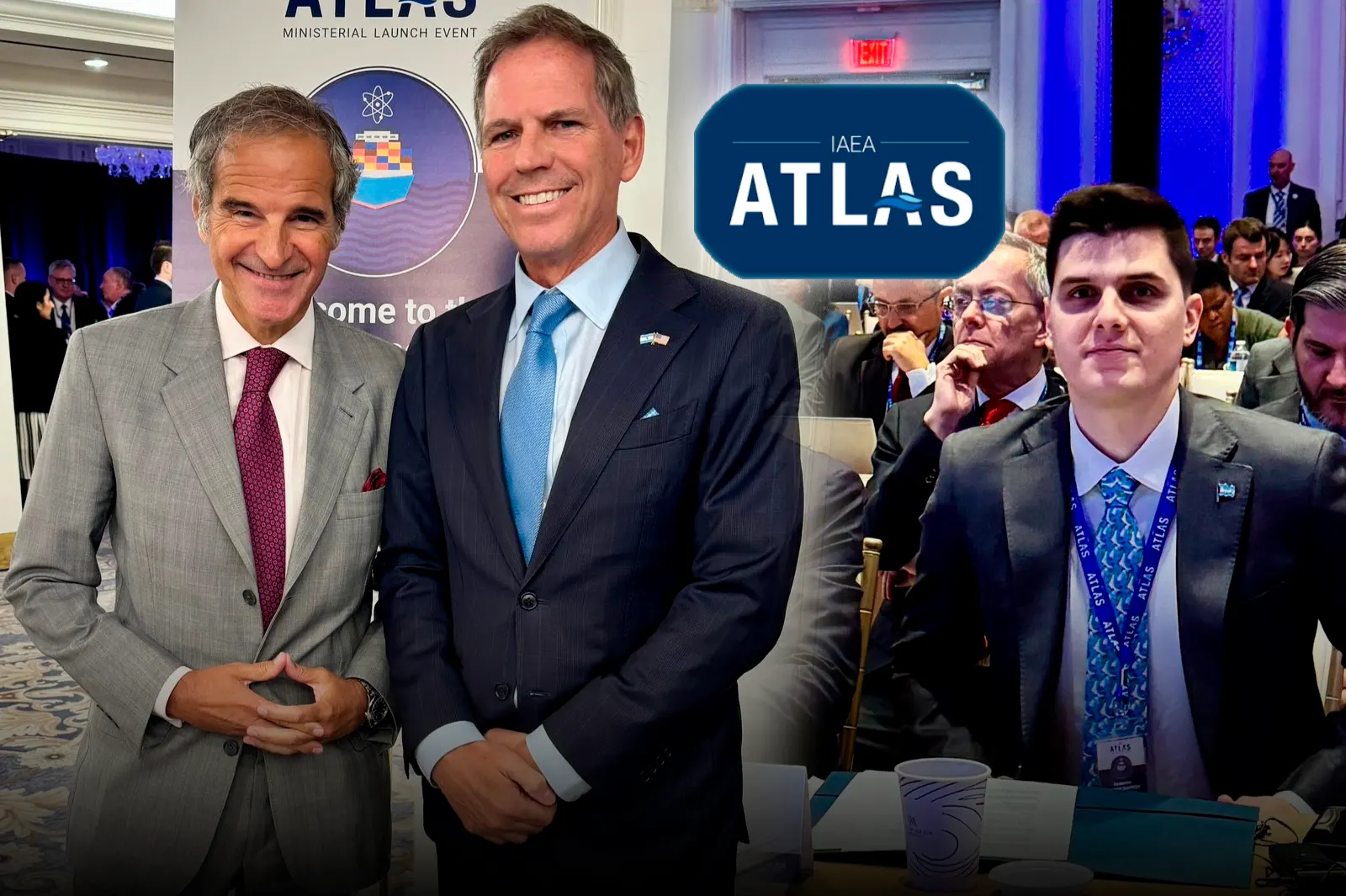









The Argentine delegation held meetings with Rafael Grossi and the U.S. Secretary of Energy, Chris Wright, as part of the IAEA initiative to promote nuclear reactors offshore
Argentina has once again positioned itself within the international nuclear agenda with its participation in the launch of ATLAS, a new initiative driven by the International Atomic Energy Agency (IAEA) to promote the safe development of civil nuclear applications at sea.
The presentation took place in Washington and was attended by the Argentine ambassador to the United States, Alejandro Oxenford, who during the event held discussions with the IAEA Director General, Argentine Rafael Grossi, and the U.S. Secretary of Energy, Chris Wright.
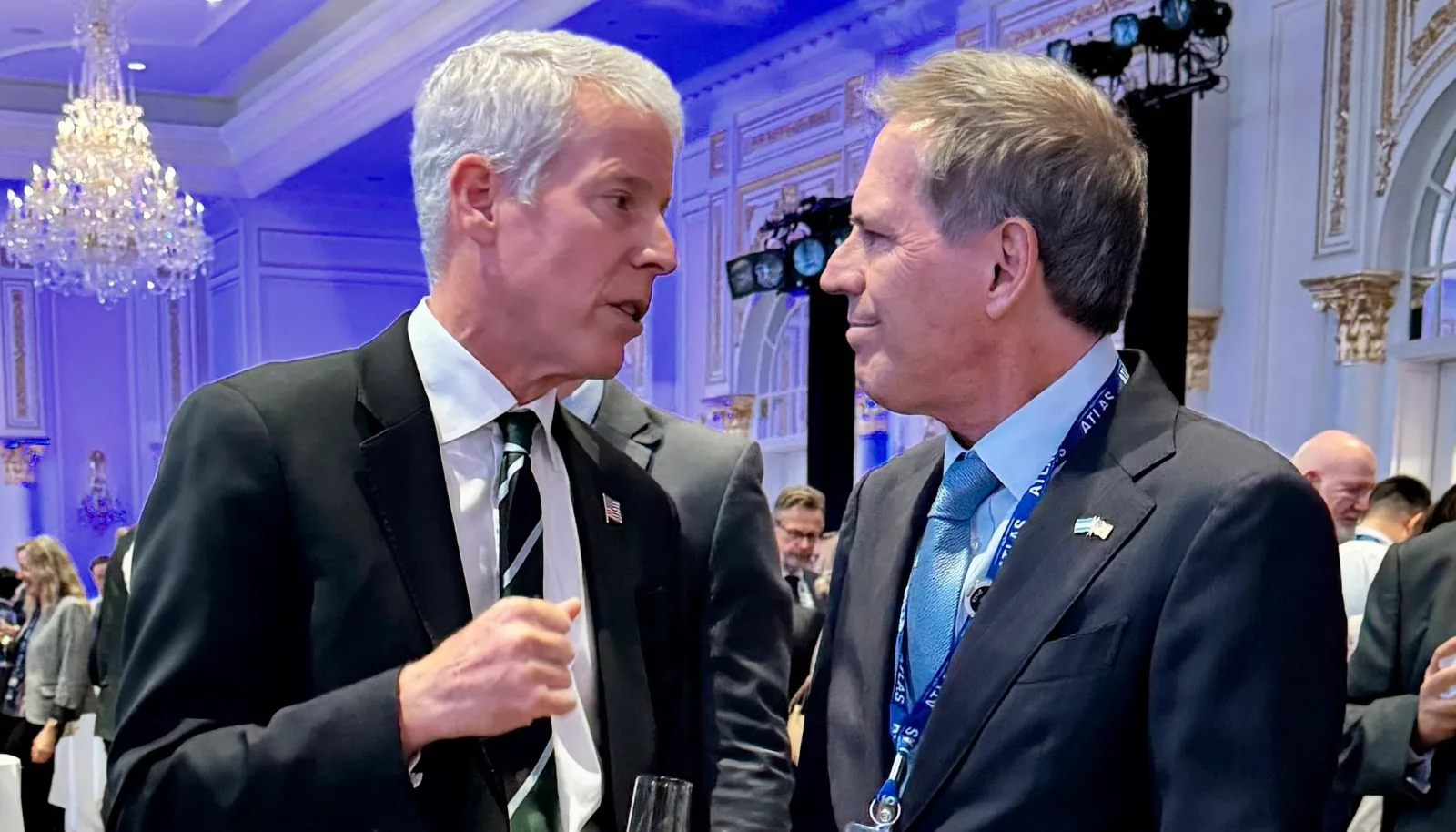
Alec Oxenford alongside Chris Wright, Secretary of Energy of the United States
ATLAS, which stands for Atomic Technologies Licensed for Applications at Sea, aims to establish an international framework that facilitates the safe, secure, and peaceful use of nuclear energy for both civil ship propulsion and floating nuclear power plants capable of generating energy offshore.
One of the main focuses of the initiative is small modular reactors (SMR), a technology that due to its size and characteristics could be adapted for vessels and maritime platforms. The IAEA believes that advancements in marine engineering, fuels, and reactor design could allow for the deployment of some of these systems in the next decade.
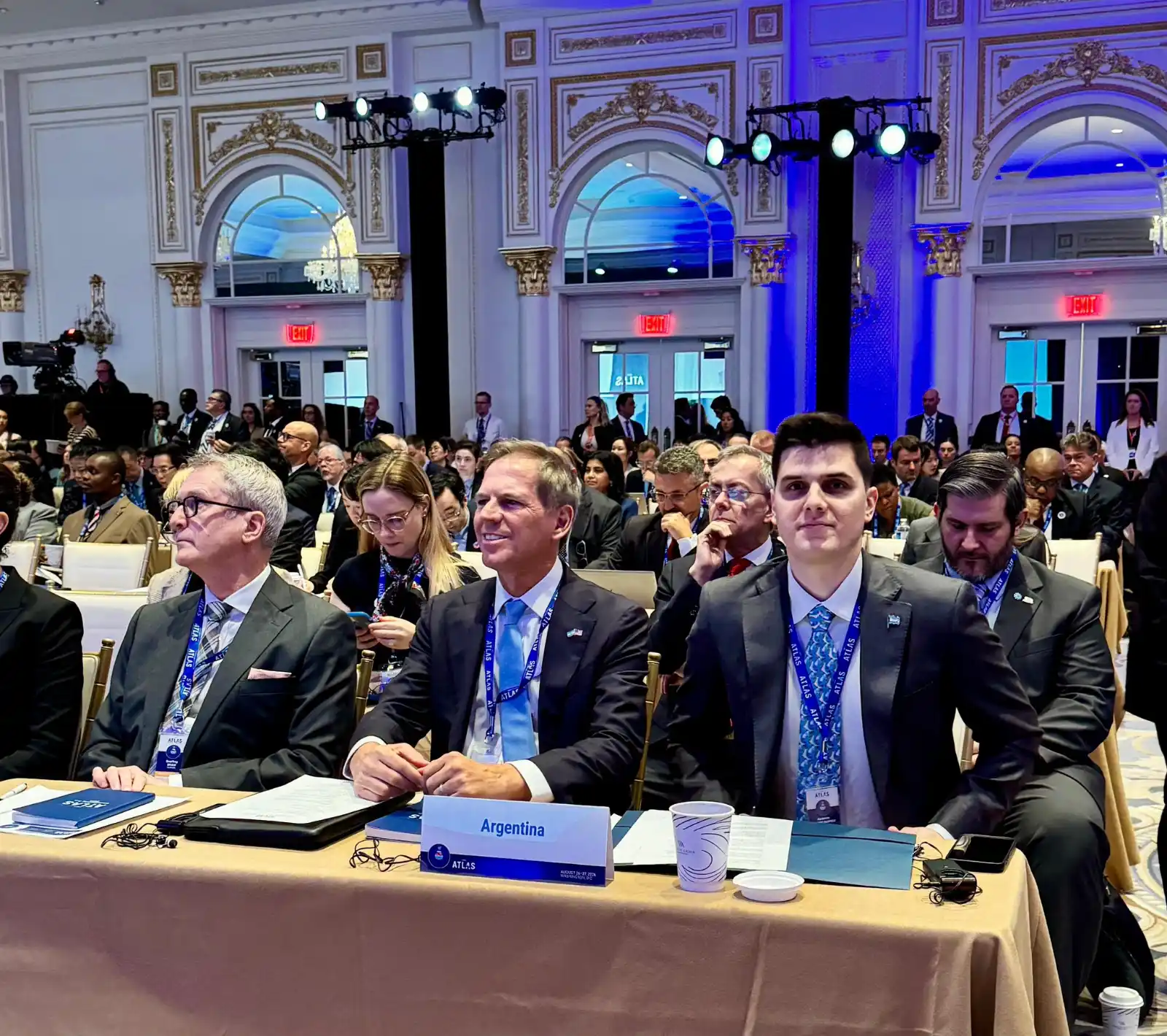
The Argentine delegation led by the Secretary of Nuclear Affairs, Federico Ramos Napoli, and the Argentine ambassador to the US, Alec Oxenford.
The initiative brought together around 600 participants from over 50 countries, along with representatives from international organizations, nuclear sector companies, firms linked to the maritime industry, and port authorities. The agency plans to form six expert groups dedicated to regulatory issues, safety, safeguards, and potential implementation scenarios.
The Argentine delegation was led by the Secretary of Nuclear Affairs, Federico Ramos Nápoli, accompanied by representatives from the national nuclear sector. The officials were also received at the Argentine Embassy in Washington, where they discussed the recent guidelines of the country's nuclear policy.
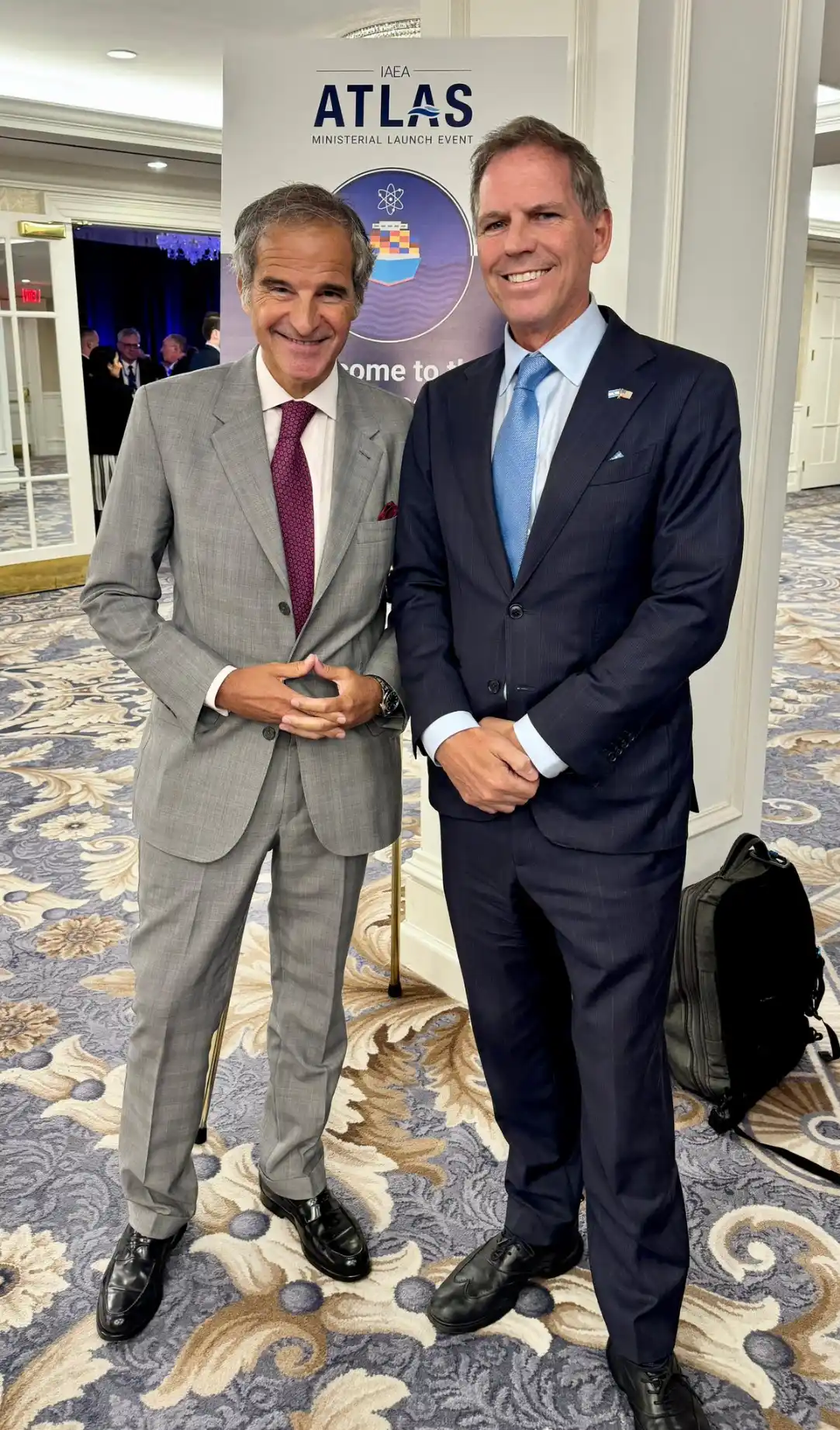
Alec Oxenford alongside the Argentine and president of the International Atomic Energy Agency (IAEA), Rafael Grossi
Ramos Nápoli also held discussions with Grossi and the president of Nucleoeléctrica Argentina, Juan Martín Campos, about the opportunities presented by the international expansion of this industry. The official particularly highlighted the capabilities developed by Argentina over decades, from the fuel cycle to the training of specialists, and pointed to international cooperation as one of the central tools of the new nuclear policy.
With an extensive track record in research, design, and technological development, Argentina seeks to leverage its nuclear experience to integrate into new international projects and establish itself as a strategic supplier and partner within a sector that is regaining prominence globally.