










Regarding price dynamics, economist Gustavo Ber highlighted the importance of inflation deceleration as a pillar of this process: “The inflation data from CABA (2.1% in May) opens positive expectations regarding the IPC continuing to reflect a deceleration that contributes to improving social expectations”. According to the expert, the goal is for the index to consistently remain below 2%, which, combined with financial calm, will allow for a real recomposition of incomes.
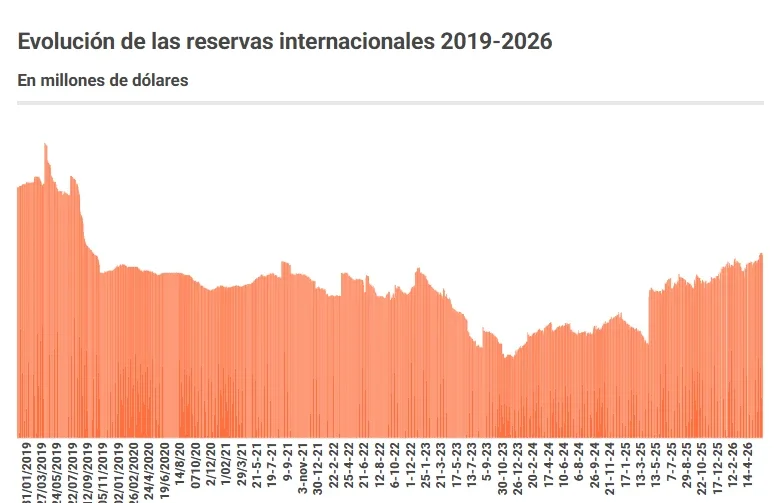
In the foreign exchange market, the currency operated with a controlled advance within the expected stability parameters. The wholesale dollar closed at $1,446.50, representing an increase of six pesos or 0.4%. At Banco Nación, the dollar rose to $1,465, while the BCRA firmly maintained its monetary policy by setting a ceiling for its exchange rate bands at $1,773.23, leaving the wholesale exchange rate at a prudent distance of 22.6% from that limit. The operator of ABC Mercado de Cambios, Nicolás Merino, detailed that: “The currency opened at $1,442 and for much of the session maintained the same dynamics observed throughout last week, with sustained demand continuing to pressure prices. However, the advance was more moderate than in previous sessions”.
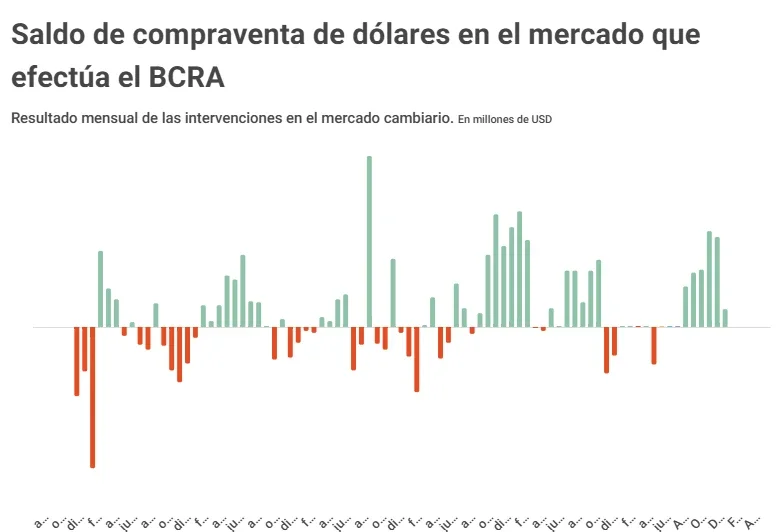
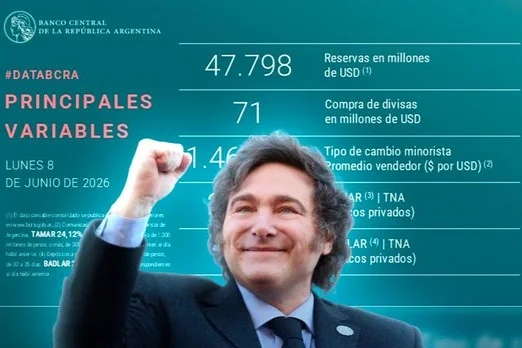
Finally, the volume traded in the spot segment was USD 427.6 million, a figure that, although lower than the previous day, allowed the Central to continue strategically acquiring foreign currency. With a firm economic policy and strict adherence to fiscal and reserve targets, the government of Javier Milei consolidates a scenario of predictability that Argentina has not known for decades.