








The chancellor detailed the historical, legal, and diplomatic foundations that support the Argentine claim
Agregar La Derecha Diario en
Compartir:
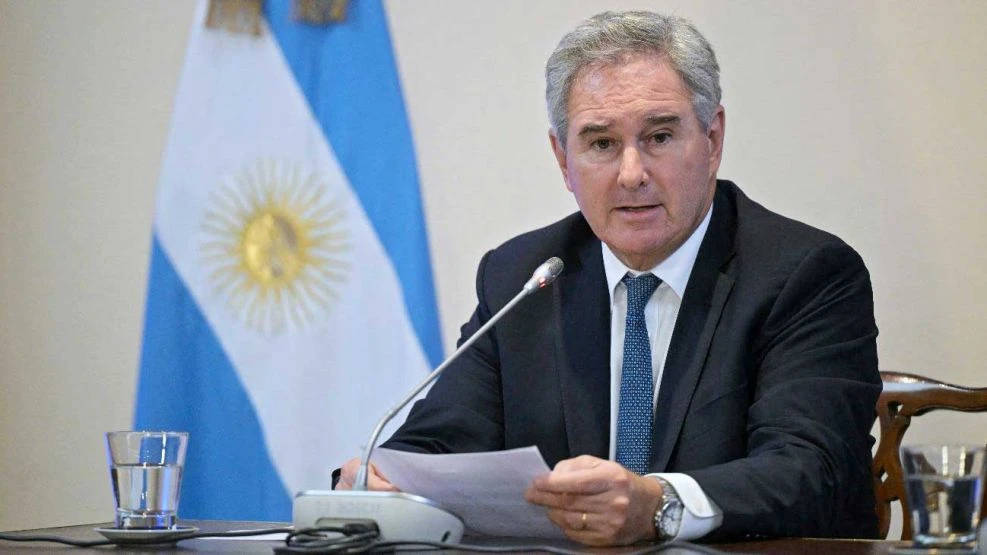
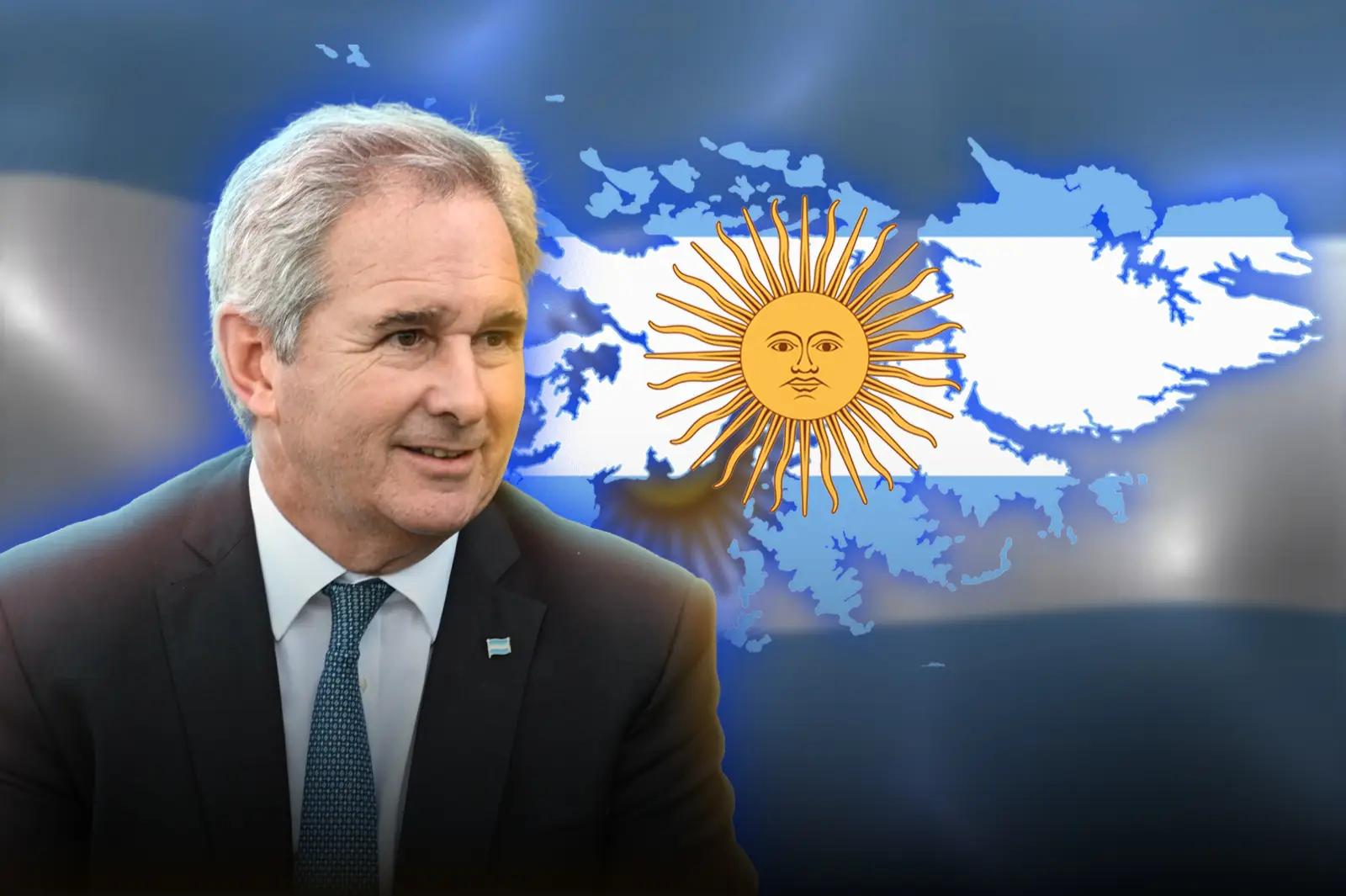
The chancellor Pablo Quirno published an extensive article in which he developed the historical, legal, and diplomatic foundations that support Argentina's sovereignty over the Falkland Islands, South Georgia, South Sandwich Islands, and the surrounding maritime spaces.
The official emphasized that the issue remains fully relevant on the international agenda, after the Organization of American States, the United Nations Special Committee on Decolonization, and Mercosur countries reiterated their call for Argentina and the United Kingdom to resume negotiations.
The Argentine Chancellor, Pablo Quirno
“Each new statement confirms that the Falklands issue remains open and relevant,” Quirno stated, asserting that the claim transcends the commemorations of April 2 and June 10. “The Falklands are a cause for every day,” he emphasized.
The chancellor explained that Argentina's rights are based on a solid historical continuity. After independence, Argentina inherited Spain's titles, exercised effective acts of authority over the islands, formally took possession in 1820, and created the Political and Military Command in 1829.
This presence was interrupted in 1833, when the United Kingdom occupied the islands by force, expelled Argentine authorities, and proceeded to populate the territory with its own settlers. Argentina never recognized that occupation and has since maintained a permanent, peaceful, and founded protest based on international law.
“Time does not turn an illegitimate occupation into sovereignty,” Quirno stated, rejecting the British position and recalling that United Nations General Assembly Resolution 2065 formally recognized in 1965 the existence of a sovereignty dispute.
The resolution established that the conflict must be resolved through bilateral negotiations, taking into account the interests of the island's inhabitants. Even after the 1982 war, the UN again demanded the resumption of dialogue, demonstrating that the armed confrontation did not change the legal nature of the controversy.
The Falklands War did not delegitimize the historical claim
Quirno also rejected the application of the principle of self-determination in this case. He explained that the Falklands constitute a special colonial situation, arising from the breach of Argentina's territorial integrity and the subsequent implantation of British population.
“We must not fall into the referendum trap,” the chancellor warned. In this regard, he clarified that no plebiscite organized unilaterally by the United Kingdom regarding the occupants can resolve a dispute whose negotiation corresponds exclusively to both States.
The official also recalled that the national Constitution obliges the recovery of full sovereignty while respecting the way of life of the island's inhabitants. However, he differentiated that commitment from the British claim that the implanted population can decide on the ownership of the territory.
Quirno also questioned the unilateral exploitation of natural resources and the strong British military presence in the South Atlantic. He pointed out that around 3,000 people live on the islands, while approximately 1,200 troops are deployed, a proportion that exposes the strategic value of the enclave for London.
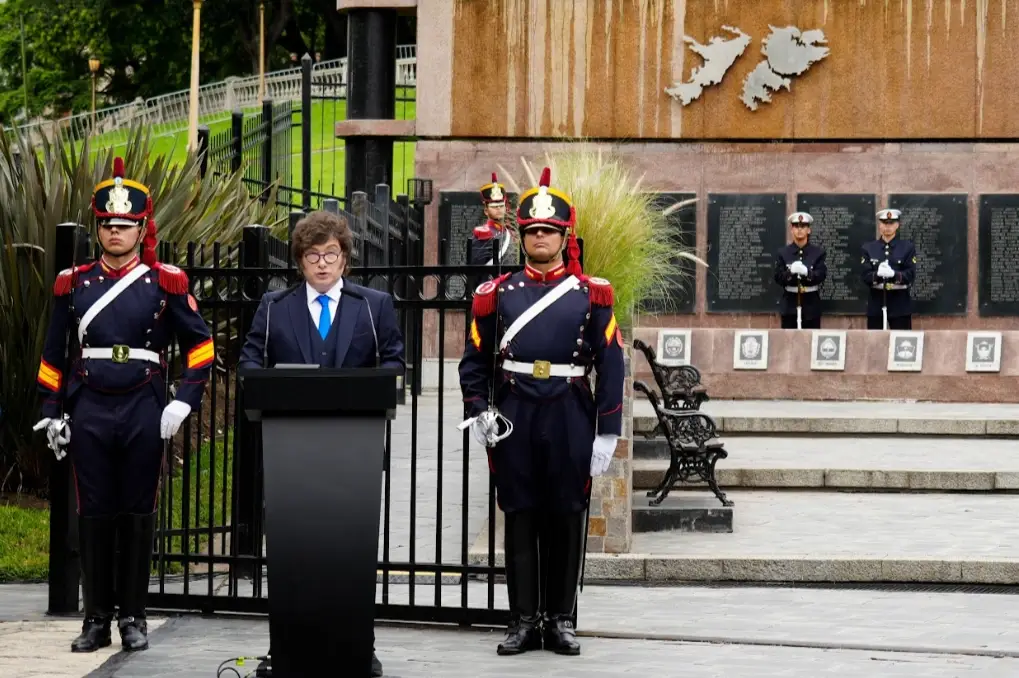
The chancellor expressed the close alignment with the policy promoted by the president.
Finally, he reaffirmed the policy promoted by President Javier Milei, based on sustaining the claim through firm, peaceful, and persistent diplomacy. “Our claim does not expire, does not resign, and does not abandon,” he assured.
“By history, by right, and by conviction, the Falklands are Argentine,” concluded the chancellor.