




Cornejo highlighted the adjustment of spending in Mendoza and called for a comprehensive tax reform

Cornejo highlighted the adjustment of spending in Mendoza and called for a comprehensive tax reform
Alfredo Cornejo called for a comprehensive tax reform to boost investments and economic growth

Most read in Argentina

"Sin Tax": Lula da Silva announced a new tax on cars, airplanes, boats, cigarettes, and beverages

  1. The Argentine National Team made a decision regarding Messi's number 10 jersey: who are the candidates to inherit it

  2. Jorge Macri will meet with Stefano Domenicali to advance the return of Formula 1 to Argentina

  3. Kicillof pushes for indefinite re-elections again to benefit more than 50 Peronist mayors

  4. Natalio Mema highlighted the reconstruction of Route 143 and Mendoza's progress in integrating with Vaca Muerta

Imagen de Editorial Team
porEditorial Team
Argentina

The governor of Mendoza defended his administration model, highlighting a 20% reduction in real public spending over the last decade

Add La Derecha Diario on
Share:


Related news

LIVE | Javier Milei speaks before the producers at the end-of-year meeting of the Argentine Rural Society

LIVE | Javier Milei speaks before the producers at the end-of-year meeting of the Argentine Rural Society

Epic Games Store: what is the free game on November 12 and how to claim it

Epic Games Store: what is the free game on November 12 and how to claim it

Prime Gaming: what are the 7 free games for November 2026 and how to claim them

Prime Gaming: what are the 7 free games for November 2026 and how to claim them

X-70 Fractal: the new NASA aircraft aiming to revolutionize flight testing

X-70 Fractal: the new NASA aircraft aiming to revolutionize flight testing

Raúl Jalil promotes agro-industrial investment in Catamarca: a plant will double its production and will operate with energy

Raúl Jalil promotes agro-industrial investment in Catamarca: a plant will double its production and will operate with energy

Meta introduced Muse Voice: how its AI avatar for video calls works

Meta introduced Muse Voice: how its AI avatar for video calls works

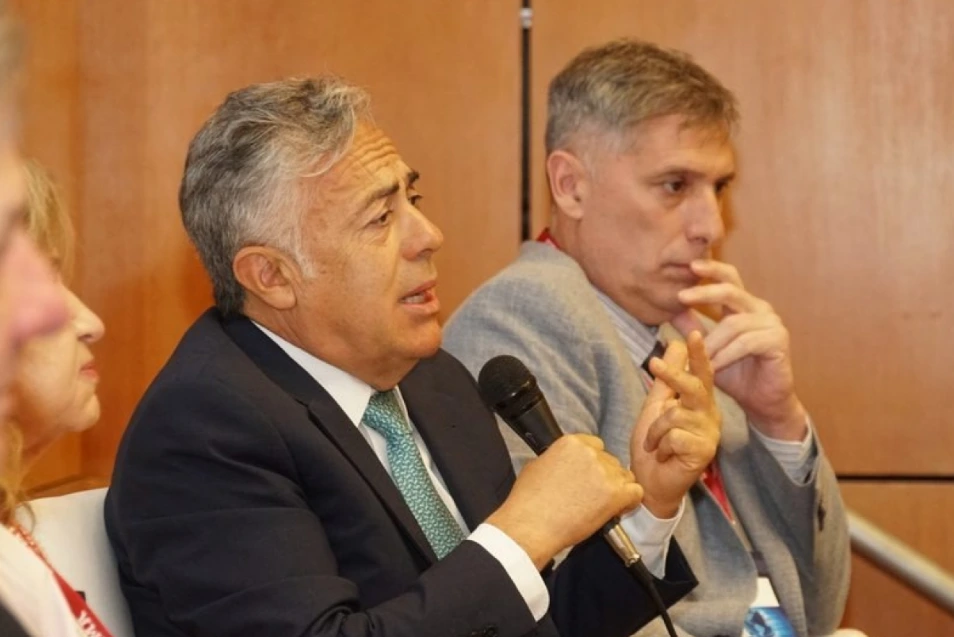
The governor of Mendoza, Alfredo Cornejo, called for advancing a comprehensive tax reform to create conditions that promote investment and economic growth in Argentina. During his participation in the XV Ibero-American Local Financing Conference, held in the Autonomous City of Buenos Aires, he defended the Mendoza administration model and raised the need to review the tax system, federal revenue sharing, and the efficiency of public spending.

The governor stated that the country's economic transformation requires lasting political agreements and macroeconomic stability. In this regard, he considered that structural reforms cannot depend solely on one government but require consensus that allows for the maintenance of economic rules in the long term.

During his presentation, Cornejo showcased the results of Mendoza's fiscal management as an example of reorganizing state resources. According to the indicators he shared, the province managed to reduce real public spending by 20% over the last decade while improving the standards of public service delivery.

Cornejo highlighted the reduction of public spending and investment in infrastructure

One of the main focuses of the presentation was the transformation of Mendoza's budget structure. Cornejo explained that the province implemented various administrative reforms to improve resource utilization and increase the state's investment capacity.

Among the indicators presented, he highlighted that the share of spending on human resources within the budget decreased from 52% to 42%. At the same time, investment in infrastructure and capital reached 13%.

The governor used these results to defend an administration aimed at improving spending efficiency and preventing the majority of public resources from being concentrated on the current functioning of the state.

The provincial strategy aims to preserve the capacity to provide public services while simultaneously freeing up resources for works and infrastructure that accompany economic development.

In this context, Cornejo argued that the Argentine fiscal discussion must incorporate criteria of efficiency and responsibility in the management of public funds.

The tax reform proposed by Alfredo Cornejo

Another central point of his presentation was the need to review the Argentine tax structure. The governor specifically mentioned Gross Income, taxes on fuels, and the tax on bank debits and credits as taxes that should be part of a comprehensive discussion.

However, he warned that the elimination of provincial taxes cannot be proposed without considering how those resources will be replaced and what financial responsibilities each jurisdiction will have to assume.

"This reform undoubtedly has a tax component that is key. The issue of Gross Income is relevant, but it has to be comprehensive. It cannot be about pressuring the provinces, nor in public opinion, but there has to be a plan behind the substitution of one income for another," he stated.

The proposal aims for any modification of the tax scheme to consider the financing needs of the provinces and establish mechanisms that allow for reducing tax pressure without compromising the functioning of public services.

For Cornejo, the reform should also contribute to improving the competitiveness of companies, facilitating private activity, and creating conditions to expand the taxpayer base.

Federal revenue sharing and political agreements to lower country risk

Cornejo also questioned the functioning of the current Federal Revenue Sharing System and considered that the resource distribution scheme between the nation and provinces needs a review.

He argued that the current system has not managed to correct economic differences between jurisdictions and requires mechanisms that include incentives for productive development and the generation of private activity.

In this context, he recalled that Mendoza presented a reform proposal to the Council of Mayo, where he participated on behalf of the governors. He also mentioned the Fiscal Pact of 2017 as a precedent for attempts to modify the country's tax structure.

The governor considered that there is an opportunity to resume those discussions and advance changes that provide greater predictability to companies and investors.

"Argentina will not significantly lower its country risk if it does not have a major agreement on these reforms. It cannot depend on one person," he maintained.

This statement summarizes one of the central arguments of his presentation: the need for economic transformations to have continuity beyond changes in government. For the governor, agreements among the main political forces are a necessary condition to reduce uncertainty and facilitate long-term investment projects.

Less informality and better conditions for production

Another topic addressed was economic informality and the need to broaden the tax base. Cornejo pointed out that certain productive sectors face difficulties in maintaining their profit margins, a situation that can encourage the development of activities outside the formal circuit.

For this reason, he emphasized the importance of generating tools that facilitate the incorporation of companies and workers into the registered economy, with rules that allow for improving competitiveness conditions.

The discussion is directly linked to the possibility of reducing pressure on those who already comply with their tax obligations and expanding the number of taxpayers participating in the system.

Cornejo shared the fiscal debate with Jorge Macri and national officials

The XV Ibero-American Local Financing Conference brought together representatives from different levels of government and public finance specialists to discuss fiscal federalism, resource management, and economic development.

The panel also included the head of the Buenos Aires City Government, Jorge Macri; the Minister of Economy of Santa Fe, Pablo Olivares; and the Secretary of Economic Policy of the Nation, José Luis Daza. The moderation was led by Carola Pessino, rector of the University of CEMA.

Cornejo's participation allowed for discussing Mendoza's experience in budget management and bringing the debate on the need to modernize the fiscal system to the national level.

The governor insisted that macroeconomic stability, coordination between the nation and provinces, and political agreements are fundamental to improving Argentine competitiveness. The goal, he stated, should be to build predictable rules that allow for sustaining reforms, strengthening the private sector, and generating new investments.

La Derecha Diario on X

  1. “HEMOS SACADO A 12 MILLONES DE PERSONAS DE LA POBREZA” Toto Caputo comparó los indicadores económicos del Gobierno de Javier Milei con los de las gestiones anteriores y destacó el crecimiento del crédito al sector privado, las exportaciones y la recuperación de las jubilaciones. “El crédito bancario al sector privado está casi un 150% arriba, las exportaciones están creciendo un 55% y la jubilación mínima está recuperando un 14%”.

    5 min ago

  2. “ELIMINAMOS EL DÉFICIT FISCAL EN EL PRIMER MES DE MANDATO” Toto Caputo destacó el ajuste fiscal implementado por el Gobierno de Javier Milei y cuestionó el financiamiento monetario de las gestiones anteriores. “Entre los gobiernos de Cristina Kirchner y Alberto Fernández, los recursos transferidos por el Banco Central al Tesoro representaron 56 puntos del PBI. Si sumamos el gobierno de Macri, totalizan 67 puntos”.

    15 min ago

  3. TOTO CAPUTO DESTACÓ LOS LOGROS ECONÓMICOS DEL GOBIERNO DE MILEI ANTE LA SOCIEDAD RURAL: El ministro de Economía, @LuisCaputoAR, participó de la reunión de fin de año de directores y delegados de la Sociedad Rural Argentina en Palermo, donde presentó una comparación de los principales indicadores económicos de las últimas cuatro presidencias. "Hace tres años éramos un montón de promesas y ahora esencialmente este gobierno es un montón de realidades".

    25 min ago

  4. AHORA — LA IZQUIERDA ES TERRORISTA: Inmigrantes africanos y terroristas de extrema izquierda incendiaron el ingreso al liceo Herriot de Lyon, en una nueva jornada de disturbios en toda Francia.

    35 min ago

  5. “LO PRIMERO QUE HAY QUE HACER ES ECHAR A PEDRO SÁNCHEZ” El candidato derechista de VOX, Santiago Abascal, advirtió que el corrupto Pedro Sánchez está dispuesto a hacer cualquier trampa para mantenerse en el poder. “Las encuestas fallan y la voluntad, el veredicto es de los españoles. Aquí puede pasar cualquier cosa y los animo a un cambio profundo”.

    45 min ago

La Derecha Diario logo
TwitterInstagramYouTubeTikTokFacebook
Derecha Diario TV

Nosotros

  • Quienes Somos
  • Autores
  • Donar

Privacidad

  • Protección de datos
  • Canales
  • Sitemap
  • RSS

Contacto

  • info@derechadiario.com.ar
PUBLICIDAD
La Derecha Diario logo
ESX logoInstagram logoYouTube logoTikTok logoFacebook
ARGENTINAUNITED STATESECUADORISRAELMEXICOURUGUAY
DERECHA DIARIO TV
  • ES
    XInstagramYouTubeTikTokFacebook
  • DERECHA DIARIO TV
  • Sections
  • ARGENTINA
  • UNITED STATES
  • ECUADOR
  • ISRAEL
  • MEXICO
  • URUGUAY
  • Countries
  • La Derecha Diario logoLA DERECHA DIARIO
  • La Derecha Diario México logoLA DERECHA DIARIO MÉXICO
  • La Derecha Diario Uruguay logoLA DERECHA DIARIO URUGUAY
  • La Derecha Diario Ecuador logoLA DERECHA DIARIO ECUADOR
  • La Derecha Diario Israel logoLA DERECHA DIARIO ISRAEL
  • La Derecha Diario Estados Unidos logoLA DERECHA DIARIO ESTADOS UNIDOS
  • Topics
  • GUERRA EN IRÁN
  • The Newspaper
  • QUIENES SOMOS
  • AUTORES
  • PUBLICIDAD
  • DONAR
