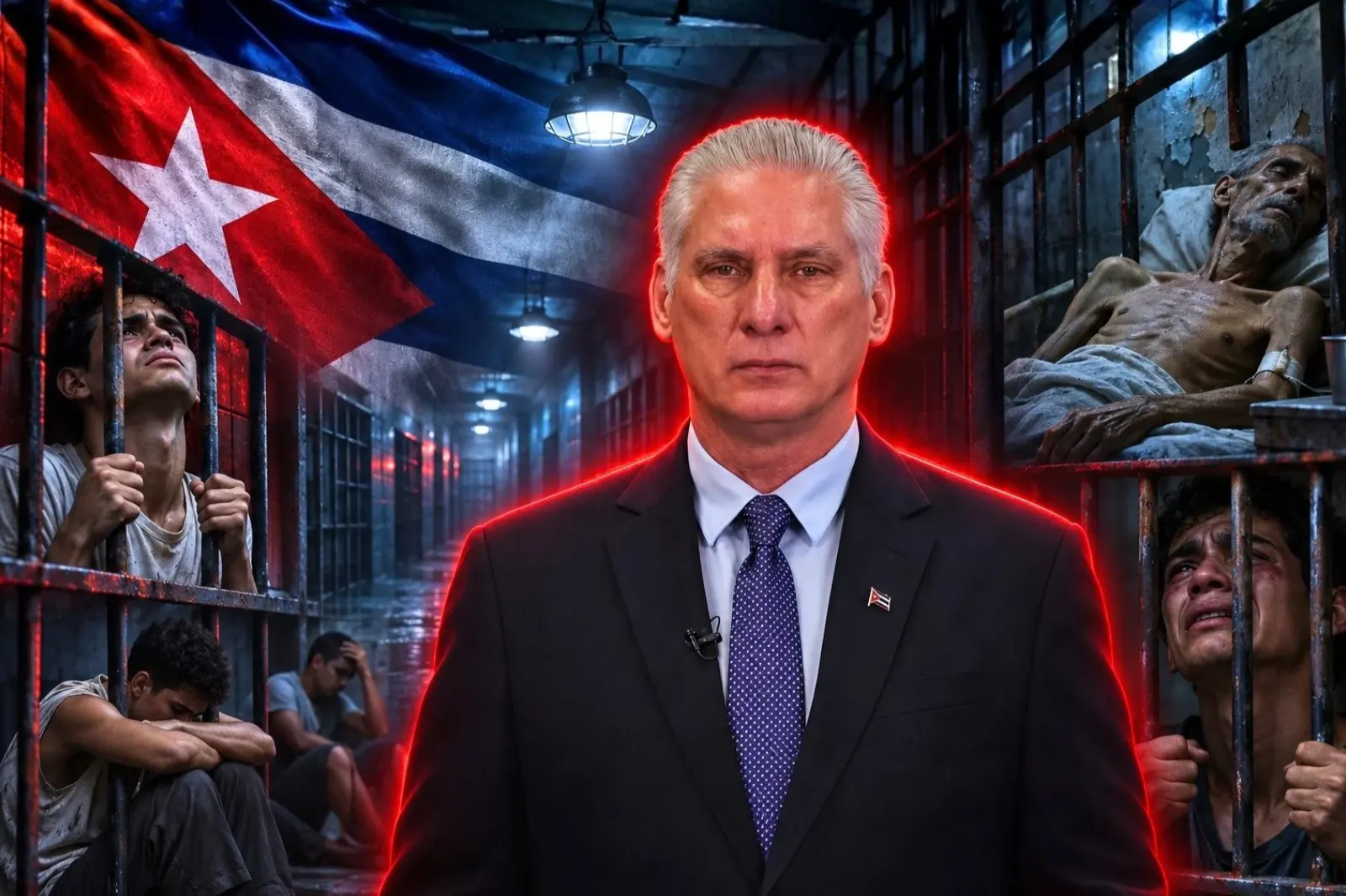
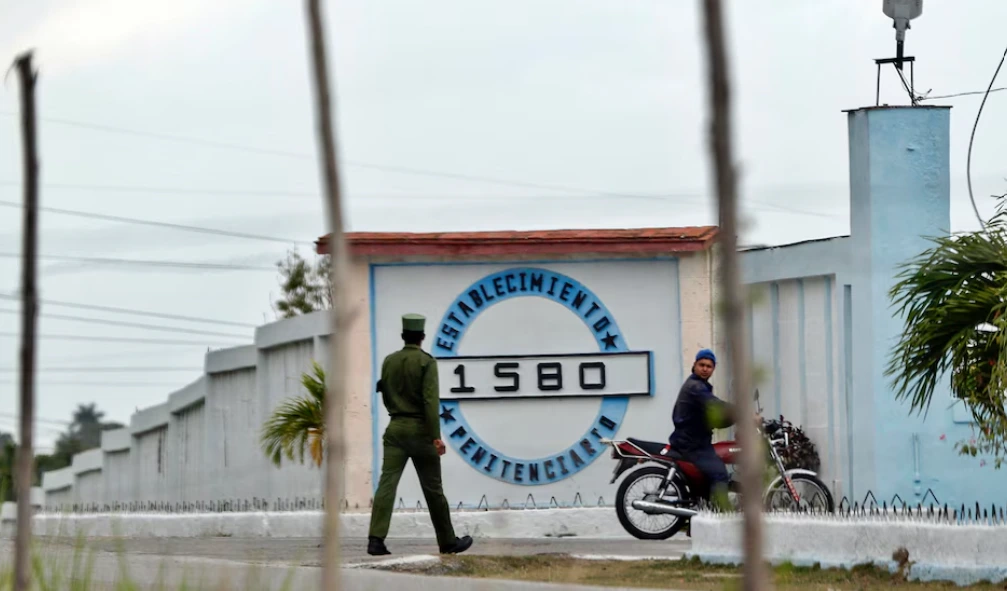
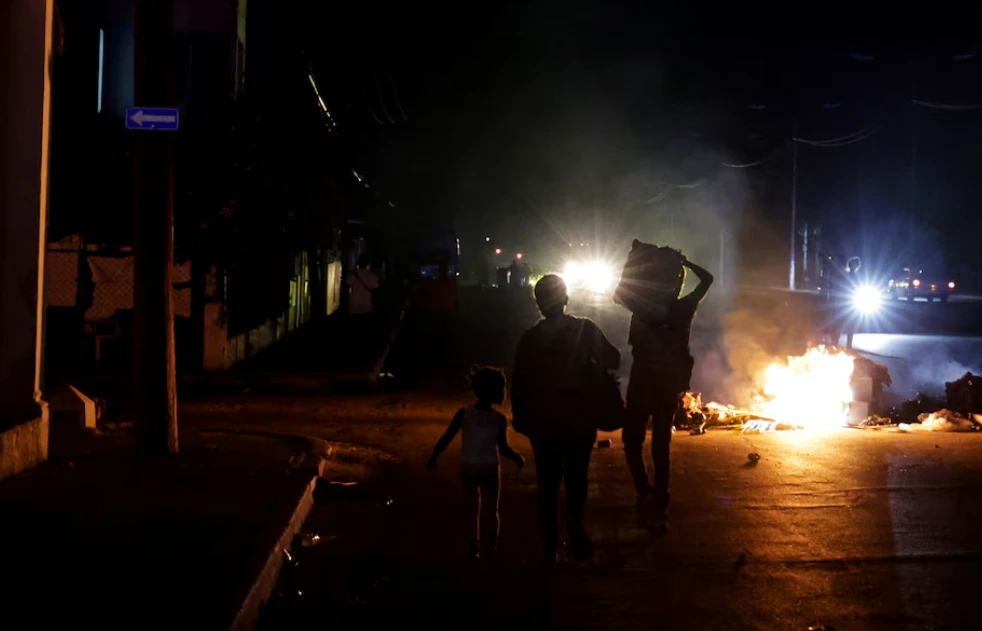
A report from Prisoners Defenders recorded 39 new political prisoners during October, raising the total number of people imprisoned for ideological reasons to 1,353
By the end of October, the organization identified 464 political prisoners with serious illnesses who do not receive adequate medical treatment.
Among the main problems recorded are:
236 people with forced malnutrition.
80 prisoners with high blood pressure without medication.
39 people with asthma.
24 detainees with diabetes.
54 prisoners with mental and psychological illnesses without psychiatric, psychological, or pharmacological care.
The communist dictatorship of Cuba has once again surpassed its own record of repression. By the end of October, the island recorded 1,353 political prisoners, after adding another 39 cases during the last month, according to the monthly report from the organization Prisoners Defenders published this Thursday.
The survey exposes the systematic persecution of the regime against those who express opinions contrary to the government, participate in demonstrations, or publicly question the authorities. The situation even affects minors, entire families, and people with serious illnesses who remain detained without receiving the necessary medical treatments.
Javier Larrondo, president of Prisoners Defenders, denounced that the figures represent a new record of repression and questioned the lack of a strong response from the international community to the human rights violations on the island.
“Cuba breaks its own record of repression in October. These figures transgress the sensitivity of those of us who monitor repression in Cuba, but they should shame an international community that, with few exceptions, is not raising its voice for the people of Cuba as the situation warrants,” he stated in an interview with Infobae.
The document shows that political persecution is not limited to opposition leaders or recognized activists. Two out of three new cases recorded during October are directly related to political expressions, such as posters, slogans, graffiti, propaganda, or critical publications against the regime.
Two out of three new prisoners were persecuted for expressing their opinions
Of the 39 new additions made during October, 26 people —66.7%— were persecuted for manifestations of political expression.
The report identifies five main patterns: the criminalization of collective protests through serious accusations, the criminal prosecution of individual opinions, the extension of proceedings against family members and minors, the use of provisional detention without judicial guarantees, and the medical neglect of detainees.
Of the total number of new documented cases, 26 people remain physically incarcerated. Eighteen are under provisional detention and another eight are serving sentences. Additionally, ten people face measures such as house arrest or abusive bail, imposed by police or prosecutorial authorities without judicial intervention.
The scale of repression is also reflected in the evolution of recent years. Over the last 12 months, Prisoners Defenders documented 346 new additions, averaging 29 people per month.
Since the massive protests of July 11, 2021, known as 11J, until the end of October 2026, the organization has counted 2,256 political prisoners in Cuba.
The dictatorship prosecuted six minors for sedition and is seeking up to 13 years in prison
One of the most serious documented episodes occurred in Morón, a town in the province of Ciego de Ávila, where 18 people face criminal proceedings for “sedition” following protests on March 13.
Among the accused are six minors at the time of the events. The prosecution requests sentences ranging from five to 13 years in prison, and according to Prisoners Defenders, none of the 18 proceedings involved the intervention of a judge to examine the accusations.
The dictatorship prosecuted six minors for sedition and asks for up to 13 years in prison
The situation of two teenagers is particularly concerning.
Jailer Israel Valero Luis was 17 years old when he participated in the protests. The accusatory file itself includes a psychiatric evaluation identifying an organic brain pathology, impulse control disorders, and psychological immaturity. Despite these antecedentes, the prosecution requests seven years of deprivation of liberty.
The second case is that of Pedro Luis Figuera Díaz, who was only 16 years old. An official expert report determined that he had a moderate mental deficit of organic brain origin and that his ability to understand the scope of his actions and direct his behavior was substantially diminished. The prosecution's request is for five years in prison.
The organization also denounced that the First Criminal Chamber of the Provincial People's Court of Ciego de Ávila rejected a habeas corpus petition filed on behalf of Jonathan David Muir Burgos, without analyzing the substance of the claim.
“What kind of state responds to the protest of vulnerable teenagers with accusations of sedition and requests for years of deprivation of liberty?” questioned Larrondo, who described the persecution of minors as an intolerable situation.
Among the adults prosecuted in Morón are Carlos Alejandro Carballeira Delgado and his wife, Madiam Estela Castellanos Darias. Both face prosecution requests of 12 years in prison for sedition after participating in a protest and inviting other citizens to join the demonstrations.
An entire family was subjected to criminal proceedings for protesting against the regime
The persecution also reached the Echevarría family in the province of Sancti Spíritus.
Óscar Echevarría Rubio and his wife, Cleidys García, were detained on October 10 after Óscar shouted slogans against the dictatorship from the roof of their home. Both were taken to the Nieves Morejón prison, where they remain under provisional detention.
The repression also extended to their daughter, Aitana Echevarría Rivero, 18 years old and mother of a child approximately one year old. On October 22, she was placed under house arrest for her participation in the protest.
All three family members were involved in the same criminal proceeding without, according to the report, any judicial pronouncement having taken place.
“An entire family subjected to a criminal proceeding for expressing their discontent with the government,” denounced the president of Prisoners Defenders.
Political prisoners with serious illnesses remain without medical treatment
The medical neglect within Cuban prisons is another of the most alarming aspects of the survey.
The majority of those affected present multiple simultaneous pathologies. This is compounded by reports of mistreatment and physical and psychological torture, which worsen detention conditions and increase risks to the lives of prisoners.
Among individual cases is that of Pentecostal pastor and painter Ariel Limias Leyva, detained on October 2 after holding a peaceful protest on the steps of the Capitol in Havana. There, he displayed posters against the dictatorship and in favor of freedom.
He was transferred to Villa Marista, identified by human rights organizations as a detention and torture center, and accused of propaganda against the constitutional order. His situation is especially delicate because he had suffered a heart attack in January 2026 and needs permanent cardiac treatment, which currently depends on the financial efforts of his family.
Another case is that of Daniel Rodríguez Rodríguez, a self-employed worker detained for photographing critical slogans against the government and disseminating them on social media.
The man suffered from pulmonary emphysema and had a tumor detected in one of his lungs. He reported that his imprisonment interrupted the medical care he had scheduled.
“He is not only condemned to die, but also to suffer a slow and agonizing death,” warned Larrondo.
Julián Manuel Mazola Beltrán was also detained again, who had already served a sentence outside of prison. On October 9, he was arrested in San Antonio de los Baños after presenting himself in response to a summons from State Security. The authorities searched his home, confiscated his phone, and opened a new proceeding for propaganda against the constitutional order.
Mazola has precautionary measures granted by the Inter-American Commission on Human Rights since June 2024.
Cuba accumulates 1,353 political prisoners and 210 convicted for sedition
Cuba has accumulated 1,353 political prisoners and 210 convicted of sedition
The report from Prisoners Defenders also provides a breakdown of the magnitude of political persecution on the island.
Of the 1,353 people registered as political prisoners by the end of October, 43 were detained when they were still minors: 41 males and two females.
Additionally, 210 protesters were convicted of sedition, with an average sentence of 10.1 years in prison. The survey also counts 158 women who currently face prosecutorial accusations, precautionary measures, or sentences for political reasons.
The organization classifies the detainees into three categories: 798 prisoners of conscience, 502 convicted of conscience, and 53 people included in other categories of political prisoners.
Larrondo stated that the Cuban situation cannot be interpreted as a series of isolated episodes, but rather as a permanent system of persecution against the population that challenges the established power.
“Cuba is not experiencing isolated episodes of repression. It is living under a permanent system of repression that must be called by its name: state terrorism,” he affirmed.
The president of the organization also questioned the silence of a large part of the international community regarding the processes against adolescents, the persecution of families, and the neglect of sick people within prisons.
In the last 12 months, the 346 new additions to the Prisoners Defenders list represent almost five times the total number of detainees during the Black Spring of 2003, when the Cuban regime imprisoned dozens of dissidents and independent journalists in an operation that provoked strong international condemnation.
67 years after the start of the communist dictatorship, Cuba continues to accumulate reports of imprisonments for political reasons, persecution of opponents, and violations of human rights. The new record of 1,353 political prisoners once again highlights the situation of those who demand fundamental freedoms on the island and the cost they face for challenging the regime.