Since the beginning of 2026, Ecuador has significantly deepened its military cooperation with the United States as part of the new regional strategy promoted by Trump against drug trafficking. Washington currently considers Noboa one of its main allies in Latin America within the hemispheric offensive against cartels and criminal organizations.
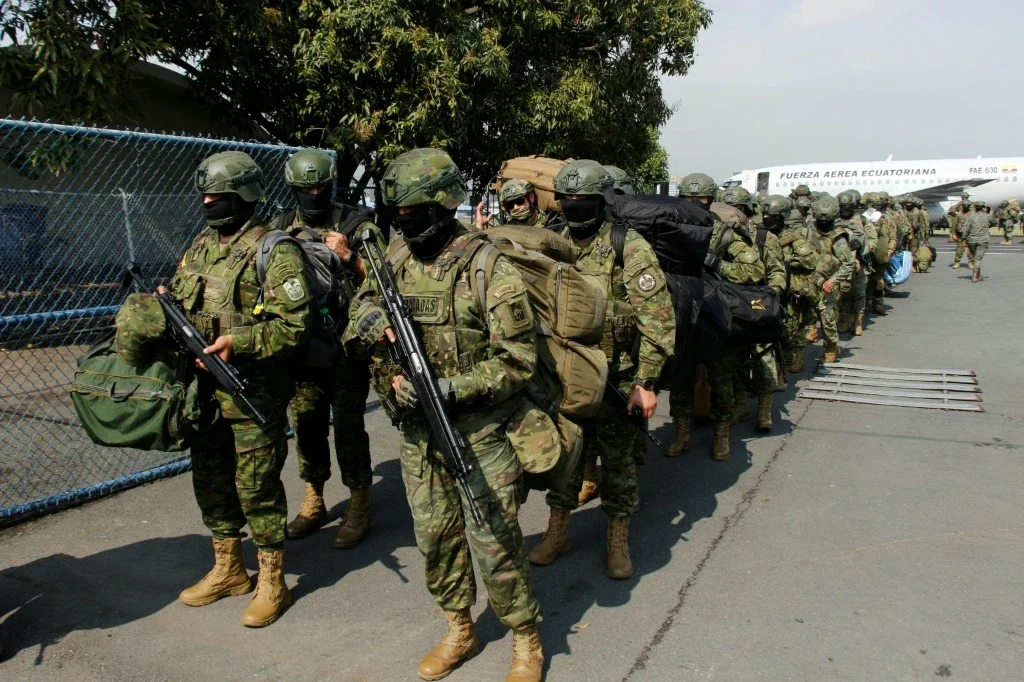
Ecuadorian soldiers being deployed to combat drug trafficking
The joint operations include intelligence sharing, logistical support, tactical assistance, and military coordination in regions deemed strategic for drug trafficking. A significant part of the actions focused on coastal and border areas where organized crime has greatly increased its presence in recent years.
Noboa also stated that Ecuador can no longer face the advance of drug trafficking alone and called for strengthening international cooperation. He also harshly criticized sectors of the Ecuadorian judicial system, accusing some judges of indirectly favoring criminal organizations through releases and alternative measures.
The president of Ecuador, Daniel Noboa, defended in Washington the military offensive driven by his government against drug trafficking organizations and reaffirmed his strategic alliance with the United States in terms of security. During a two-day official visit to the U.S. capital, the president stated that Ecuador is undergoing a “war against narcoterrorism” and argued that the extraordinary measures implemented by his administration are necessary to regain control of the country in the face of the advance of organized crime.
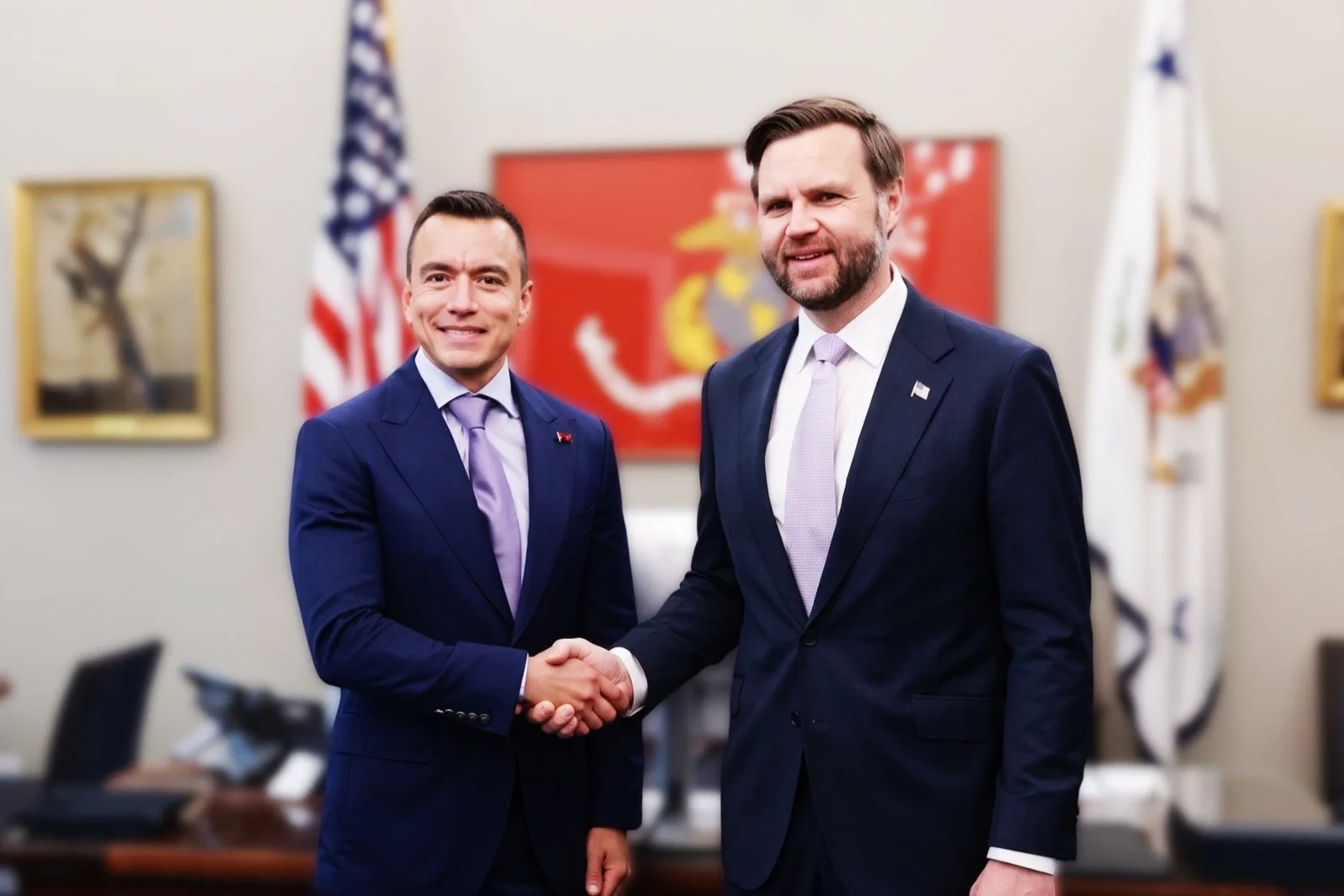
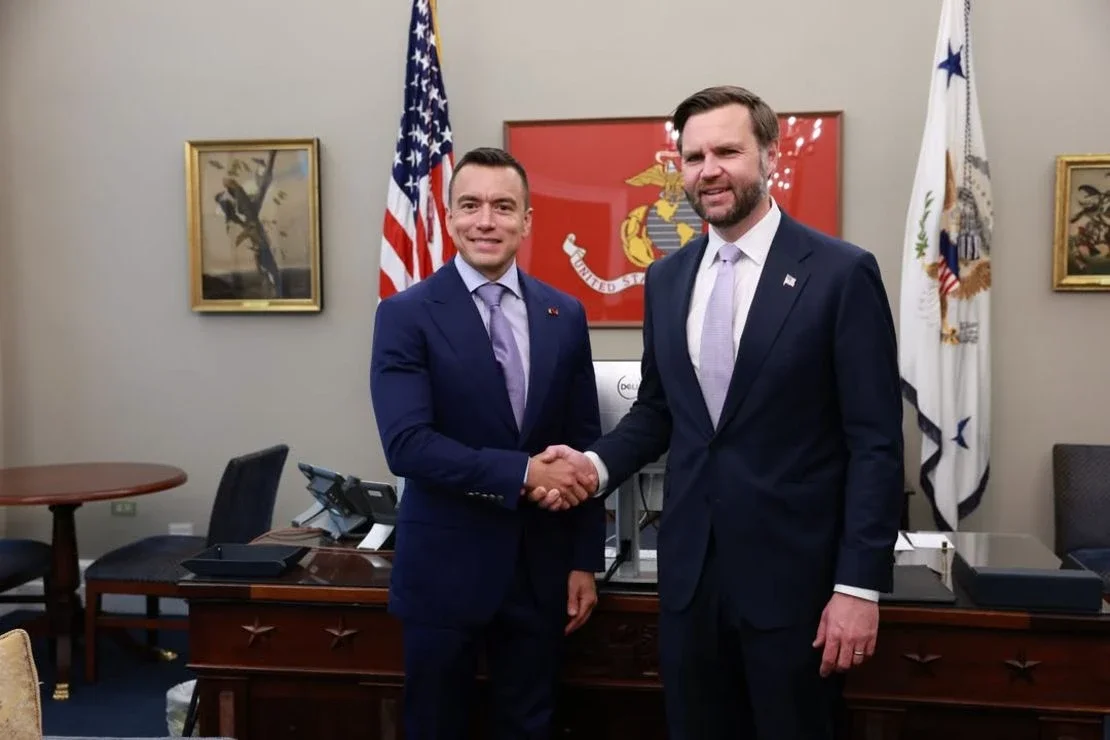
Noboa participated in meetings at the Organization of American States (OAS), meetings with U.S. officials, and activities organized by the Atlantic Council. He also held talks with Vice President JD Vance while Donald Trump continued his diplomatic tour of Asia.
The Ecuadorian president particularly defended the recent joint military operations between Ecuadorian and U.S. forces against criminal groups linked to drug trafficking. The actions generated international controversy following reports of possible damage to civilian facilities near the border with Colombia during some bombings and intelligence operations.
Daniel Noboa with U.S. Vice President JD Vance
“Drug traffickers do not hide in fortresses with neon signs. They hide in civilian facilities,” Noboa stated during one of his presentations. The president also maintained that all operations are conducted with intelligence information and under coordination between both governments.