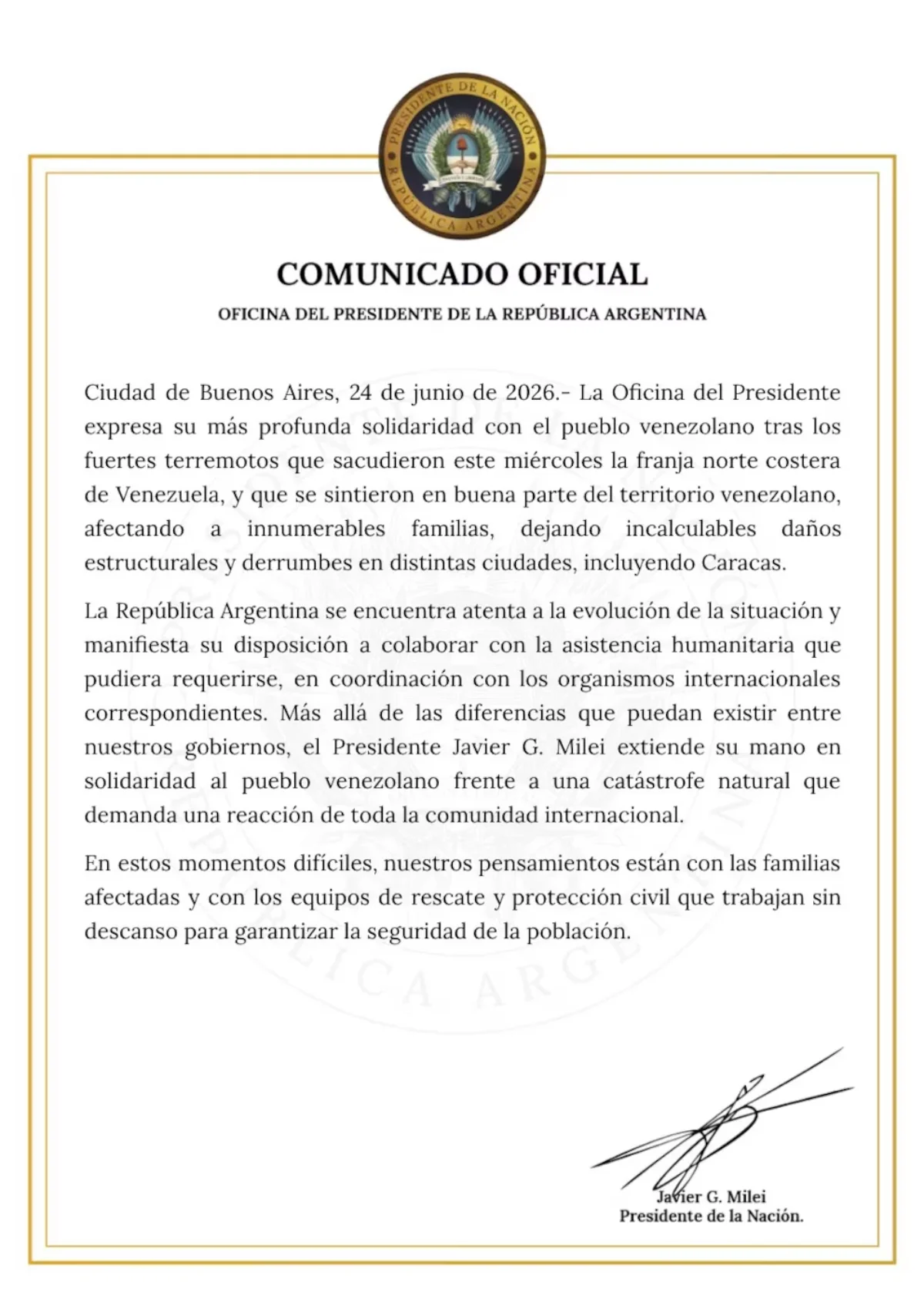
The Argentine administration showed willingness to work in coordination with international organizations and the relevant authorities if assistance is required. The offer includes the possibility of collaborating with healthcare resources, rescue teams, and specialized personnel, in line with a serious and orderly humanitarian response.
The statement issued by the Office of the President of the Argentine Republic
From Chile, President José Antonio Kast also expressed his solidarity with Venezuela and offered humanitarian and rescue aid if needed. Through the Foreign Ministry, the Chilean government lamented the tragedy and emphasized that it is prepared to assist the affected families, thus joining the regional response to the emergency.
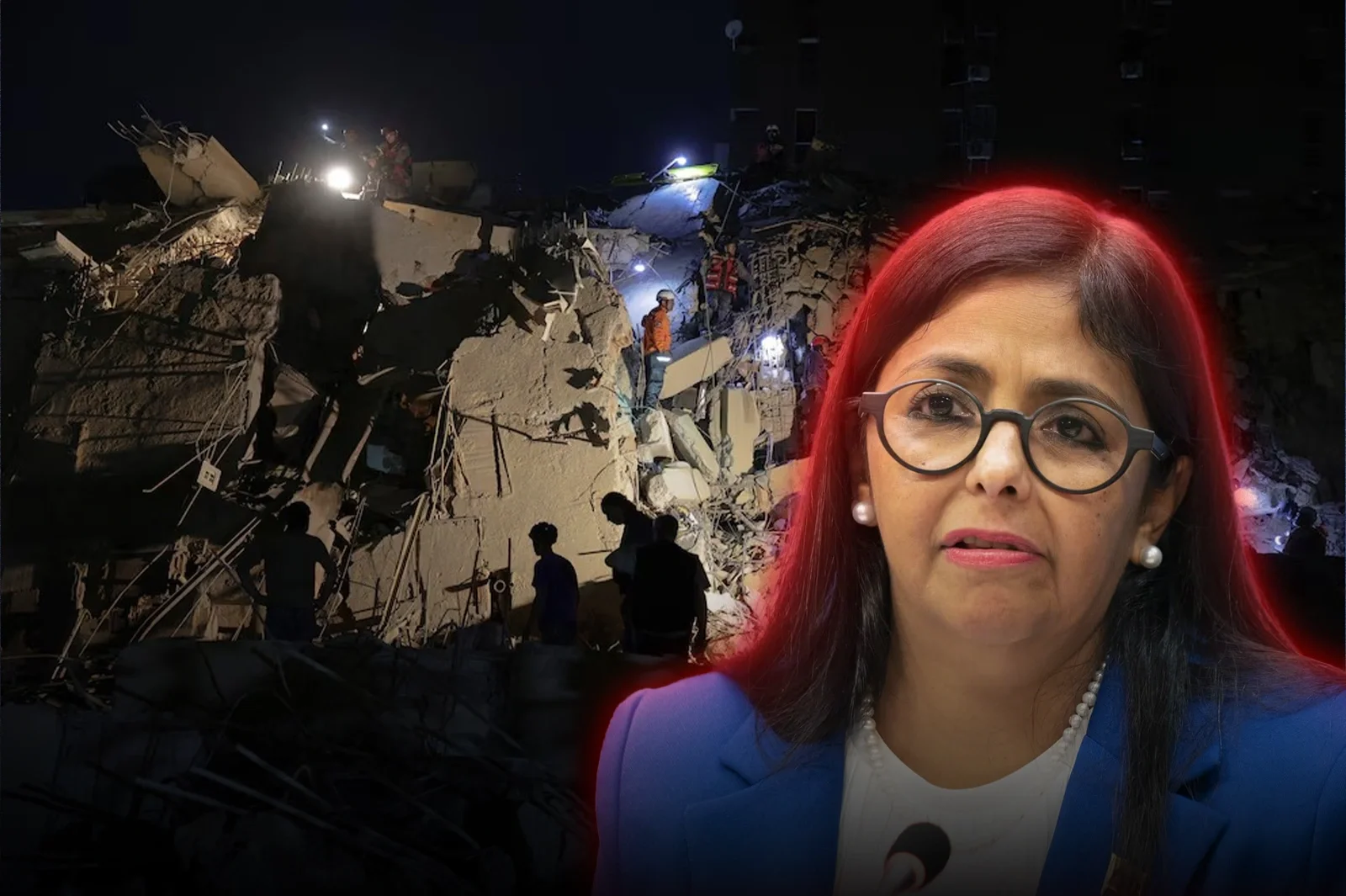
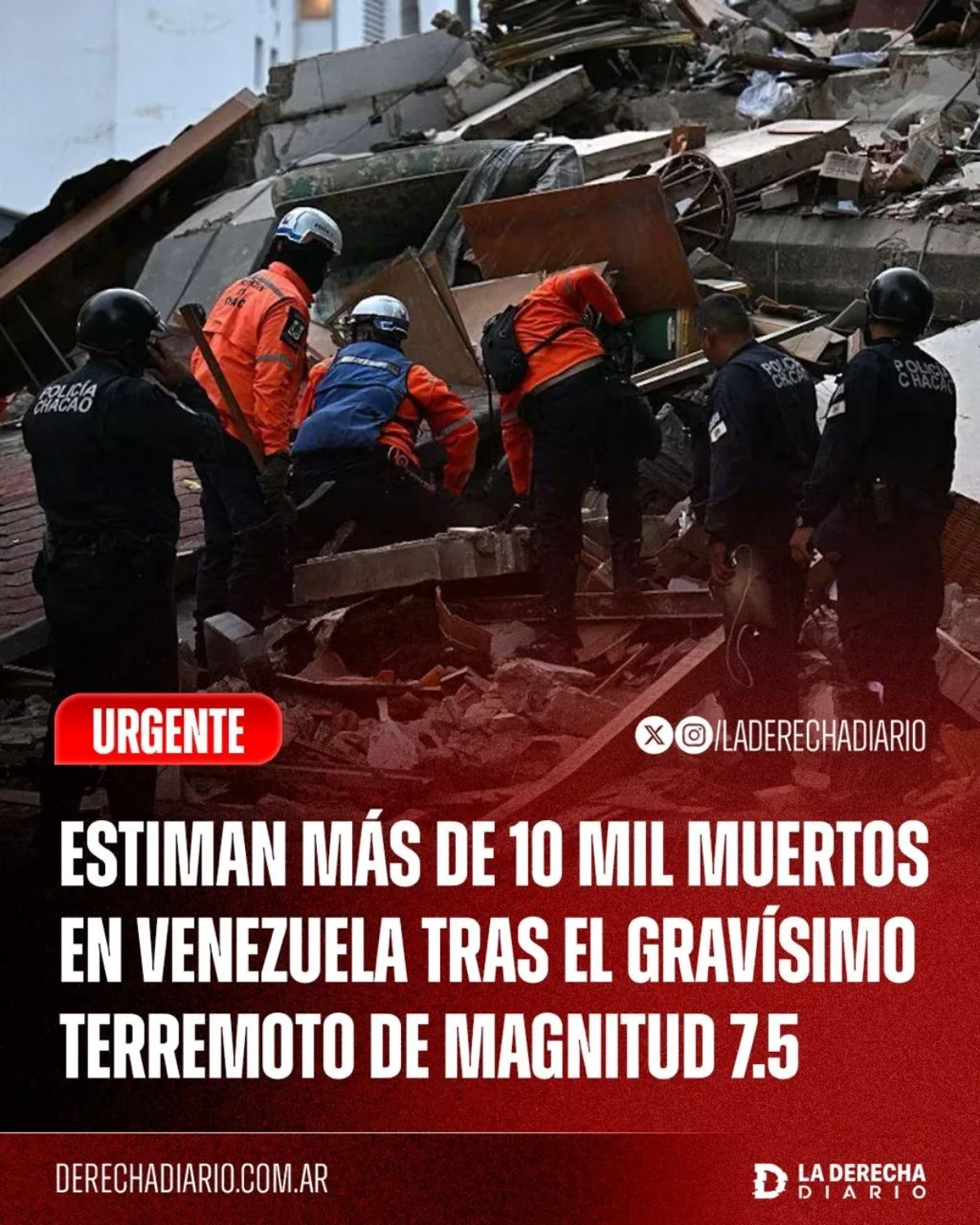
The presidency of Venezuela declared a state of emergency after two earthquakes of magnitudes 7.2 and 7.5 shook the center and north of the country, with landslides in Caracas and a preliminary estimate from the United States Geological Survey warning of thousands of possible deathss. Although there is still no consolidated official figure, the American agency indicated that the disaster could leave a high number of victims and widespread damage.
Delcy Rodríguez confirmed the measure following the seismic movements and acknowledged that there are states particularly affected. According to initial reports, landslides were recorded in various parishes of the capital, while Miranda, La Guaira, Aragua, Carabobo, and Falcón also suffered significant damage.
The disaster could leave more than 10,000 dead, with an extreme scenario that even raises the projection to 100,000 fatalities.
The earthquakes occurred just seconds apart and were strongly felt in Caracas, where thousands of residents rushed to the streets in desperation, service outages were reported, and emergency teams were deployed in areas with collapsed buildings. Classes and non-essential activities were also suspended, while the Maiquetía airport remained closed.
The disaster strikes a country that has already been suffering from years of institutional deterioration, infrastructure crisis, and a healthcare system weakened by chavismo. In this context, the emergency not only demands immediate rescue efforts but also international coordination to assist a population exposed in a collapsed infrastructure.
Regional humanitarian aid and Milei's gesture
In the face of the catastrophe, President Javier Milei expressed his solidarity with the Venezuelan people and offered healthcare and humanitarian assistance from Argentina. The official message emphasized that, despite the deep political differences between both governments, the priority must be to support the affected families and collaborate in the face of a natural tragedy of such magnitude.
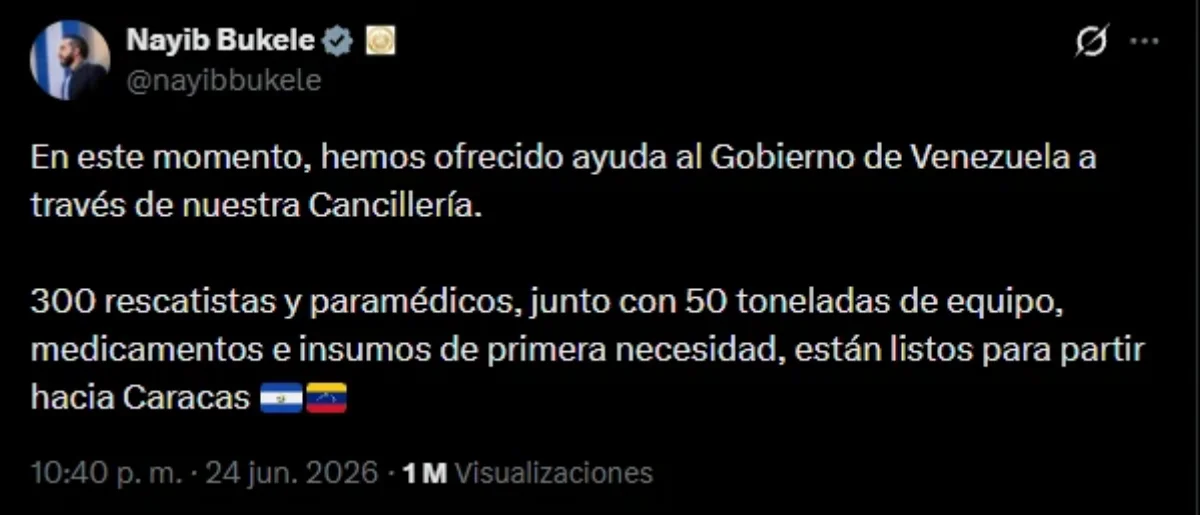
Nayib Bukele also joined in, informing that El Salvador offered assistance to Venezuela through its Foreign Ministry. The president assured that 300 rescuers and paramedics, along with 50 tons of equipment, medicines, and essential supplies, are already ready to travel to Caracas if the aid is accepted by Venezuelan authorities.
Nayib Bukele joined the regional support in response to the catastrophe
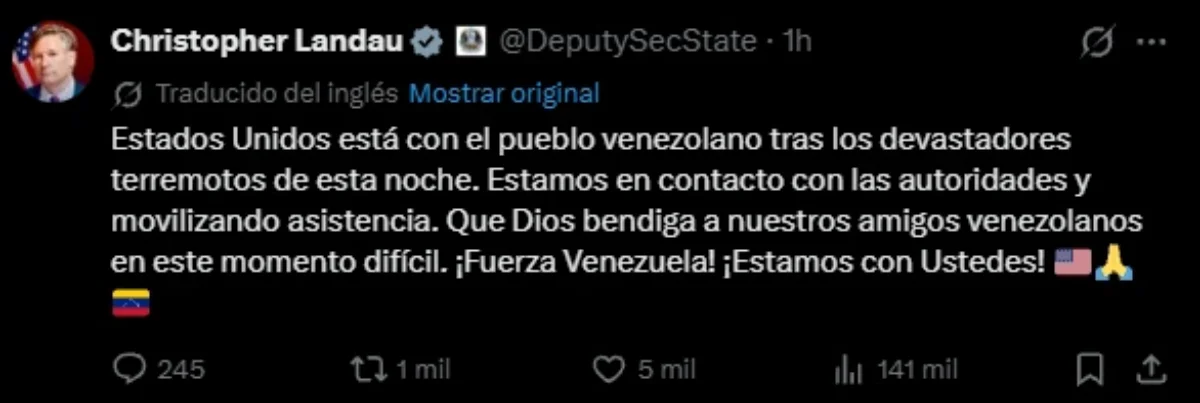
The United States also expressed its solidarity with Venezuela after the earthquakes. The Undersecretary of State, Christopher Landau, stated that Washington is “with the Venezuelan people” and assured that the U.S. government is in contact with the authorities and mobilizing assistance in response to the emergency.
In the same vein, the Secretary of Energy, Chris Wright, sent his condolences to the affected families and expressed his support for the communities hit by the disaster. Delcy Rodríguez publicly thanked the support offered by the United States and other countries, while local teams continue to assess the actual extent of the damage.
The post of U.S. Under Secretary of State, Christopher Landau
As rescue efforts progress, María Corina Machado also called for unity, strength, and solidarity in the face of the tragedy. Her message reflected the climate of anguish of millions of Venezuelans who await news from relatives, medical assistance, and answers amid an emergency that could become one of the worst natural disasters in the recent history of the country.