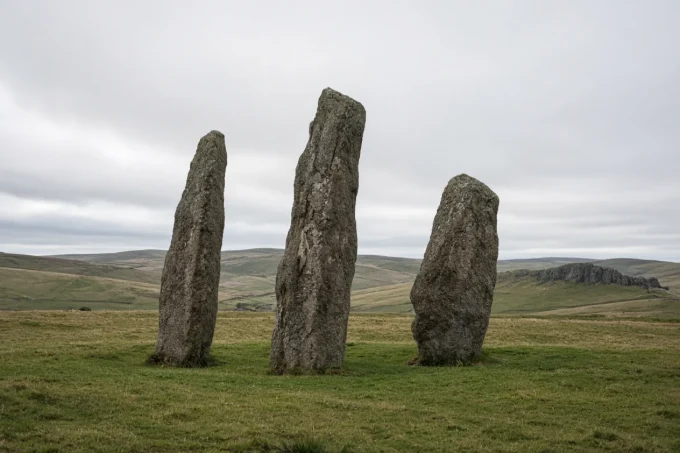
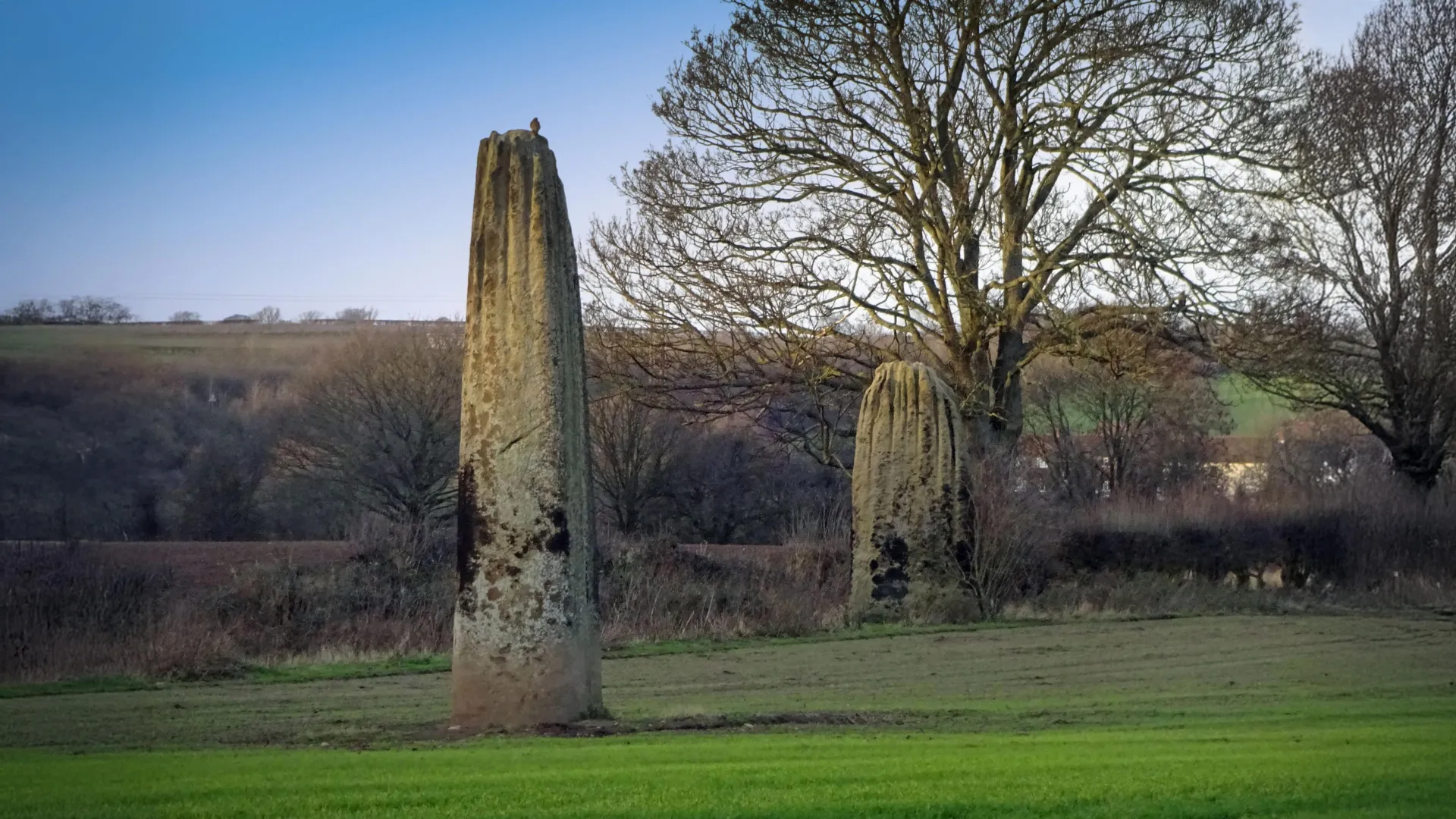
Researchers from Curtin University, in collaboration with the University of York, have identified for the first time the geological origin of the Devil's Arrows, the tallest prehistoric stone alignment preserved in Britain. The enormous rocks, each weighing over 25 tons, were transported over at least 18 kilometers from Brimham Rocks in North Yorkshire.
Located near Boroughbridge in northern England, these stones rise up to seven meters high and form an unusual set in a lowland landscape. Until now, it had not been possible to accurately determine where they came from, although closer sources had been speculated.
The study places the transport and elevation of the stones in the late Neolithic or early Bronze Age, likely around 2000 B.C. The finding highlights impressive prehistoric engineering work and suggests that the choice of the origin site was not random.
Dr. Anthony Clarke, the lead author of the work and a member of the Temporal Scales of Mineral Systems group at Curtin's School of Earth and Planetary Sciences, explained that the results challenge previous ideas about the decisions of ancient communities when constructing large-scale monuments.
A more distant source than previously thought
For a long time, it was believed that the stones came from Plumpton Rocks, a closer site. However, the analysis demonstrated that the actual source is Brimham Rocks, a rocky and rugged landscape located about 18 kilometers away. “Our research shows that these stones were not simply taken from the nearest available source: they were deliberately chosen from a challenging landscape 18 kilometers away,” said Clarke.
Each block exceeds 25 tons, so their transport would have required extraordinary planning, coordination, and technical skill. According to the researcher, this reveals that people of the time placed real value on the landscape itself. It was not just about convenience: the place of origin likely held cultural or spiritual significance for them.
Dr. Jim Leary, co-author from the University of York, emphasized that the results change the way we interpret the construction of prehistoric monuments. “These findings show that ancient communities made deliberate and meaningful decisions about the origin of their stones,” he noted. He highlighted the importance of the landscape and shared belief systems, in addition to the remarkable effort involved in transporting and erecting rocks of that size.
To determine the origin, the team used a low-impact sampling technique. They collected tiny mineral grains from the stones using adhesive tape without damaging the monument. They then analyzed the age “fingerprints” of those grains and compared them with geological samples from possible origin sites. The results matched Brimham Rocks and allowed for the dismissal of natural explanations such as glacial transport. This confirms that the stones were intentionally moved by people.
New clues about ancient engineering
Clarke indicated that they now plan to apply the same non-invasive technique to other standing stones whose origin remains uncertain. They also hope to conduct focused excavations both at the Devil's Arrows and at the newly identified origin area. “These next steps could help us better understand when the stones were moved and how these extraordinary monuments were constructed,” he explained.
Justin Scully, general manager of the National Trust for Fountains Abbey & Studley Royal and Brimham Rocks, valued the discovery because it establishes a direct connection between both distinctive landscapes of Yorkshire. He thanked the researchers for revealing a new chapter in the history of the stones and for deepening the understanding of the people who shaped that territory thousands of years ago. “The Devil's Arrows are deeply appreciated by local communities, and we are pleased that this finding adds a new chapter to their history,” he stated.
The work, titled “Deliberate Prehistoric Sourcing of the Devil’s Arrows, Britain’s Tallest Stone Row,” was published in the journal Proceedings of the Royal Society A. The study not only clarifies the material origin of one of the most imposing monuments of British prehistory but also underscores the symbolic value of the landscape in the decisions of ancient societies.