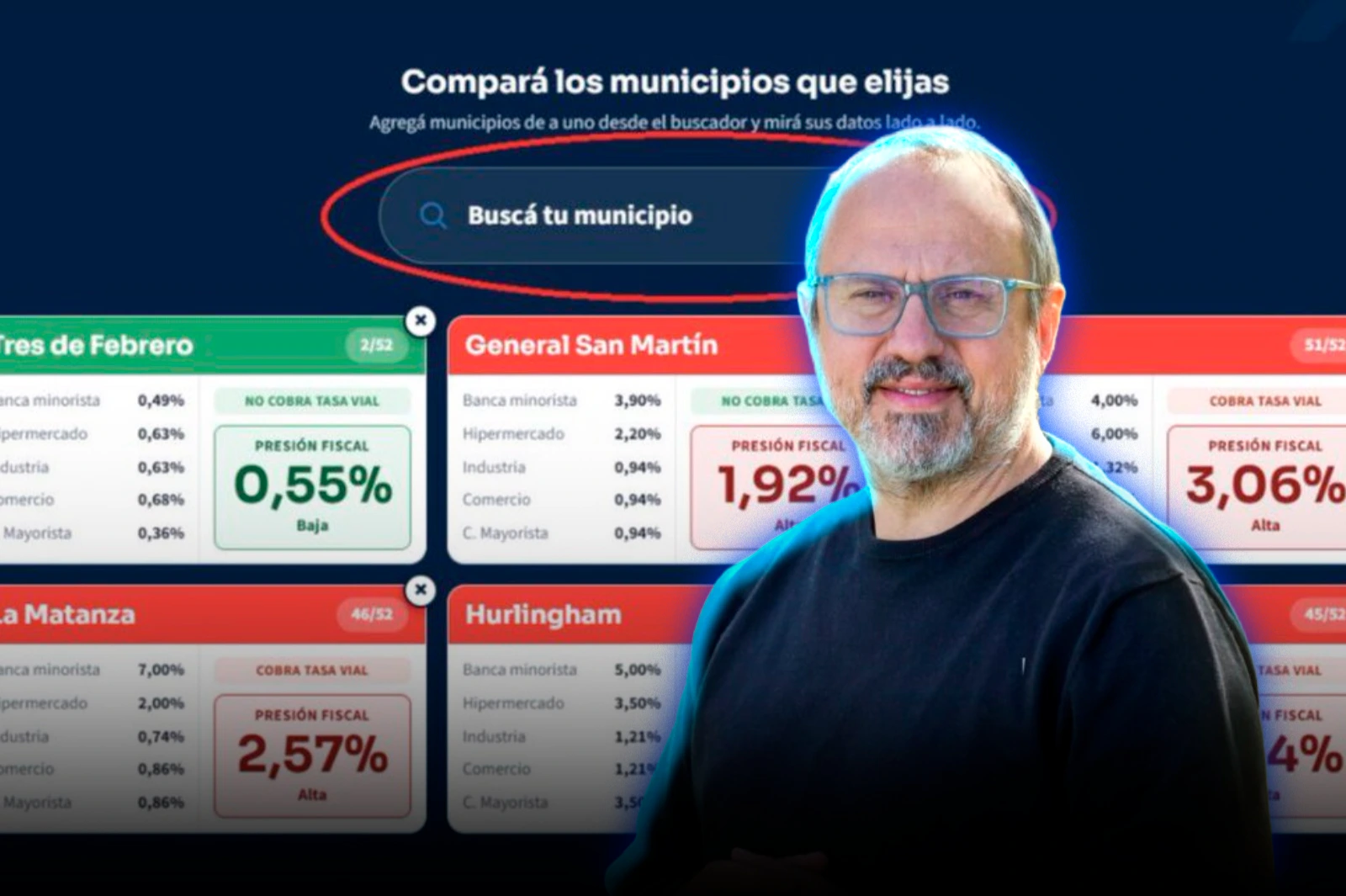
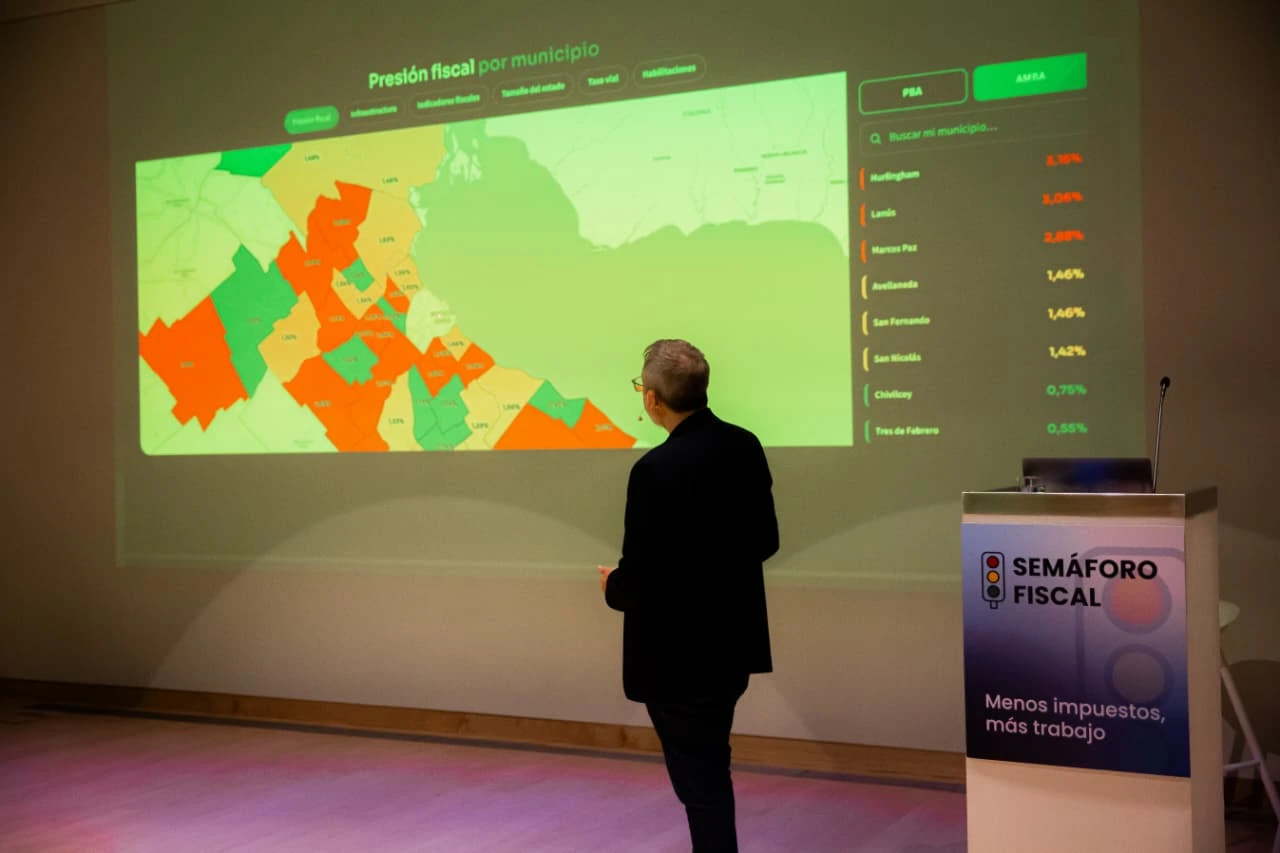
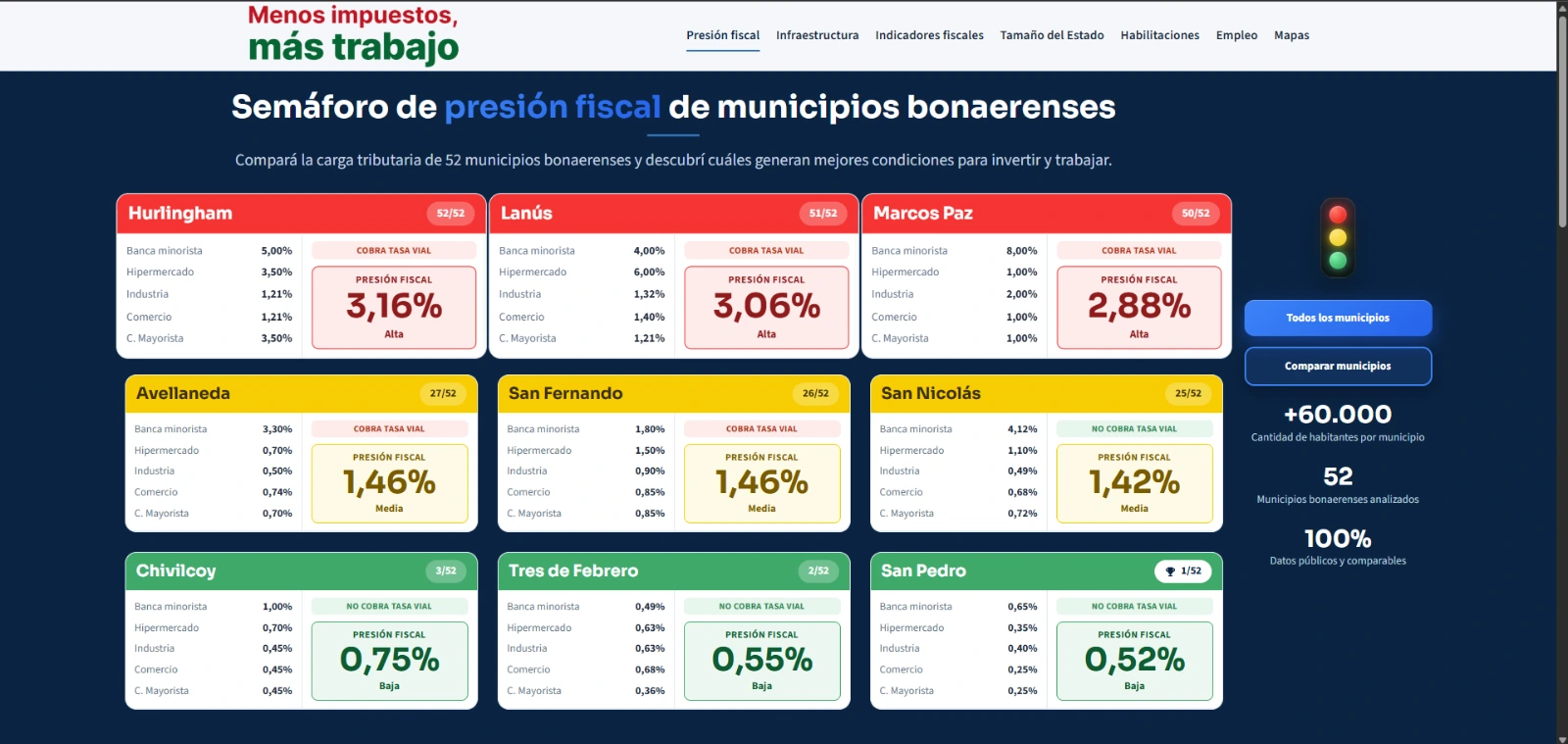
One of the main indicators measures the municipal tax pressure through the average of the nominal rates applied to retail banking, hypermarkets, industry, retail trade, and wholesale trade. Additionally, it incorporates adjustments when municipalities charge Road Tax or licensing fees.
The municipality of Tres de Febrero, where Valenzuela was mayor, was one of the best positioned.
The best results were for San Pedro, with a tax pressure of 0.52%, followed by Tres de Febrero, with 0.55%, and San Nicolás, with 0.75%. None of these three municipalities charge Road Tax.
At the opposite end are Hurlingham, with 3.16%; Lanús, with 3.06%; and Marcos Paz, with 2.88%. All three charge Road Tax and have rates exceeding 1%.
The Fiscal Traffic Light also allows for comparisons of infrastructure, public employment, size of the State, private employment, licenses, and fiscal indicators. In terms of water, gas, and sewage coverage, Vicente López led with 92.46%, followed by Tres de Febrero with 90.02% and San Isidro with 89.36%.
less taxes.com.ar
The initiative is part of the discussion promoted by Milei's Government for provinces and municipalities to support the reduction of national tax pressure, at a time when several local administrations maintain rates that directly impact investment, production, and employment.
The complete platform can be consulted at menosimpuestos.com.ar, where users can access the interactive map, compare different municipalities, and review in detail the indicators of tax pressure, rates, public employment, infrastructure, licenses, and size of the State.
The provincial senator and economist Diego Valenzuela presented the Fiscal Traffic Light, a new digital platform that compares the tax burden and various management indicators of 52 municipalities in Buenos Aires with more than 60,000 inhabitants, with the aim of identifying which districts impose greater burdens on merchants, businesses, and residents.
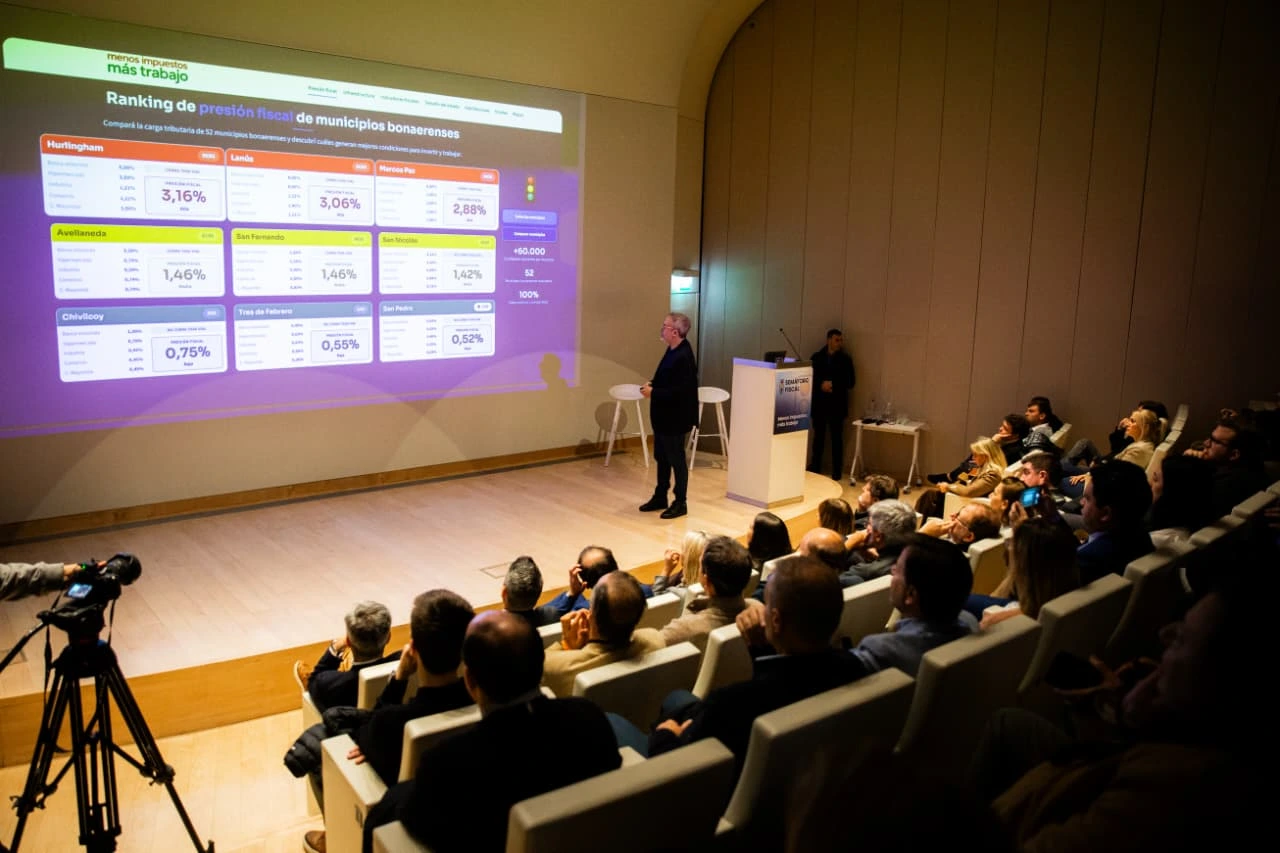
The tool is part of the project "Less taxes, more jobs" and was developed over a year alongside economists and tax specialists. The presentation took place at the Auditorium of the Macro Tower and included the participation of national senator Patricia Bullrich, as well as businesspeople, legislators, and specialists.
Diego Valenzuela spoke at the auditorium of the Torre Macro
“This initiative is designed so that merchants, business owners, and residents know where their wallets are protected and where it is not advisable to invest or create jobs,” Valenzuela explained.
The legislator also stated that he personally presented the initiative to President Javier Milei, who, according to him, received it “with great enthusiasm and interest.” Valenzuela maintained that municipal governments must abandon a model limited to collecting fees and begin to compete for investments through lower taxes and less bureaucracy.
Bullrich directly linked the initiative to the direction taken by the national Government. “This traffic light shows us two models of the State: one that lives off collecting more and more fees, and the other that understands that the State should try to step back as much as possible and not obstruct,” she stated.