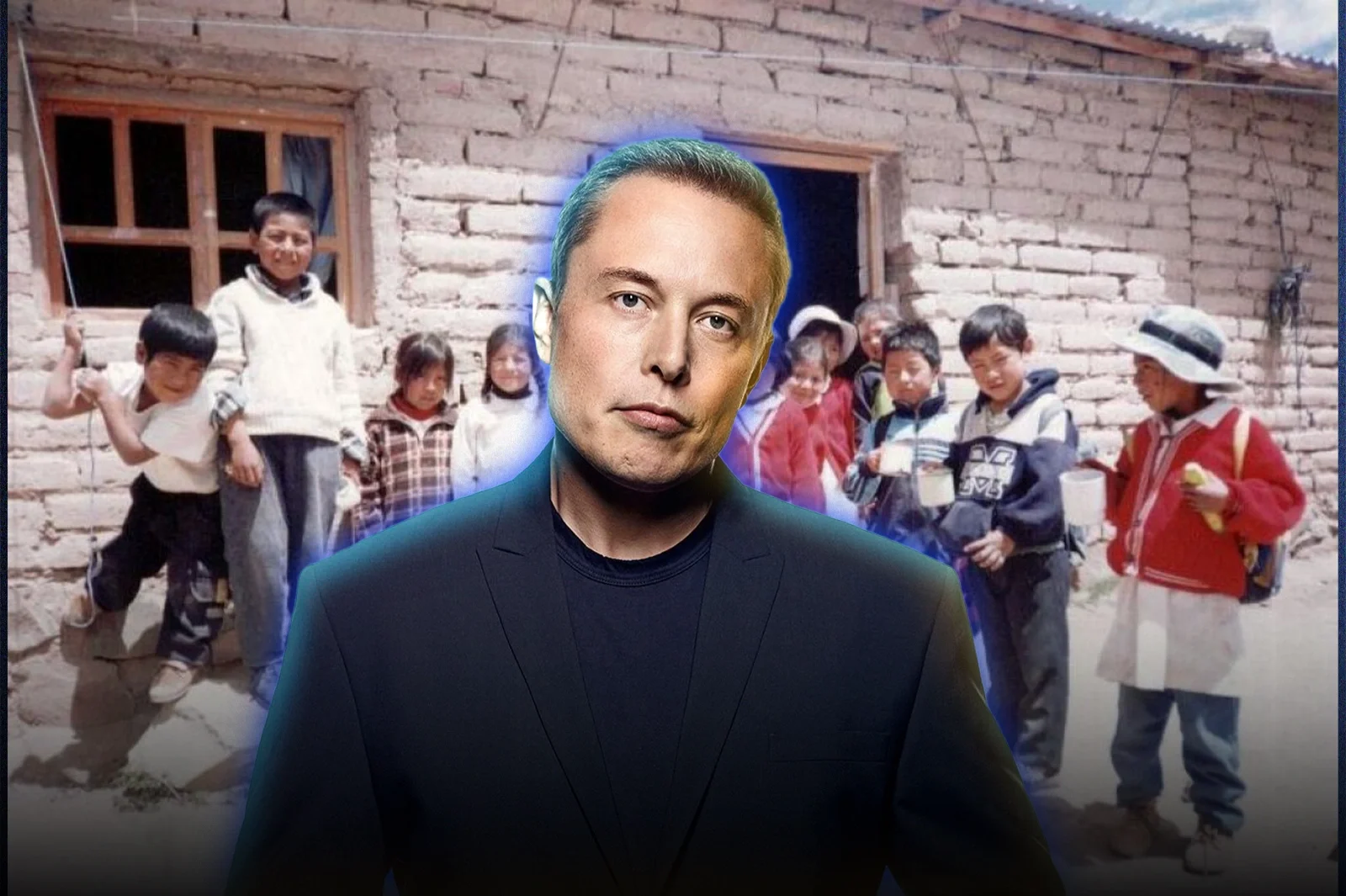
Elon Musk highlighted the progress of Starlink in Bolivia, after the company announced that it is already providing high-speed satellite internet to more than 1,000 people, including students and teachers from 14 schools in the country. The initiative marks a concrete step to reduce the digital divide in rural areas, where for years access to a stable connection has been limited or directly nonexistent.
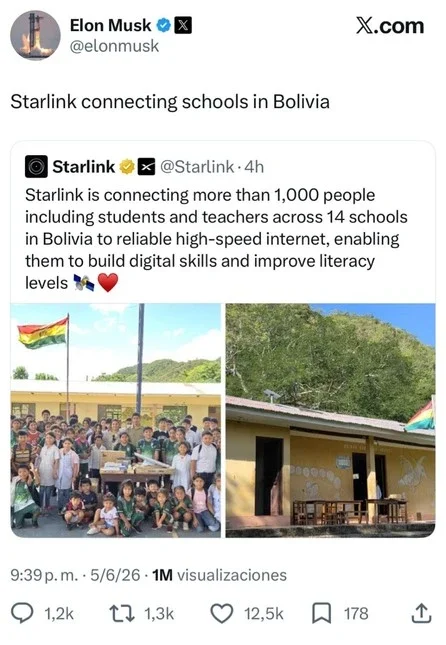
The entrepreneur shared on his X account an official post from Starlink and celebrated the deployment with a brief phrase: “Starlink connecting schools in Bolivia”. The message quickly generated a response as it is one of the first visible advances of the company in the Bolivian education system, historically lagging due to the socialist policies of Evo Morales.
Elon Musk's post on the social network X
According to the company, the service allows students and teachers to access reliable high-speed internet, with the aim of strengthening digital skills and improving literacy levels. In communities far from major urban centers, this type of connectivity can make a huge difference: access to educational content, teacher training, digital tools, and communication with the rest of the country.
The arrival of Starlink in Bolivia occurred after the approval of Supreme Decree 5509, promoted by the government of President Rodrigo Paz, which enabled the implementation of telecommunications services via low Earth orbit satellites. The regulation opened the door for companies like Starlink, OneWeb, and Amazon's Project Kuiper to enter, complementing the coverage offered by the state-owned Entel.
The decision represented a significant shift for a country that has been struggling with serious connectivity issues, especially in rural and hard-to-reach areas. For years, Bolivia relied on state schemes and restrictions on international operators, with insufficient results to address technological lag.
The arrival of Starlink was made possible by a decree from Rodrigo Paz
The Bolivian government itself had stated that connectivity should be considered practically a basic service, on the same level as water, sewage, or electricity. Under this logic, the opening to satellite internet aims to reach children, young people, producers, and entrepreneurs who need modern tools to study, work, and access new markets.
The arrival of Starlink to rural schools also shows the progress that private investment can have when bureaucratic hurdles are reduced and technology companies are allowed to compete. In the face of years of unfulfilled state promises regarding digital inclusion, satellite technology and private capital have brought real solutions.