
They excavate a funerary complex near the Egyptian Mediterranean coast

They excavate a funerary complex near the Egyptian Mediterranean coast
Imagen de Editorial Team
porEditorial Team
Argentina

Findings at Tell El-Deir reveal a site used from the Late Period until the end of the Roman era, with stelae and objects that blend Egyptian and Greco-Roman traditions

Add La Derecha Diario on
Share:

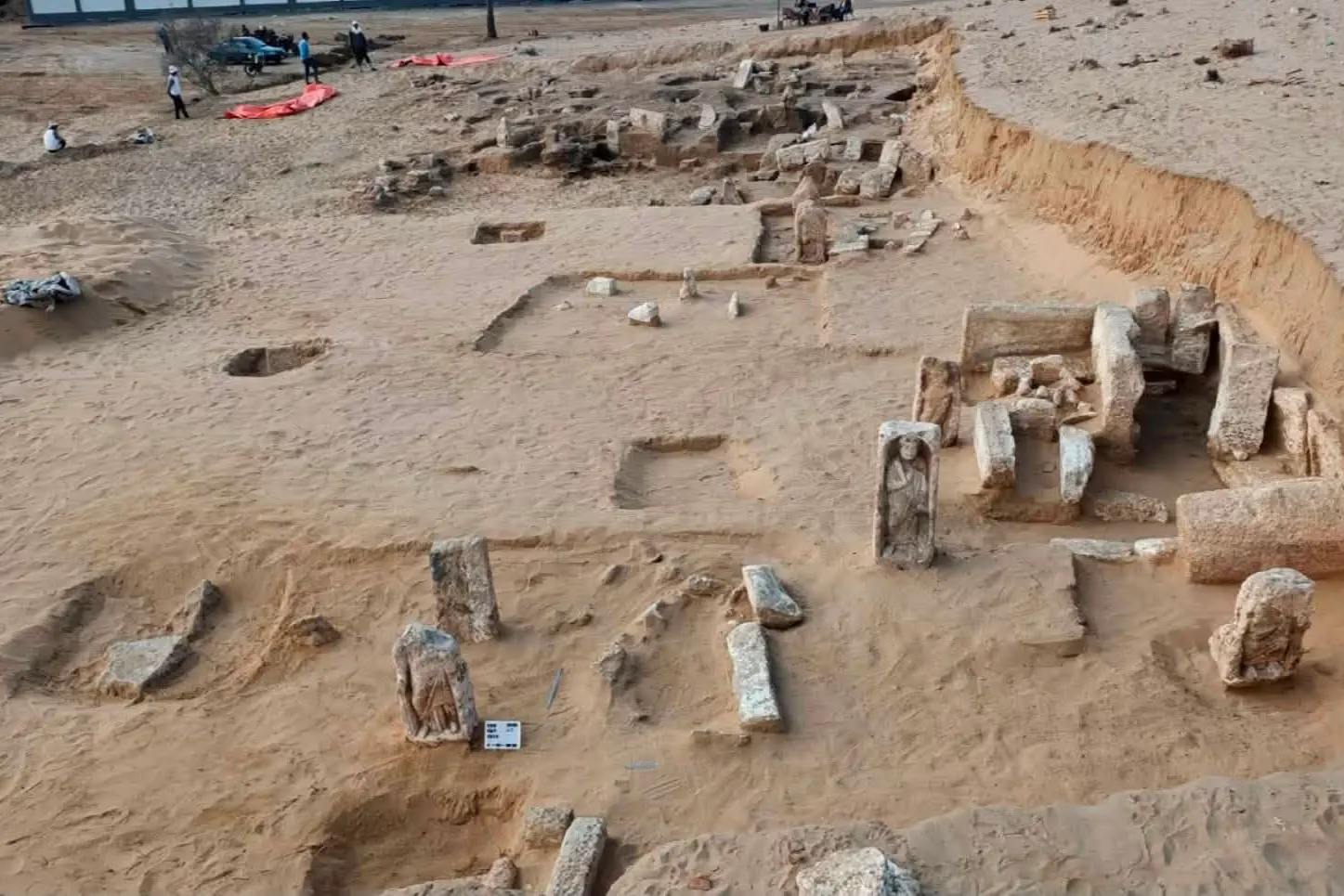
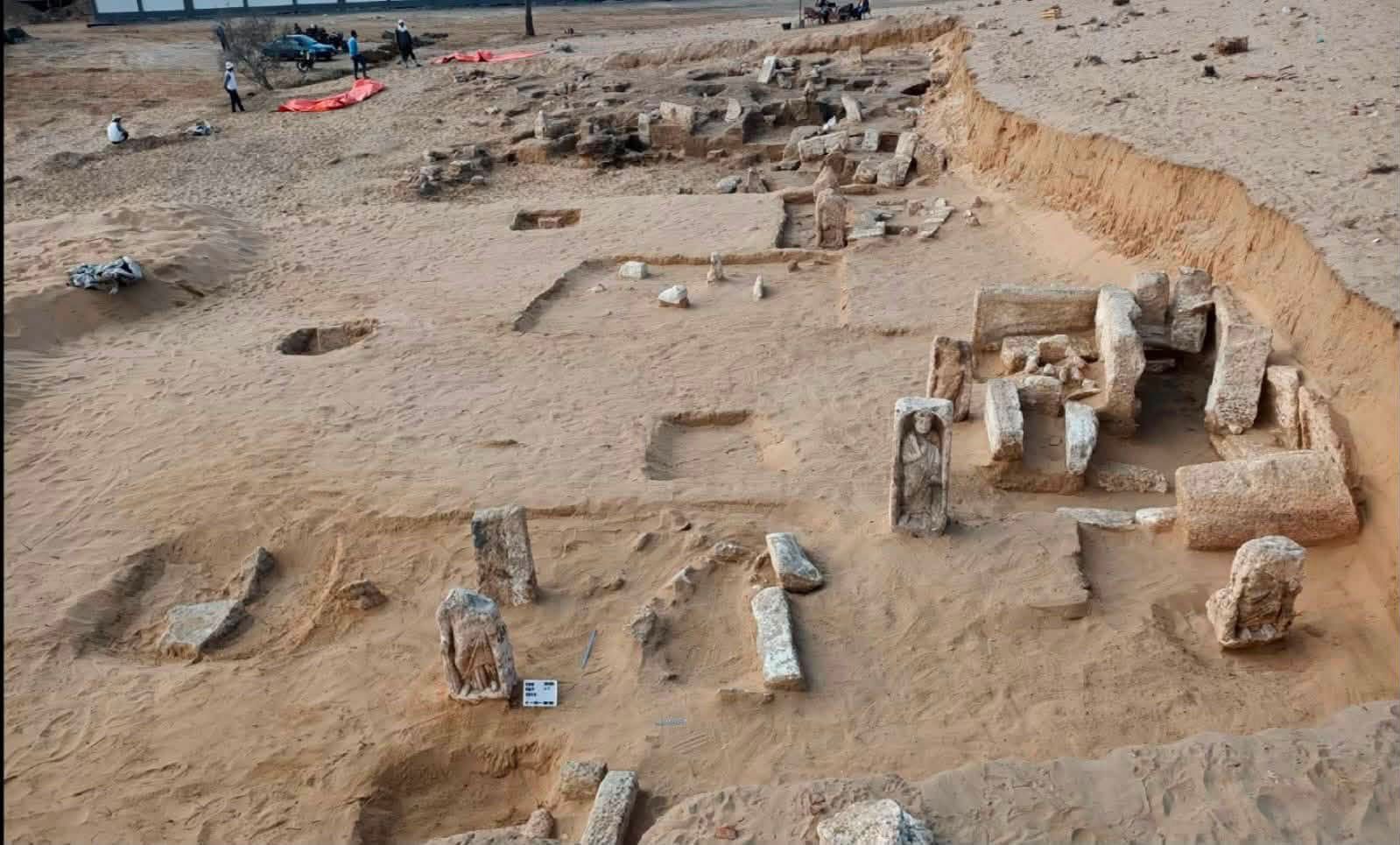
A team of archaeologists discovered a funerary complex in the eastern Nile delta, near Egypt's Mediterranean coast. The site, located in Tell El-Deir, in the Damietta area, was in use for a long period ranging from the Late Period to the end of the Roman era, approximately between 712 BC and 641 AD.

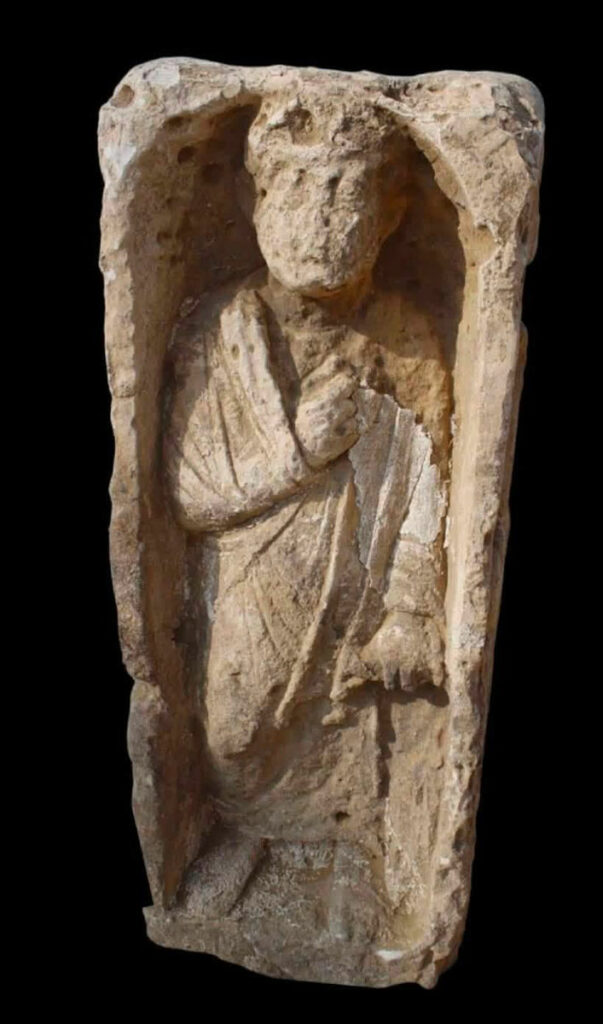
The information comes from a report by Ahram Online and was confirmed by officials from Egypt's Supreme Council of Antiquities. Hisham El-Leithy from the organization explained that twenty limestone funerary stelae were recovered at the site, intricately carved and depicting human figures.

These stelae feature engravings on the sides and back that combine elements of Egyptian tradition with those of Greco-Roman style. According to El-Leithy, this mix reflects the cultural contact that characterized the region for centuries.

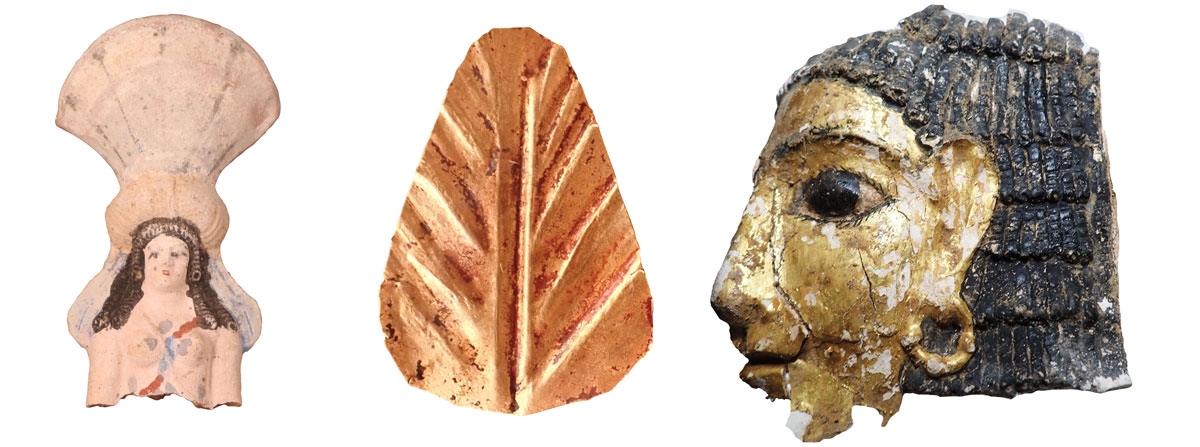
Mohamed Abdel Badie, also from the Supreme Council of Antiquities, indicated that the team unearthed a large number of objects associated with funerary rituals. Among them are ceramic incense burners, decorated oil lamps, barrel-shaped coffins made of pottery, and funerary amulets.
News - Funerary Complex Excavated Near Egypt’s Mediterranean Coast - Archaeology Magazine

A site of prolonged use in the eastern delta

The finding at Tell El-Deir provides concrete data on funerary practices in a part of the Nile delta that was occupied for over a thousand years. The period of use of the complex spans from late pharaonic times to the end of Roman rule in Egypt.

The limestone stelae are one of the most notable discoveries. They are finely carved and represent human figures, allowing observation of both the artisans' technique and the beliefs associated with death and the afterlife during that historical stage.
News - Funerary Complex Excavated Near Egypt’s Mediterranean Coast - Archaeology Magazine

The presence of Egyptian motifs alongside Greco-Roman elements in the same pieces shows how local traditions adapted and incorporated external influences without losing their own identity. This cultural fusion is one of the most interesting characteristics of the collection.

Ceramic objects, such as incense burners and decorated lamps, point to rituals that included offerings and the use of scents during ceremonies. The barrel-shaped coffins and amulets complete the picture of a complex designed to accompany the deceased in their transition.

Importance of the discovery for Egyptian archaeology

The excavation work at Tell El-Deir is part of the systematic investigations that the Supreme Council of Antiquities conducts in the eastern delta. The Damietta area, close to the Mediterranean, offers a particular geographical context that influenced cultural exchanges over time.

News - Funerary Complex Excavated Near Egypt’s Mediterranean Coast - Archaeology Magazine - image 2

The officials behind the discovery emphasized the quality of the recovered pieces. The twenty stelae stand out for their careful carving and the information they provide about the funerary iconography of the time. At the same time, the quantity of ritual objects indicates that the site had constant activity for centuries.

Such discoveries allow for the reconstruction of aspects of daily life and the beliefs of the communities that inhabited the Nile delta during periods of political and cultural change. The continuity of use of the complex, from the Late Period to the end of the Roman era, illustrates that stability despite historical transformations.

Specialists will continue to study the recovered material to obtain more details about manufacturing techniques, artistic styles, and possible external influences reflected in the pieces. The collection of stelae, ceramics, and amulets constitutes a valuable testimony of funerary practices in northern Egypt.


La Derecha Diario logo
TwitterInstagramYouTubeTikTokFacebook
Derecha Diario TV

Nosotros

  • Quienes Somos
  • Autores
  • Donar

Privacidad

  • Protección de datos
  • Canales
  • Sitemap
  • RSS

Contacto

  • info@derechadiario.com.ar
PUBLICIDAD
La Derecha Diario logoLa Derecha Diario logo
ESX logoInstagram logoYouTube logoTikTok logoFacebook
ARGENTINAUNITED STATESECUADORISRAELMEXICODERECHA DIARIO TV
  • ES
    XInstagramYouTubeTikTokFacebook
  • DERECHA DIARIO TV
  • Sections
  • ARGENTINA
  • UNITED STATES
  • ECUADOR
  • ISRAEL
  • MEXICO
  • URUGUAY
  • Countries
  • La Derecha Diario logoLA DERECHA DIARIO
  • La Derecha Diario México logoLA DERECHA DIARIO MÉXICO
  • La Derecha Diario Uruguay logoLA DERECHA DIARIO URUGUAY
  • La Derecha Diario Ecuador logoLA DERECHA DIARIO ECUADOR
  • La Derecha Diario Israel logoLA DERECHA DIARIO ISRAEL
  • La Derecha Diario Estados Unidos logoLA DERECHA DIARIO ESTADOS UNIDOS
  • Topics
  • GUERRA EN IRÁN
  • The Newspaper
  • QUIENES SOMOS
  • AUTORES
  • PUBLICIDAD
  • DONAR

Related news

Lula's regime has once again allowed visits to Bolsonaro, but intends to censor his conversations

Lula's regime has once again allowed visits to Bolsonaro, but intends to censor his conversations

Russia recalled its ambassador to the United Kingdom and deepens the diplomatic crisis with London

Russia recalled its ambassador to the United Kingdom and deepens the diplomatic crisis with London

Peter Lamelas called to replace Chinese technology in Vaca Muerta

Peter Lamelas called to replace Chinese technology in Vaca Muerta

Democrat John Fetterman once again endorsed Trump's strategy to accelerate the US race in AI

Democrat John Fetterman once again endorsed Trump's strategy to accelerate the US race in AI

Economic D-Day: Trump launched the "most destructive operation in history" to collapse the Iranian regime

Economic D-Day: Trump launched the "most destructive operation in history" to collapse the Iranian regime

The U.S. justice system ruled against California regarding federal rules on ''ghost guns''

The U.S. justice system ruled against California regarding federal rules on ''ghost guns''