Amid growing concerns about the cybersecurity of sports institutions, FIFAconfirmed that it was the victim of a cyberattack that allowed unauthorized access and theft of personal and corporate information. The governing body of world football acknowledged the incident and stated that it is already working with security forces to clarify what happened, although it has not yet specified which documents were compromised or how many people may be affected.
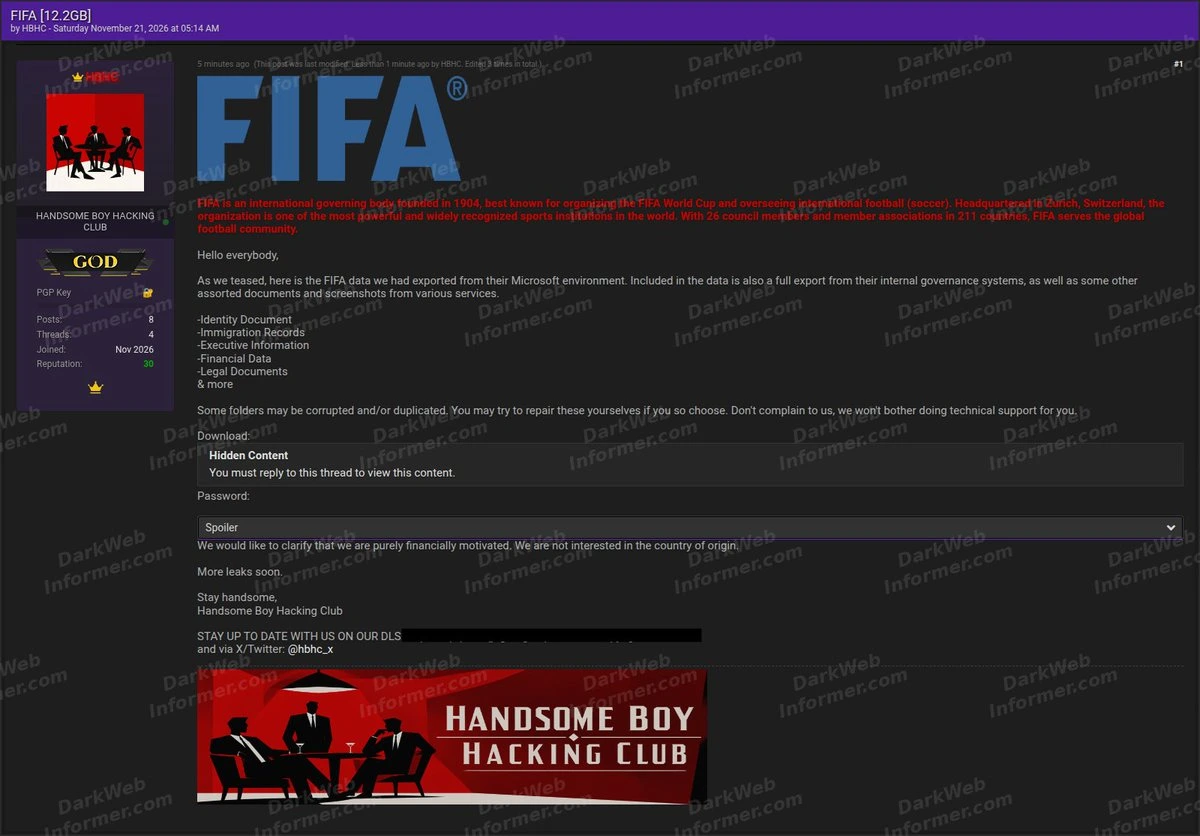
The leak came to light after the group known as Handsome Boy Hacking Club (HBHC) claimed responsibility for the attack. On November 19, the alleged perpetrators published a screenshot on X with files they claimed belonged to the international entity. Subsequently, they also claimed to have obtained more than 12 gigabytes of confidential information and demanded payment of a ransom to prevent the dissemination of the material.
HBHC's announcement about its FIFA hack
Among the documents that the cybercriminals claim to have stolen would be personal and immigration identifications, information about executive leadership members, financial records, legal documentation, and files related to internal governance. However, FIFA has not yet officially confirmed the content or the totality of the data that may have fallen into the hands of the attackers.
Through a statement, a spokesperson for the organization acknowledged the intrusion: "FIFA confirms that it has been the victim of a criminal cyberattack that has resulted in unauthorized access to a limited set of personal and corporate information". Additionally, it confirmed that it is in contact with the relevant agencies to advance the investigation.
The entity also expressed its rejection of the acquisition and subsequent publication of the files without authorization. "FIFA condemns in the strongest possible terms the unlawful acquisition and publication of information, particularly personal data", it stated. And warned: "Such actions constitute a serious and unacceptable violation of privacy and can have significant consequences for the affected individuals".
Despite the seriousness of the episode, the organization sought to downplay the extent of the breach. According to sources from the institution, the compromised information would represent less than 0.1% of the total volume of data managed by FIFA. They also noted that among the stolen files, there would be no documentation related to the FIFA Forward Enterprise (FFE) project, an initiative that was ultimately abandoned.
FIFA confirmed that it was hacked
Another point that the investigation seeks to clarify is the methodology used to access the systems. According to consulted sources, the attackers allegedly resorted to impersonating employees through phishing or social engineering techniques, rather than exploiting a technical flaw in the IT infrastructure. On the other hand, it has not been determined whether they were seeking specific information about President Gianni Infantino or Secretary General Mattias Grafstrom, although the organization maintains that the target was likely the institution as a whole.
FIFA is not the only football institution that has faced cybersecurity issues in recent months. In early November, LaLiga in Spain reported that an unauthorized person had managed to access one of its digital platforms and steal personal data from fans. Meanwhile, the Argentine Football Association (AFA) opened an investigation in July to determine whether its systems had been compromised after journalists received suspicious emails.
For now, the challenge for the international organization is to establish the real magnitude of the leak, identify those responsible, and prevent the stolen information from being used for extortion or commercial purposes. The investigation continues with the collaboration of authorities and law enforcement, while FIFA tries to contain the consequences of an attack that has once again put the protection of data in world football under scrutiny.