The measure will grant additional amounts of up to 25% depending on the level of education and is part of the professionalization and strengthening plan for the Armed Forces promoted by Javier Milei
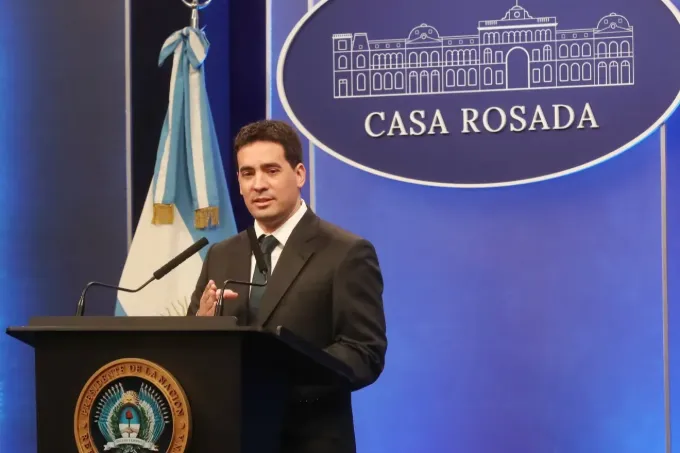
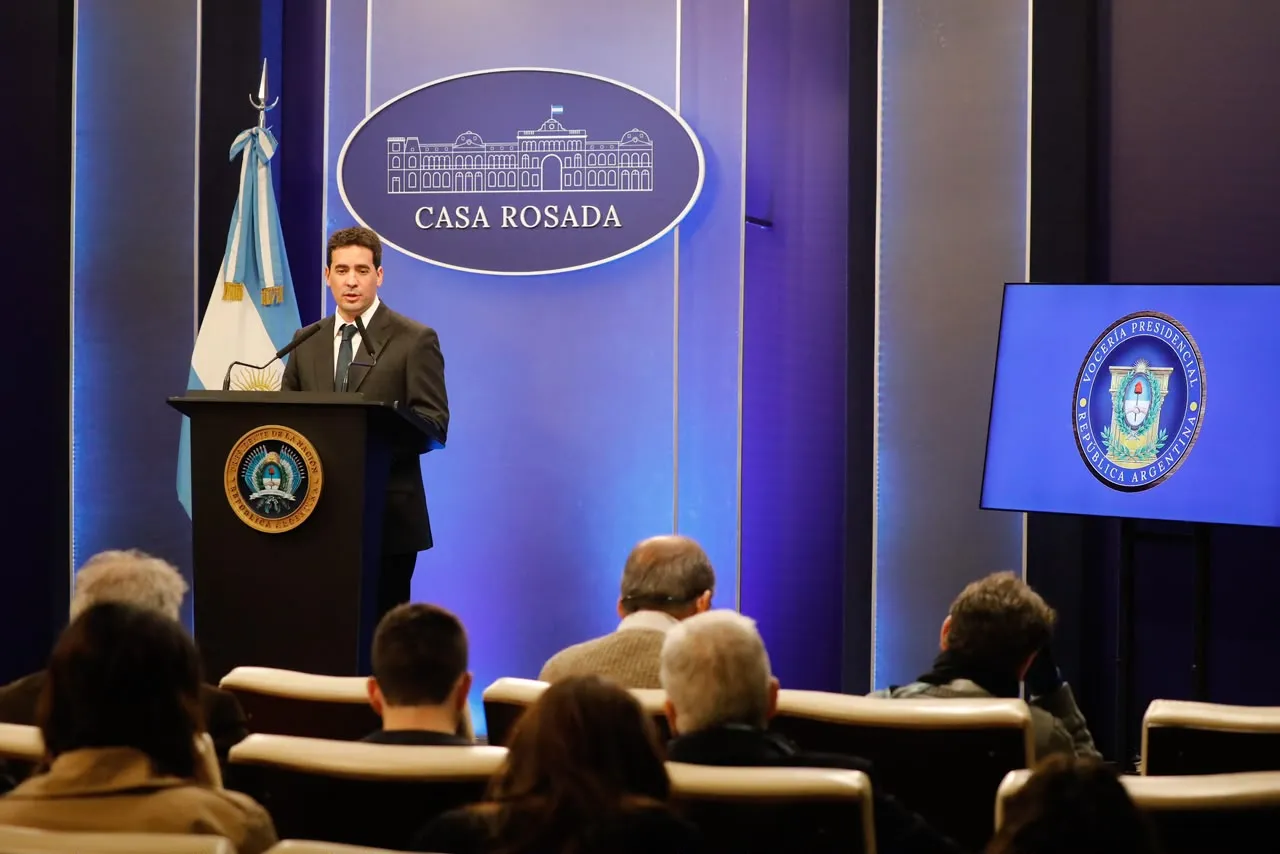
The presidential spokesperson Adrián Ravier announced on Tuesday the creation of a new academic training supplement program for Armed Forces personnel, a measure aimed at recognizing the professional training of military personnel and strengthening the human capital of defense institutions.
During his press conference, Ravier also reviewed the main economic indicators of Javier Milei's administration, highlighting the decrease in inflation, record growth in exports, expansion of the capital market, and new investments in health and infrastructure.
A recognition of the professionalization of the Armed Forces
The new scheme establishes that military personnel will receive a supplement on the gross salary corresponding to their rank, according to the level of training achieved.
The supplements will be 10% for those with a technical degree, 15% for those with an undergraduate university degree, and 25% for those with postgraduate studies.
Ravier stated that the initiative is part of the process of rebuilding the Armed Forces driven by the national Government.
A recognition of the professionalization of the Armed Forces
"This increase represents a recognition of the effort to deepen and professionalize the military instrument", he affirmed.
He also emphasized that "when public spending is managed carefully, more can be invested in the human capital of our Forces", stressing that military strengthening does not solely depend on the acquisition of new equipment but also on the ongoing training of personnel.
The Government highlighted the decrease in inflation
During the conference, the spokesperson also highlighted the latest economic indicators and stated that the Government continues to consolidate the stabilization process.
As he explained, the Consumer Price Index (CPI) for June was 1.9%, the lowest record for 2026.
"We have broken the 2% inertia, something we were waiting for, and we have finally achieved it", he stated.
Additionally, he noted that core inflation fell to 1.6%, while the Wholesale Price Index (WPI) stood at 1.1%, indicators that, according to the Government, reflect the consolidation of the economic program.
Record exports and growth of SMEs
Ravier stated that the economic model promoted by President Milei is based on private investment and export growth.
In this regard, he reported that during the first half of 2026 Argentinian exports reached US$ 49 billion, marking a growth of 24% compared to the same period in 2025 and establishing a new historical record.
Record exports and growth of SMEs
He also highlighted the performance of small and medium-sized enterprises.
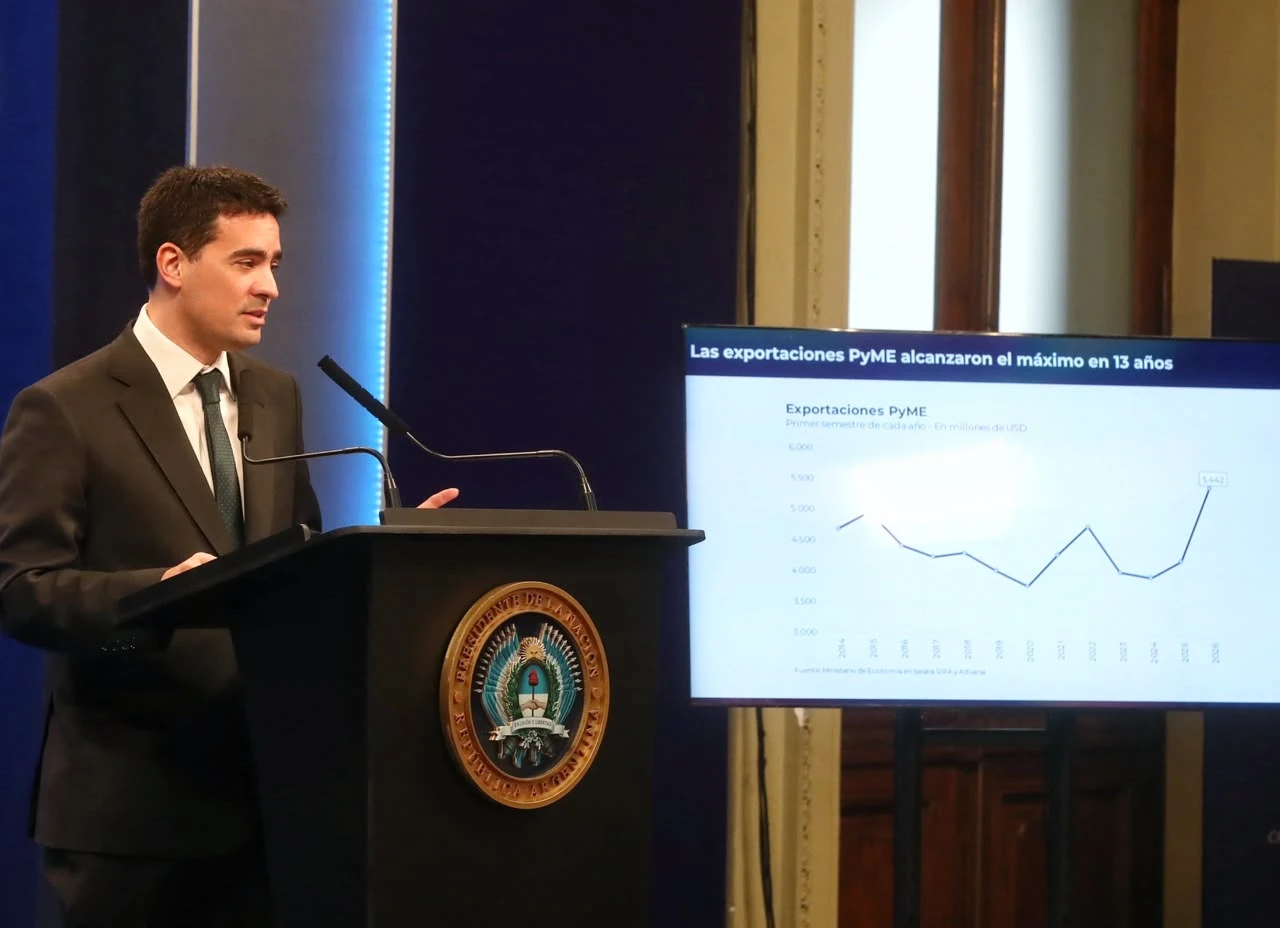
SMEs exported US$ 5.442 billion during the first half, the largest volume recorded for that period in the last thirteen years.
Furthermore, he indicated that there are currently 6,145 exporting SMEs, a 7% increase from 2023, a result attributed to macroeconomic stability, deregulation, and economic opening policies.
More financing and new public investments
The spokesperson also highlighted the growth of the Argentine capital market, noting that its size has nearly doubled in the last two and a half years.
As he specified, financing reached 57.4 trillion pesos during 2025, representing a real increase of 90% compared to 2023.
Ravier explained that the reforms driven by the National Securities Commission (CNV) aim to facilitate access to credit, simplify regulations, and promote savings and investment.
On another note, he announced that the Garrahan Hospital has incorporated 18 new state-of-the-art surgical beds as part of a construction plan exceeding 35 billion pesos.
He also reported the signing of agreements between Mendoza, Salta, and the Ministry of Justice to implement the Juvenile Criminal Regime, and announced that the Ministry of Economy will present modifications to the Fiscal Innocence project in the coming hours, which will be sent to Congress.
The Government deepens its reform agenda
The announced measures are part of the national Government's strategy to strengthen institutions, consolidate economic stability, and continue promoting structural reforms.
From the professionalization of the Armed Forces to the growth of exports and the development of the capital market, Javier Milei's administration maintains that the results are beginning to reflect the impact of policies for fiscal balance, economic opening, and modernization of the State.