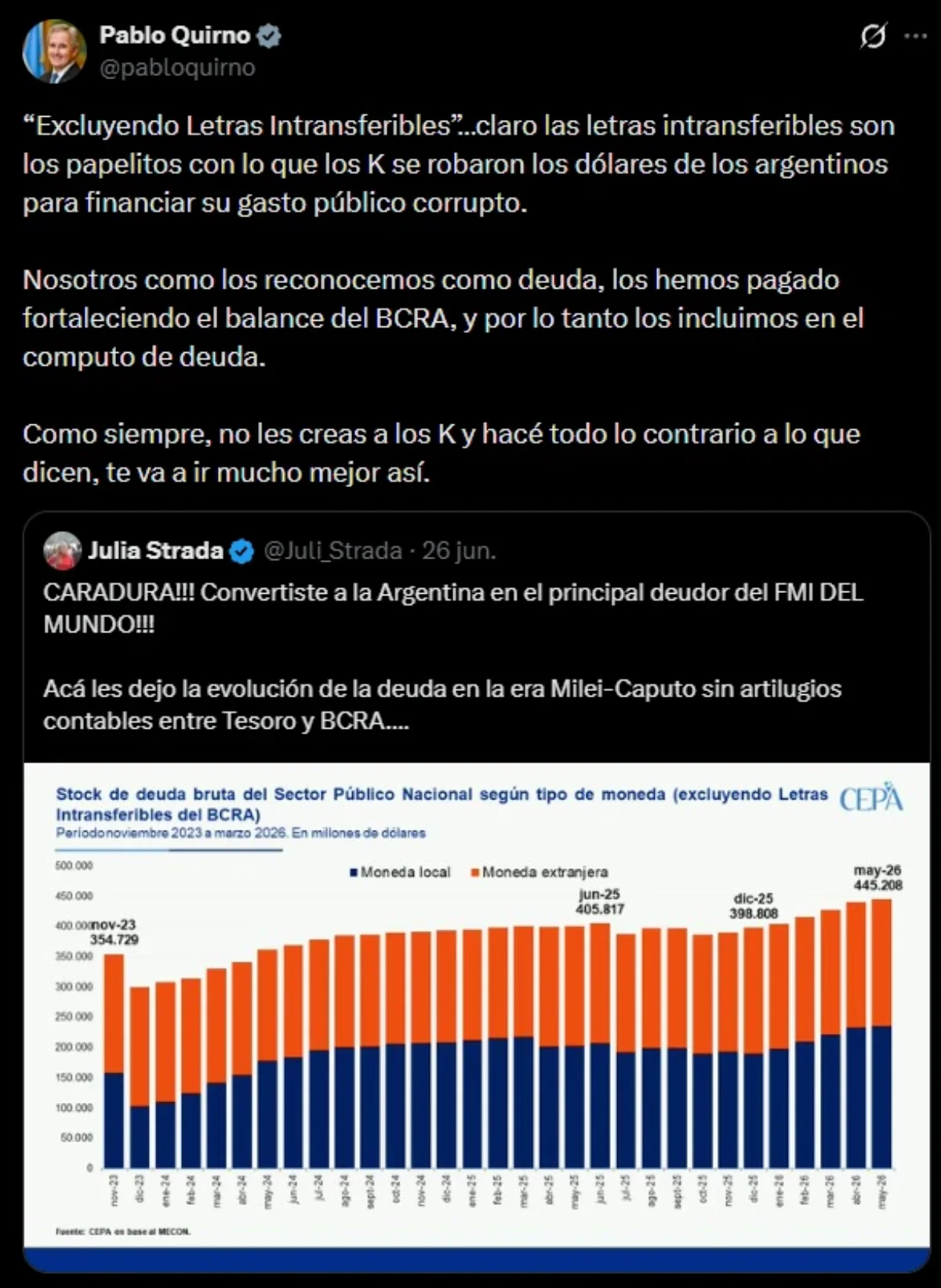

The Government exposed how Kirchnerism attempts to install a false narrative about public debt to hide the inherited deterioration in the Central Bank's balance sheet. The official response came after the ultrakirchnerist deputy from Unión por la Patria Julia Strada disseminated a CEPA graph to accuse the Minister of Economy, Luis Caputo, of having increased debt during the management of Javier Milei.
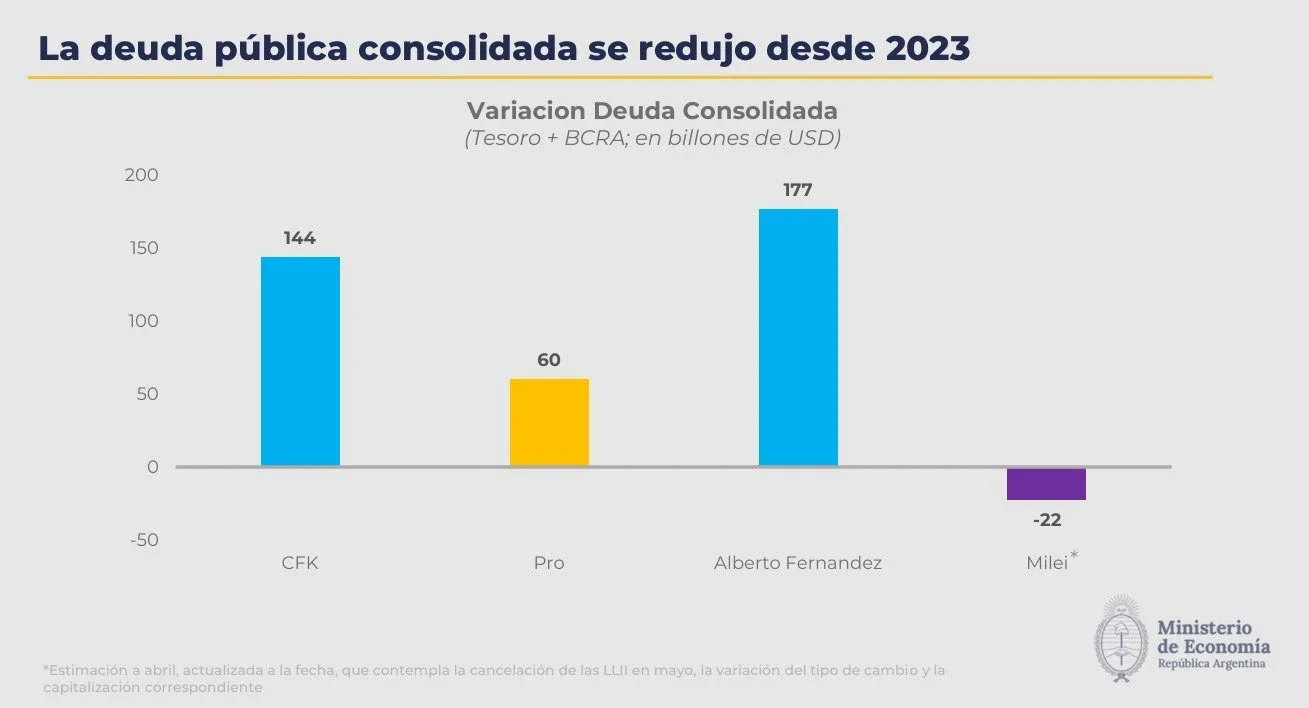
The controversy began when Caputo published a graph from the Ministry of Economy with official data followed by the phrase “all the debt is Kirchnerist.” The chart compared the variation of consolidated public debt between the Treasury and the BCRA. According to the official measurement, since 2023, consolidated debt has decreased, while during the Kirchnerist and Frente de Todos administrations, significant increases were recorded.
Strada responded with an alternative measurement that excluded the Non-Transferable Bills from the BCRA, a methodological decision that was harshly criticized by the Official Response Office. The agency argued that this way of measuring leaves out relevant liabilities of the consolidated public sector and allows presenting as new debt operations that, in reality, served to cancel liabilities of the Central Bank.
The official explanation particularly targeted the remunerated liabilities of the BCRA, which during the inherited situation generated an explosive dynamic of monetary emission. According to the Government's response, public debt cannot be analyzed without considering those liabilities, as many Treasury placements were used precisely to cancel high-rate obligations that pressured emission, inflation, and exchange rate expectations.