The Government of Javier Milei signed the concession contract for the Waterway and formally initiated the private management of the main waterway for Argentine foreign trade, a measure that will automatically trigger a 13.5% reduction in toll rates and aims to reduce logistical costs for productive sectors.
The concession is in the hands of a consortium made up of the Belgian company Jan De Nul and the national capital firm Servimagnus, which will manage the Main Navigable Waterway for the next 25 years. The European company has been maintaining the corridor for three decades.
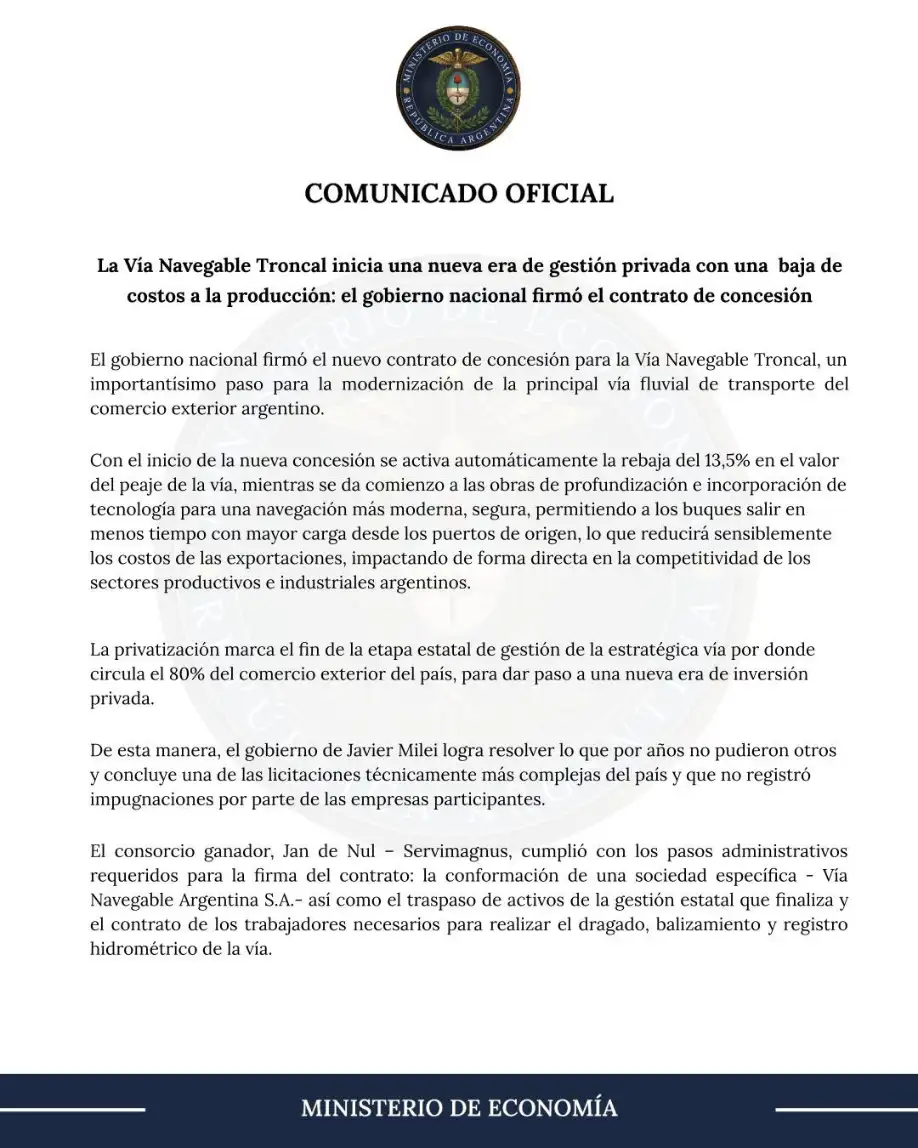
Fragment of the statement issued by the Ministry of Economy
“With the start of the new concession, the 13.5% reduction in the toll rate for the waterway is automatically activated,” reported the Ministry of Economy through a statement published on its social media.
The economic portfolio indicated that the new scheme will allow for “more modern and safe” navigation, with the goal of enabling ships to depart in less time and transport a greater amount of cargo from the ports of origin.
The deepening of the navigable waterway represents one of the main structural changes demanded for years by exporting sectors, as it will allow for an increase in the cargo transported by each vessel and reduce the number of ships needed.
According to estimates made by grain companies, the main users of the Waterway, the improvements could allow for the use of up to 230 fewer ships per year. A report from the Argentine Oilseed Industry Chamber and the Export Center for Cereals estimated that each additional foot of deepening allows for an average of about 2,200 additional tons to be loaded, depending on the product being transported.
The lack of progress in modernizing the Waterway had kept for years a scheme focused mainly on maintenance tasks, without implementing the necessary improvements for larger ships to depart with their full load.
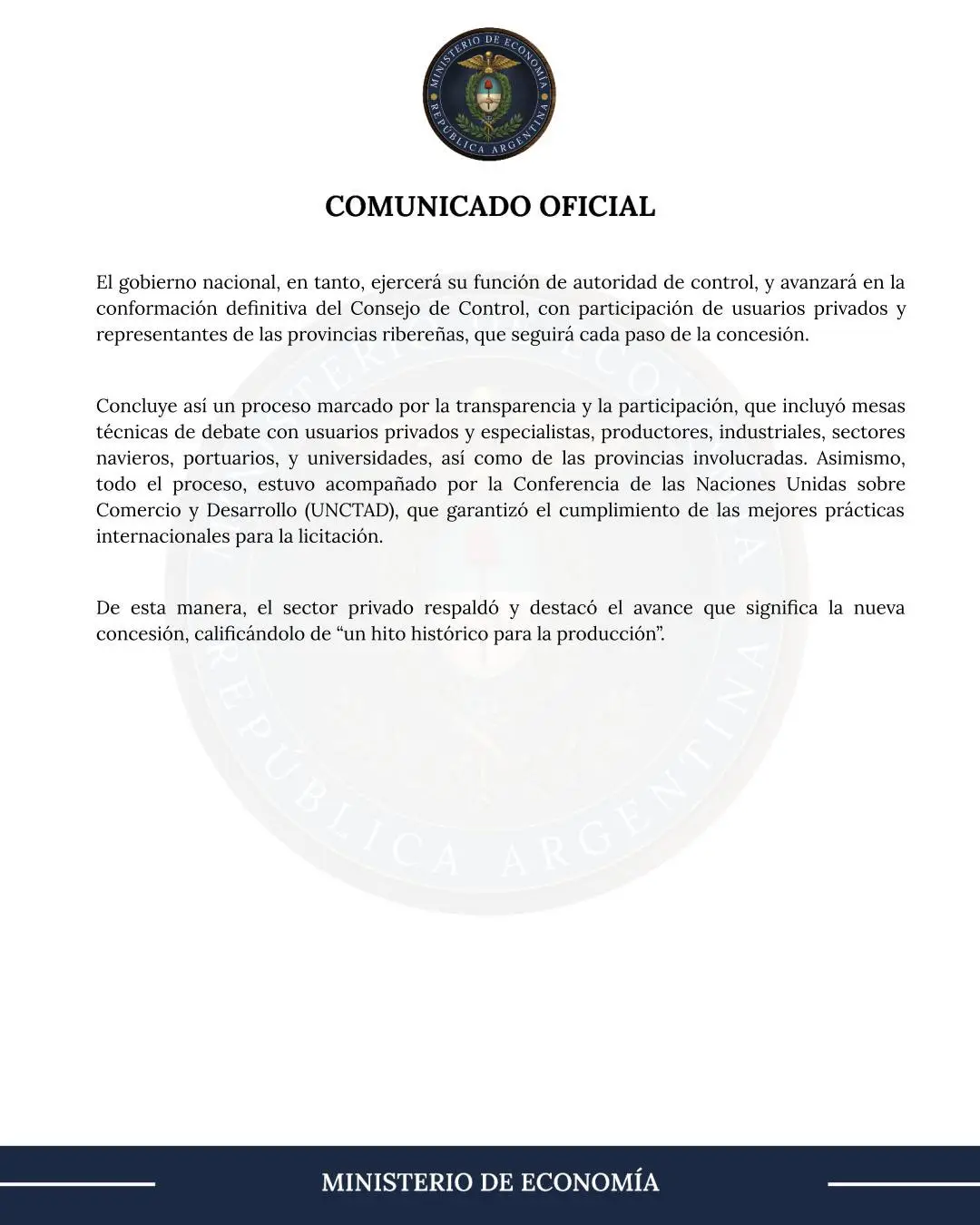
Excerpt from the statement issued by the Ministry of Economy
With the new concession, the Government seeks to change that scenario and directly reduce export costs. “It will significantly reduce export costs, directly impacting the competitiveness of Argentine productive and industrial sectors,” emphasized the Ministry of Economy.
The Milei administration will maintain its role as the controlling authority and will advance in the definitive formation of the Control Council, which will include the participation of private users and representatives from the riverine provinces to oversee the development of the concession.