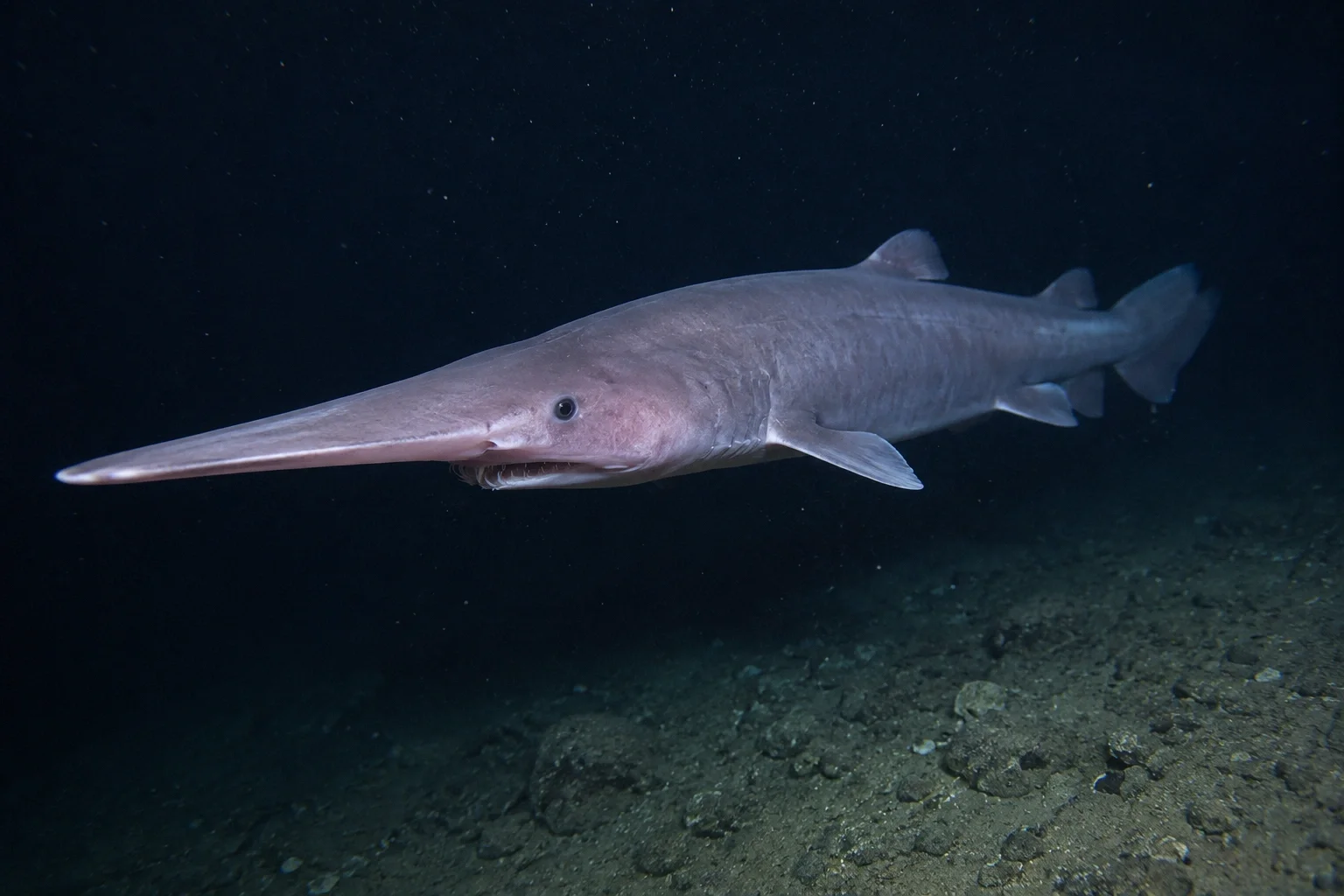

In the depths of the Pacific Ocean, where light barely reaches, scientists have captured for the first time images of a live goblin shark in its natural environment. This advancement represents an important milestone for the study of one of the most enigmatic creatures of the marine world, which until now was only known from accidentally captured specimens.
The recording took place during an expedition in 2024 in the Tonga Trench. The footage was published this year in the Journal of Fish Biology, and also includes a previous observation near Jarvis Island in 2019. These videos allow for a better understanding of the animal's behavior when it is not under stress from being caught.
Goblin sharks inhabit very deep areas and are extremely difficult to observe. Most previous data came from specimens that became entangled in fishing nets or were accidentally captured. Therefore, experts highlighted the importance of these new records, which expand the known geographic range of the species.
Unique characteristics of this marine creature
The goblin shark is distinguished by its peculiar appearance. It has an elongated, pointed head, a long, soft body, and relatively small fins. It can reach several meters in length and is believed to move with slow movements typical of deep-sea inhabitants.
One of its most striking features is the protrusible jaw, which can be thrust forward like a spring to capture prey. However, in the videos of the live animal, it is observed that the mouth often remains retracted within the head, which notably changes its appearance compared to known images of dead or captured specimens.
 The observations in the Tonga Trench and near Jarvis contribute to filling information gaps about a species that remains poorly understood. Although much remains to be discovered about its life cycle, reproduction, and feeding, each new piece of data helps to better protect these deep environments.