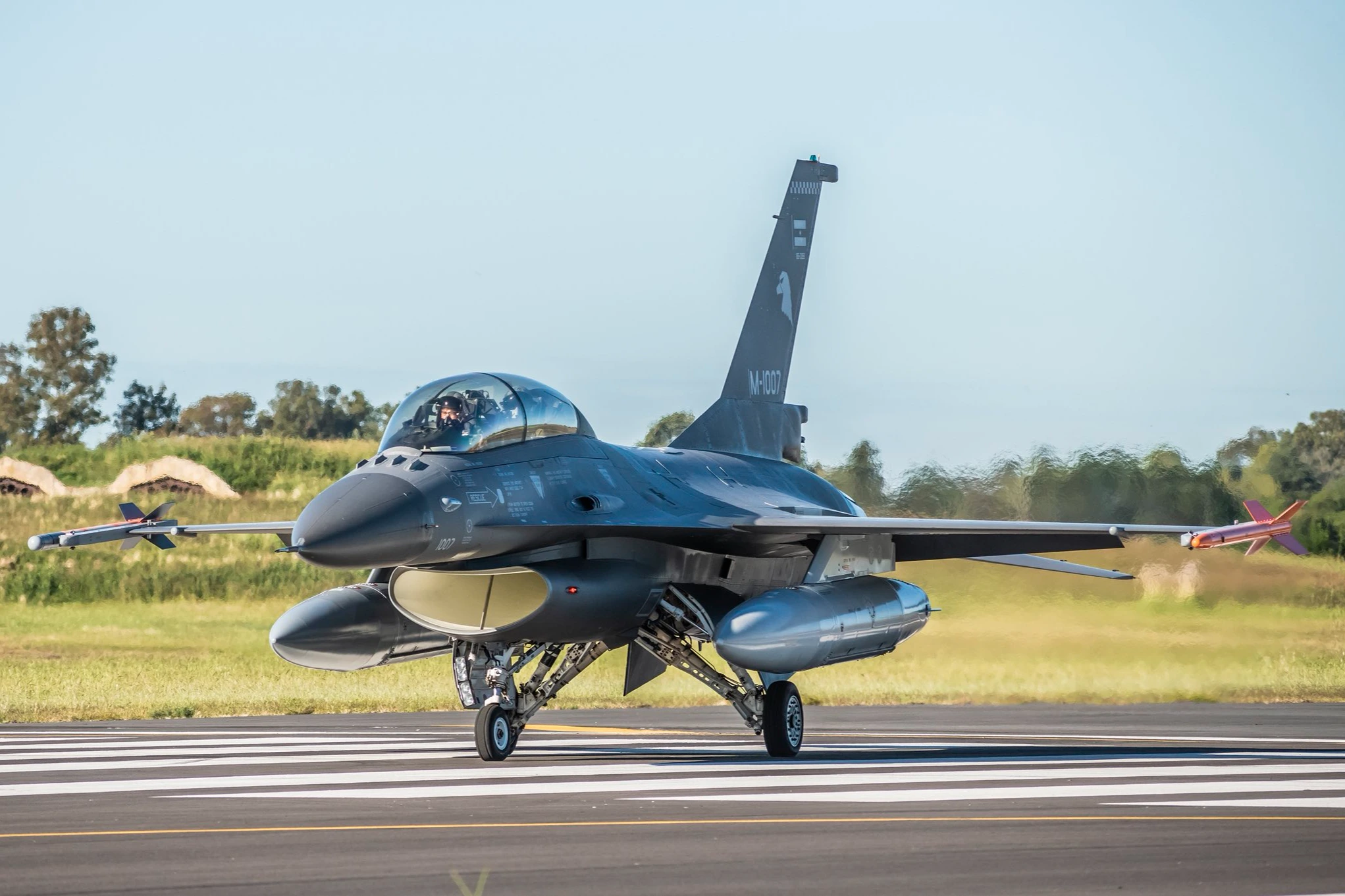
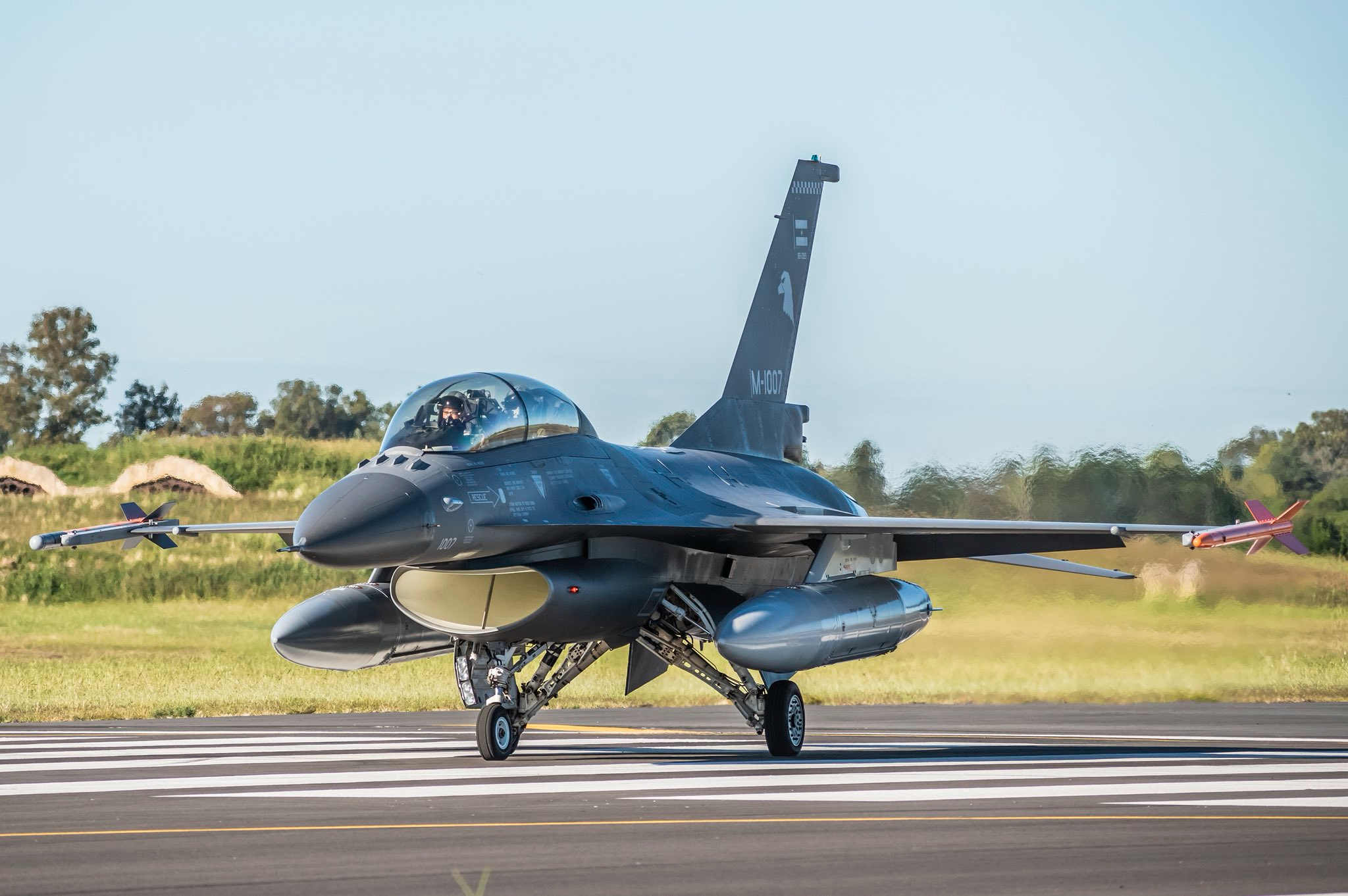
The F-16 combat aircraft began their first flight activities this Monday, as part of the training program of the US company Top Aces for pilots of the Argentine Air Force.
Through different official publications, the Ministry of Defense highlighted the relevance of the event. “Two takeoffs that mark the beginning of a new phase, Argentine F-16s are already flying in our sky. From the Rio IV Material Area, the Air Force is launching the flight activity of this Weapons System, within the framework of the Training Program for Argentine Pilots and with the technical support of Top Aces,” they said.
Along the same lines, the ministry highlighted the strategic impact of this incorporation: “A concrete milestone in the evolution of our aerospace defense and in the consolidation of new strategic capabilities to protect our sky and defend Argentines like never
before.”
The start of the flights is part of an initial phase focused on pilot training. As officially reported, “This morning the flight activity began and, at this stage, the focus is on a central axis of the F-16 Program: the training of our Air Force pilots Training hours, with specialized technical support to ensure the highest operational and safety standards
.”
“This is the beginning of a great Argentina, with new capabilities, a stronger defense and armed forces better prepared to protect our airspace and all Argentines,” they remarked.
F-16.
The training program The training
is carried out by the American company Top Aces, whose role is decisive in developing the operational capabilities necessary for the deployment of F-16s in the
country.
The training program includes different progressive stages that ensure complete professional development aligned with international standards.
The first phase, called Basic Course (B-Course), lasts between six and nine months and is aimed at the initial transition to the weapons system, including engine management, navigation, landings, takeoffs and basic air combat maneuvers.
This instance includes between 80 and 100 hours of real flight and between 50 and 60 simulator sessions focused on emergency procedures.
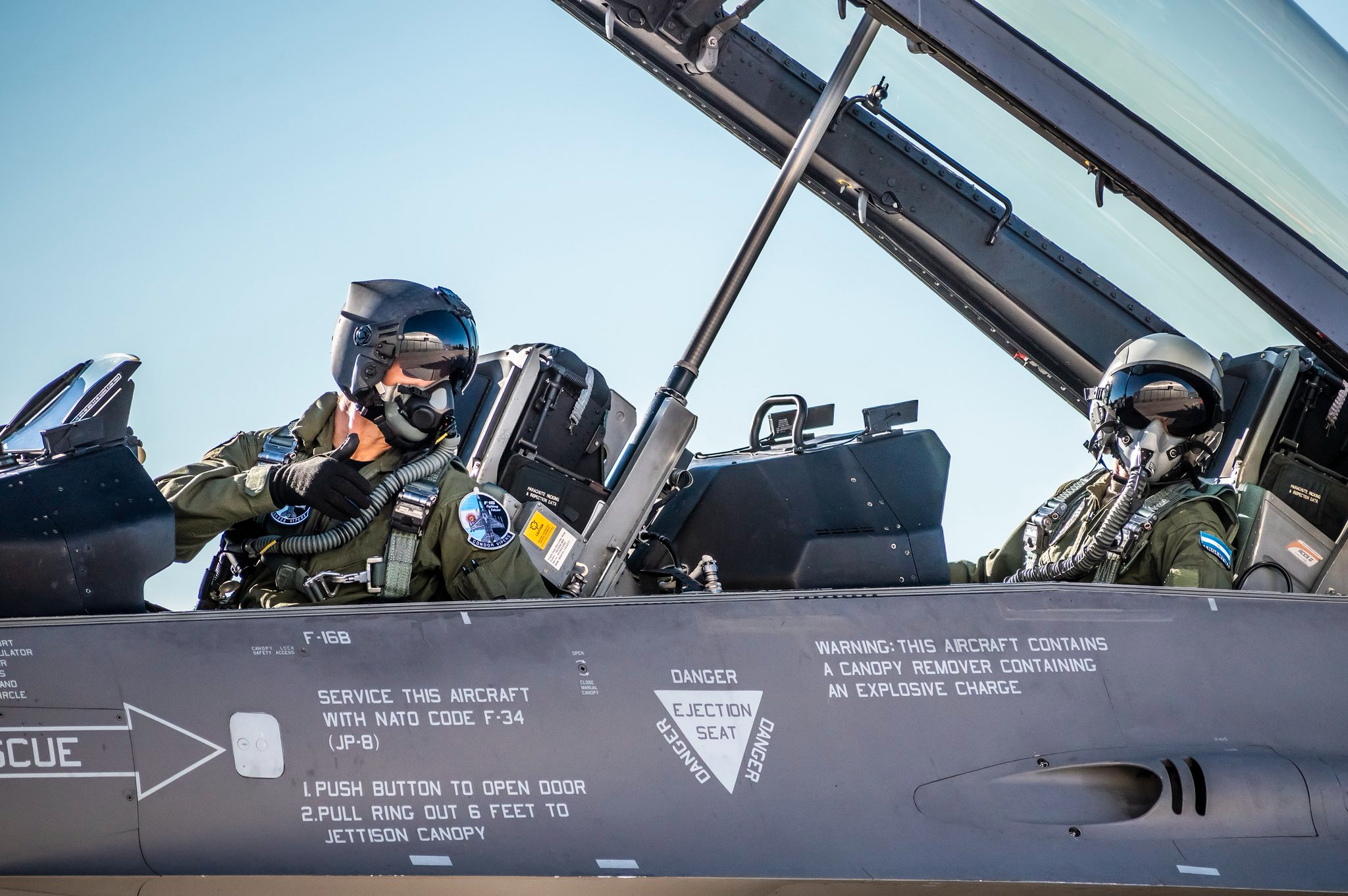
Argentinian pilots.
Then, pilots progress to Mission Qualification Training (MQT), a phase of three to four months that incorporates operational tactics, such as long-range interception, use of guided weapons and in-flight refueling. Upon completion, they obtain the “Combat Ready” rating, which allows them to integrate into real operations under supervision
.
Later phases include the Flight Lead Upgrade (FLUG), aimed at tactical leadership roles, and the qualification as an Instructor Pilot (IP), the highest level in the system, reserved for aviators with extensive experience and advanced capabilities.
Thus, the start of F-16 flights not only marks an operational event, but also the beginning of a comprehensive process of transformation in Argentine air defense, with a focus on training, modernization and the incorporation of new strategic capabilities.