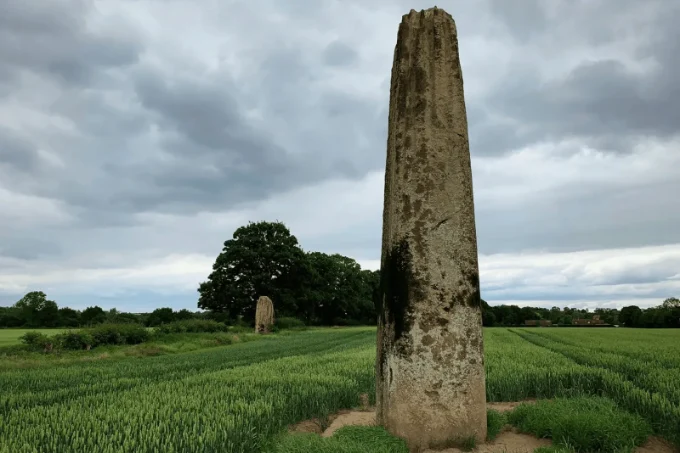

A group of scientists led by Anthony Clarke from Curtin University has managed to identify the origin of the three enormous stones that make up the monument known as Devil’s Arrows, located in North Yorkshire, England. Each of these rocks weighs over 25 tons and was erected around 2000 BC.
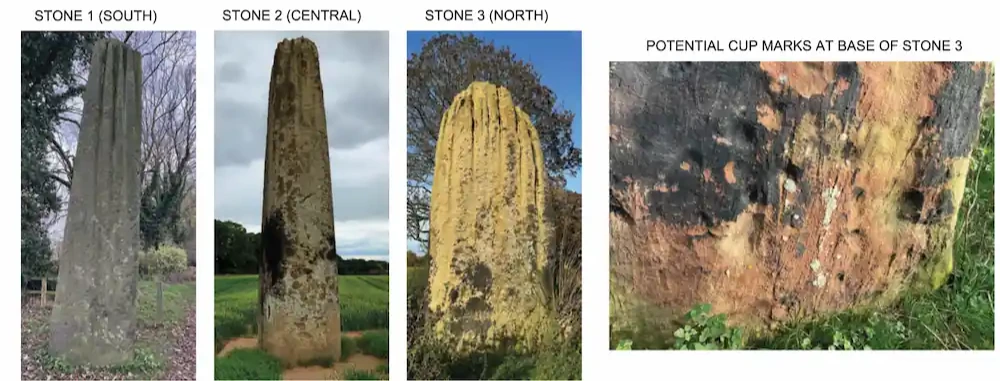
The site is considered the tallest row of standing stones preserved in Britain. It is a rare example of megalith alignment in a lowland setting. Experts believe that a fourth stone originally existed, which was destroyed and reused in later times.
To determine the origin of the blocks, the researchers analyzed zircon and apatite crystals present in the rocks. The results allowed them to accurately link them to an independent rock outcrop called Brimham Rocks, located about 11 miles, equivalent to approximately 18 kilometers from the monument.
Clarke emphasized that the stones were not taken from the nearest available source. On the contrary, they were deliberately selected from a complex and difficult-to-access landscape. This choice reveals careful planning by the communities that erected the site.
A deliberate choice in a challenging landscape
The study confirms that prehistoric builders made a considerable effort to transport these large rocks from Brimham Rocks to the location where they still stand. The distance and terrain characteristics suggest that it was not an improvised decision.
The monument stands out not only for the height of its stones but also for its rarity within the context of British megalithic alignments. Most of these types of constructions are found in elevated areas, making Devil’s Arrows a particular case in a flatland setting.