
Why it is time to buy gold and silver

Why it is time to buy gold and silver
Imagen de Editorial Team
porEditorial Team
Argentina

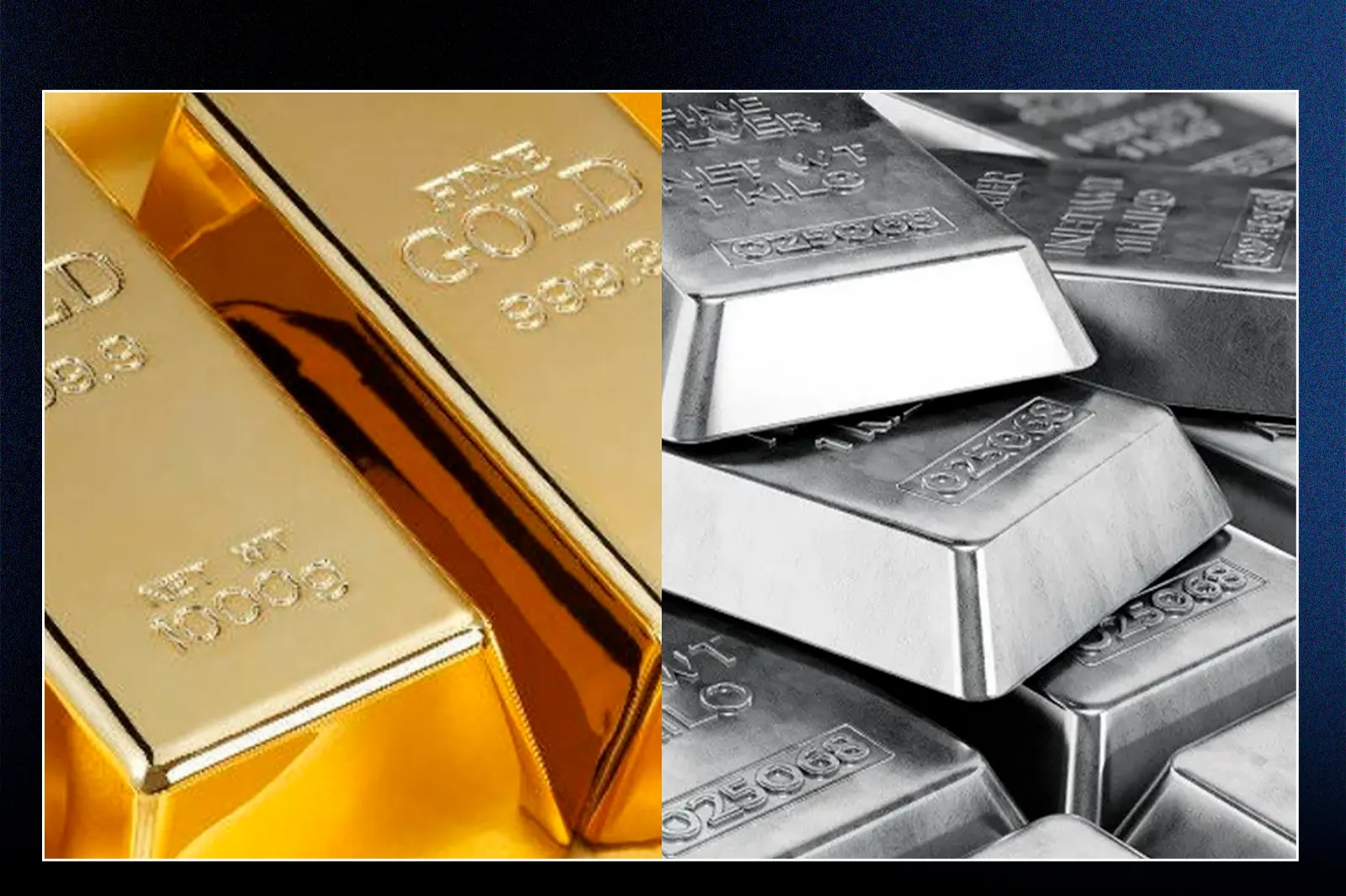
Gold and silver could benefit if tensions over U.S. debt lead to new Treasury purchases and a more aggressive monetary expansion

Add La Derecha Diario on
Share:

This week something happened that, at first glance, may seem technical, but could end up being much more important: the U.S. Treasury decided to double, at a minimum, its long-term bond repurchases, raising the maximum per operation from US $2 billion to US $4 billion for securities maturing in 10 to 30 years. The measure begins on September 9 and, for now, will be in effect until early November.

Formally, the Treasury's argument is to improve market liquidity. But the timing chosen is impossible to ignore. The 30-year Treasury yield had just reached levels not seen in nearly two decades. And when the decision was announced, the reaction was immediate: bonds rose, long-term rates fell, the dollar dropped, and gold surged.

In other words, the market quickly interpreted the message: the U.S. government is concerned about long-term rates at these levels. And it has reasons to be.

The United States has just surpassed US$40 trillion in public debt, maintains enormous fiscal deficits, and needs to constantly refinance a mountain of maturities. The higher the rates remain, the greater the cost of refinancing that debt and the larger the interest burden that ends up feeding the deficit.

The problem is that this Treasury intervention is relatively small compared to the size of the market. In fact, after the initial reaction, rates rose again. The 30-year Treasury ended the week around 5.28%.

And this is where the important question arises:

What happens if US$4 billion per operation is not enough?

From the Treasury to the Federal Reserve

Today we are not talking about QE. We are also not talking about Yield Curve Control. And the Federal Reserve is not announcing bond purchases to lower long-term rates.

But the precedent that has just been set matters.

The Treasury has just demonstrated that, in the face of a sufficiently uncomfortable rise in long-term rates, it is willing to intervene by buying bonds.

If pressures continue, the next step could be to increase those repurchases even more. And in a more extreme scenario, if the market demanded rates incompatible with fiscal sustainability, the institution with real firepower to intervene would be the Federal Reserve.

At that point, we would enter completely different territory.

The Fed could expand its balance sheet again by buying Treasuries, as it did with quantitative easing. And, in the extreme, some variant of Yield Curve Control could emerge: a policy aimed at preventing certain long-term rates from exceeding levels deemed intolerable.

It would, in effect, be a choice between two problems:

allowing the market to determine increasingly higher rates or using monetary creation to contain them.

And for gold, silver, and other real assets, that difference is enormous.

The problem of foreign buyers

Additionally, the United States needs to issue more and more debt just as some of its historical foreign buyers are reducing their exposure.

Japan remains the largest foreign holder, but its Treasuries fell from approximately US $1.24 trillion in February to US $1.12 trillion in June.

China is also continuing to sell. Its holdings have decreased to approximately US$633 billion, the lowest level since 2008.

It is important to clarify: this does not mean that everyone is abandoning U.S. debt. Total foreign holdings remain enormous.

But the equation is starting to get complicated:

The United States needs to issue a lot. Some of its large historical holders are selling. And if buyers demand higher yields to absorb that supply, rates rise.

And what happens if the government is not willing to tolerate those rates?

Someone has to become a buyer.

And eventually that buyer could end up being the Federal Reserve.

The flip side: gold, silver, and real assets

All of this is happening, moreover, in a world where the global supply of fiat money is growing again and where governments face levels of debt that make it politically very difficult to solve the problem solely through fiscal austerity.

That’s why I believe the movement we are seeing in metals may be far from over.

Gold reached a record of approximately US$5,600 per ounce in January. It then suffered a significant correction, but from current levels returning to those highs would again imply a considerable percentage increase.

Silver offers an even more explosive scenario.

In January it surpassed US$90 per ounce. From current levels, a return to those highs would represent a much larger percentage movement than in gold.

That’s why I don’t think it’s at all far-fetched to think that before the end of 2026 both gold and silver could seek the highs they reached at the beginning of the year.

It’s not a certainty. Persistently high real rates, a more restrictive Federal Reserve, or genuine fiscal improvement could change the scenario.

But if the response to the tensions in the bond market ends up being more intervention, more Treasury purchases, and eventually more monetary expansion, the context could be extraordinarily favorable for metals.

And in silver, precisely because of its greater volatility, the potential percentage journey back to previous highs is considerably greater.

What happened this week with the 30-year Treasury may have just been a small technical intervention.

But it could also end up being remembered as the first sign of a much deeper change: the moment when the United States began to show that it was not willing to accept the long-term rates that the market wanted to impose.

If that process continues, I believe that real assets —and especially gold and silver— could be one of the most interesting places to be positioned.

And then the question is quite simple:

And don’t you still have metals in your portfolio?


La Derecha Diario logo
TwitterInstagramYouTubeTikTokFacebook
Derecha Diario TV

Nosotros

  • Quienes Somos
  • Autores
  • Donar

Privacidad

  • Protección de datos
  • Canales
  • Sitemap
  • RSS

Contacto

  • info@derechadiario.com.ar
PUBLICIDAD
La Derecha Diario logoLa Derecha Diario logo
ESX logoInstagram logoYouTube logoTikTok logoFacebook
ARGENTINAUNITED STATESECUADORISRAELMEXICODERECHA DIARIO TV
  • ES
    XInstagramYouTubeTikTokFacebook
  • DERECHA DIARIO TV
  • Sections
  • ARGENTINA
  • UNITED STATES
  • ECUADOR
  • ISRAEL
  • MEXICO
  • URUGUAY
  • Countries
  • La Derecha Diario logoLA DERECHA DIARIO
  • La Derecha Diario México logoLA DERECHA DIARIO MÉXICO
  • La Derecha Diario Uruguay logoLA DERECHA DIARIO URUGUAY
  • La Derecha Diario Ecuador logoLA DERECHA DIARIO ECUADOR
  • La Derecha Diario Israel logoLA DERECHA DIARIO ISRAEL
  • La Derecha Diario Estados Unidos logoLA DERECHA DIARIO ESTADOS UNIDOS
  • Topics
  • GUERRA EN IRÁN
  • The Newspaper
  • QUIENES SOMOS
  • AUTORES
  • PUBLICIDAD
  • DONAR

Related news

Inter closed the door on the possible departure of Lautaro Martínez to Barcelona: "He is our captain"

Inter closed the door on the possible departure of Lautaro Martínez to Barcelona: "He is our captain"

Ethiopian Yomif Kejelcha won the Buenos Aires Half Marathon and set a new world record

Ethiopian Yomif Kejelcha won the Buenos Aires Half Marathon and set a new world record

Florida implemented mandatory teaching of "Communism History" in schools

Florida implemented mandatory teaching of "Communism History" in schools

Milei confirmed that he will meet with the FIA to bring Formula 1 back to Argentina

Milei confirmed that he will meet with the FIA to bring Formula 1 back to Argentina

A Chinese humanoid robot shattered Usain Bolt's world record in the 100 meters

A Chinese humanoid robot shattered Usain Bolt's world record in the 100 meters

A Republican senator accused the DSA of controlling the Democratic Party and pushing it to the far left

A Republican senator accused the DSA of controlling the Democratic Party and pushing it to the far left