A court in Bahía Blanca issued a precautionary measure this Friday that suspended the increases in electricity rates authorized by the government of Axel Kicillof and ordered four provincial distributors to revert to the rate schedule prior to the enacted resolution.
The decision was made by the Administrative Contentious Court No. 1 of Bahía Blanca, led by Agustín López Cóppola, following a presentation made by the provincial Ombudsman, Guido Lorenzino.
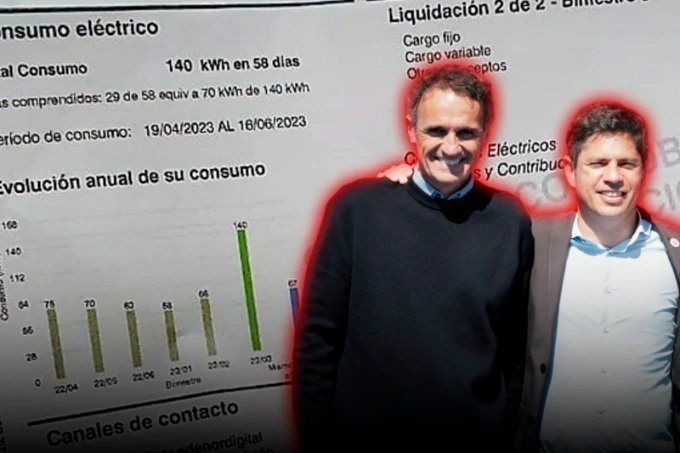
Axel Kicillof with Gabriel Katopodis
The measure affects EDELAP, EDES, EDEA, and EDEN, the four distribution companies operating under provincial jurisdiction. Edenor and Edesur were excluded from the ruling as they provide service within the Metropolitan Area of Buenos Aires (AMBA) and are subject to a different jurisdiction.
The precautionary measure suspended the application of Resolution 585/2026 from the Ministry of Infrastructure and Public Services of the province, led by the Kirchnerist and former mayor of San Martin, Gabriel Katopodis. The corresponding rate schedules from that resolution were officially published by the Provincial Electricity Regulatory Agency (OCEBA).
The Ombudsman's office particularly questioned the update of the Distribution Added Value (VAD), one of the provincial components of the rate, arguing that the new values were determined without prior user participation.
The judge upheld the complaint and determined that, until a final ruling exists, the companies cannot apply the questioned rate schedule or future increases on provincial components without first ensuring user participation. Additionally, if a distributor has already billed using the suspended values, the difference must be recognized as a credit for the user on the next bill.
The challenge to Kicillof's administration
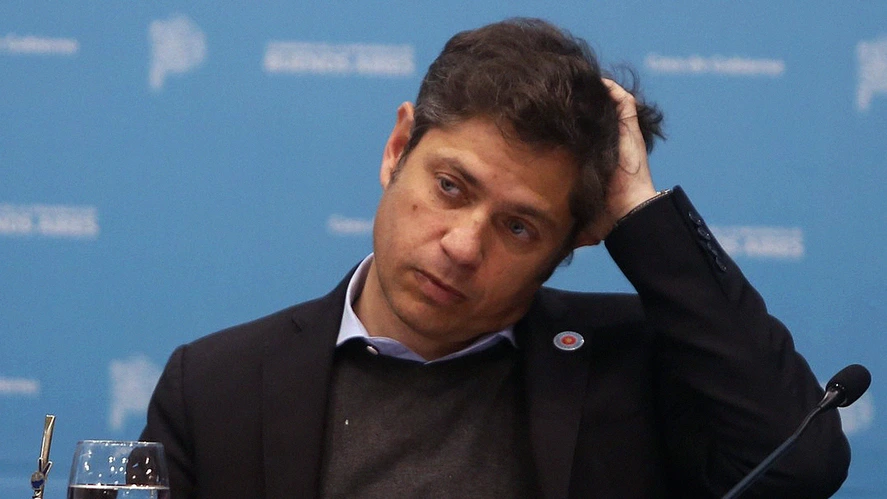
Kicillof sees frustrated by the increase in service costs for the people of Buenos Aires
In the grounds for the precautionary measure, López Cóppola referred to the constitutional right of consumers to receive adequate information and to participate in discussions related to the determination of rates. The provincial government had argued that the updates were part of a transitional scheme and that the mechanisms used had precedents in public hearings held years ago.
However, the magistrate considered the prolonged period since the last instance of user participation to be relevant and noted that the notification of a predetermined rate does not replace a prior discussion.
Thus, the ruling represents a judicial setback for the administration of Kicillof in its policy of increases in electricity rates. As long as the precautionary measure remains in effect, the four affected distributors must revert the questioned components and await the final resolution of the case before reapplying the suspended increases.