In the midst of the debate over the land law reform pushed by the government of Javier Milei, various Kirchnerist artists began to spread false information and joined the campaign of the British NGO Amnesty International against the official project.
Amnesty International, an NGO founded in the United Kingdom and partially funded by British government subsidies, released a video criticizing Milei's project under the slogan: “Defending the land is defending human rights.”
The official proposal aims to modify regulations related to rural land, expropriations, and land use, in order to eliminate bureaucratic obstacles and provide absolute legal security to owners, creating a favorable climate for investments in Argentina and without jeopardizing national sovereignty.
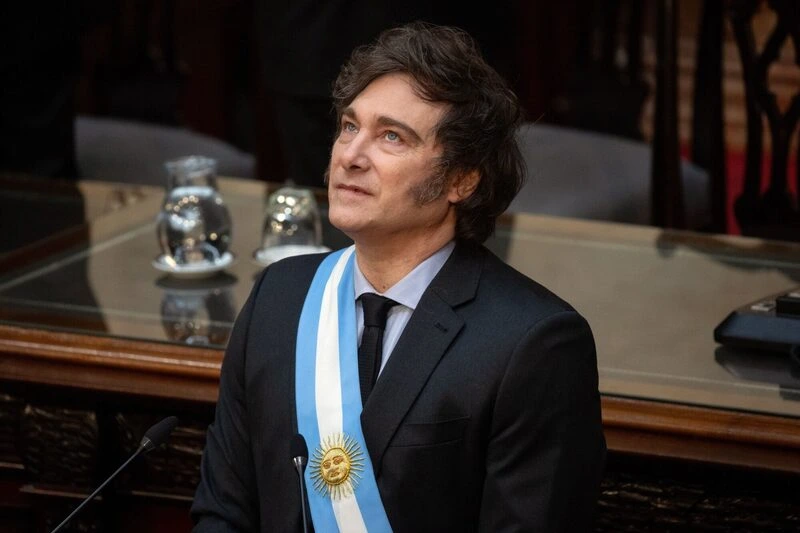
President Javier Milei
As a result of this campaign against the initiative, various figures from the artistic field replicated the content and called for a mobilization scheduled for August 6, 2026, in front of Congress.
Among them, the ultra-Kirchnerist Lali Espósito shared the call in her Instagram stories under the slogan “Argentina is not for sale. No to foreignization.”
In the same vein, Dolores Fonzi published a message that was later also shared by Espósito: “It’s important. It’s now. It’s for you and for those who come. They want to sell everything! See you in the streets to stop the onslaught. ENOUGH! ... Let’s call!!!”
For her part, Laura Azcurra also joined the attack and linked the discussion to the defense of territory and sovereignty, including references to the Malvinas Islands and natural resources.
Lali Deposit
The Milei Project
However, the reality of the project is completely different, and those who criticize the measure are basing their arguments on false information about the scope of the reform.
The initiative aims to flexibilize excessive state restrictions, such as the 15% cap on rural land in foreign hands, nationality limits, or the maximum number of hectares in certain areas.
These restrictions affect the right to property and legal security, two fundamental pillars for economic growth. President Milei himself pointed out that if this right is violated, there are no incentives to save and invest.
In the same vein, the current regulations have discouraged investments for decades due to the lack of securityand their modification could unlock projects worth billions of dollars in various sectors.
Moreover, the reform does not imply a loss of sovereignty or a “sale of the country,” as claimed by Kirchnerism. In this sense, it distinguishes between private investors, whom it seeks to equate with Argentines, and foreign states or state-owned companies, which will remain subject to restrictions and security controls.
The project also maintains prohibitions in border areas and retains the state's tools to supervise operations, investigate irregularities, and act against possible crimes that threaten national security.
For these reasons, foreign investors do not have the ability to “take” the land, but rather provide capital for productive development, the incorporation of technology, and job creation.
Additionally, reducing bureaucracy and existing limitations would allow for the consolidation of a long-term investment flow, impacting economic growth and regional development.