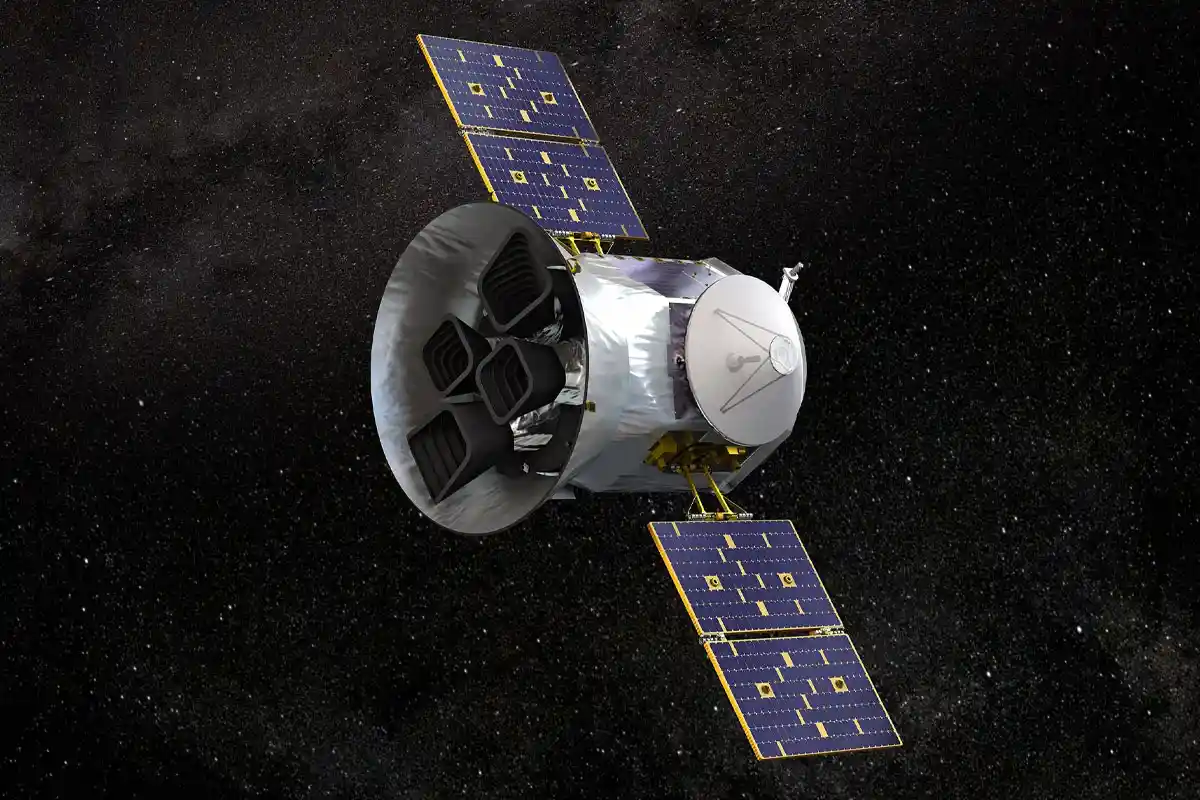
The TESS mission from NASA confirmed the existence of an exoplanet using a technique based on the effect of gravitational microlensing, a phenomenon explained by Albert Einstein in his general theory of relativity.
The finding corresponds to Gaia23bra b, a planet located about 40,000 light-years from Earth. The discovery opens the possibility of identifying other similar worlds hidden in the data collected by the space telescope.
The finding corresponds to Gaia23bra b, a planet located about 40,000 light-years from Earth
What the NASA TESS mission discovered
NASA confirmed that the TESS satellite managed to detect the exoplanet Gaia23bra b using a technique different from the transit method it usually employs to search for planets outside the Solar System.
The first signals of this world were recorded in 2023 by the Gaia space telescope, which observed a slight increase in the brightness of a star caused by a gravitational microlensing event.
What is gravitational microlensing
Gravitational microlensing is a phenomenon predicted by Albert Einstein's general theory of relativity, presented in 1915.
What did NASA's TESS mission discover
When a massive object passes in front of a distant star, its gravity curves space-time and bends the path of light. This effect produces a temporary increase in the brightness of the star, allowing the detection of objects that would otherwise go unnoticed.
Why this exoplanet could not be detected by traditional methods
The exoplanet Gaia23bra b has a mass equivalent to 1.6 times that of Jupiter and orbits an orange dwarf star located about 40,000 light-years from Earth.
Why this exoplanet could not be detected using the traditional method
Additionally, it completes an orbit at a distance similar to that which separates Jupiter from the Sun, a characteristic that complicates its detection using the transit method typically employed by TESS.
As explained by Diana Dragomir, a member of the University of New Mexico team, when TESS was launched, it was not expected to detect this type of planet.
What this discovery changes for the search for exoplanets
The use of gravitational microlensing expands the possibilities of finding exoplanets that other methods cannot detect.
What does this discovery change for the search for exoplanets
Mallory Harris, also a member of the research team, noted that this technique allows for the identification of smaller planets, with orbits farther from their stars and even located within the so-called habitable zone.
The next NASA mission will use this technology
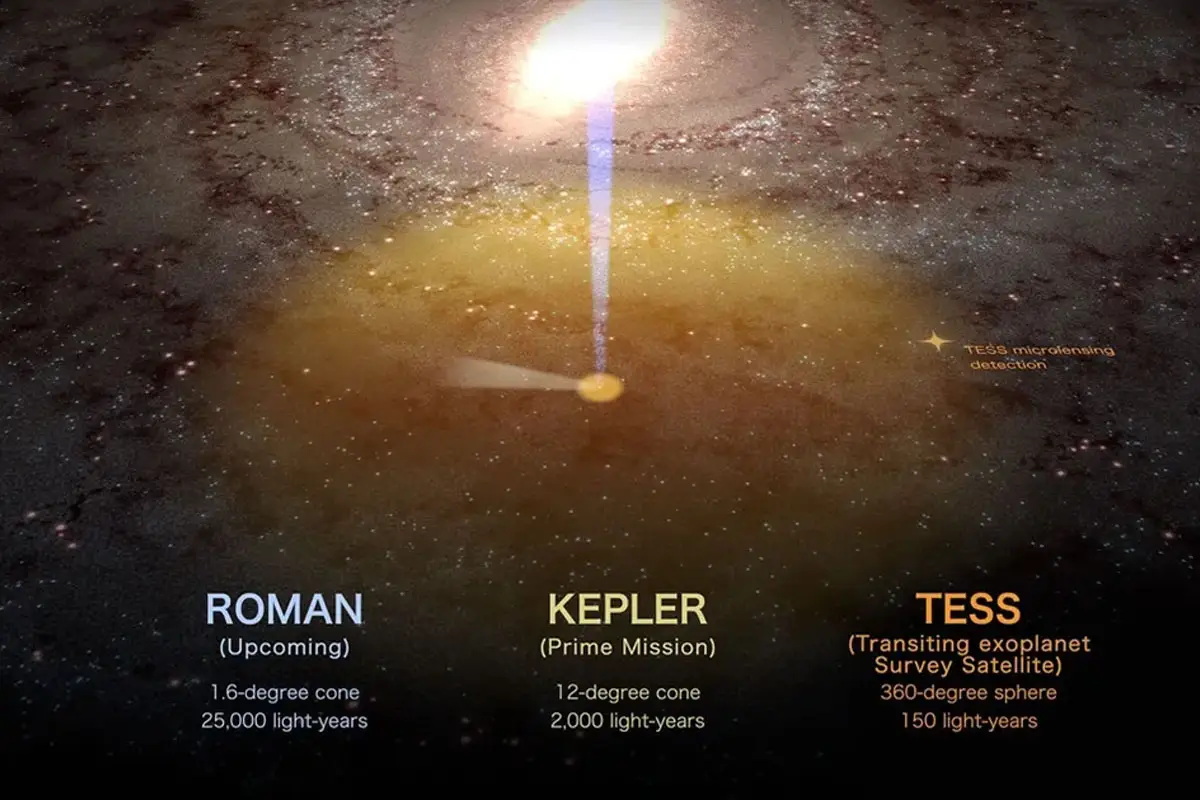
NASA plans to use gravitational microlensing as one of the main tools of the future Nancy Grace Roman Space Telescope.
The next NASA mission will use this technology
The mission will observe the center of the Milky Way in search of this type of events, and scientists estimate that it will allow the discovery of around 1,000 exoplanets using this technique, in addition to about 100,000 planets detected by transit.
The results of this research were published on July 1 in the scientific journal The Astrophysical Journal Letters