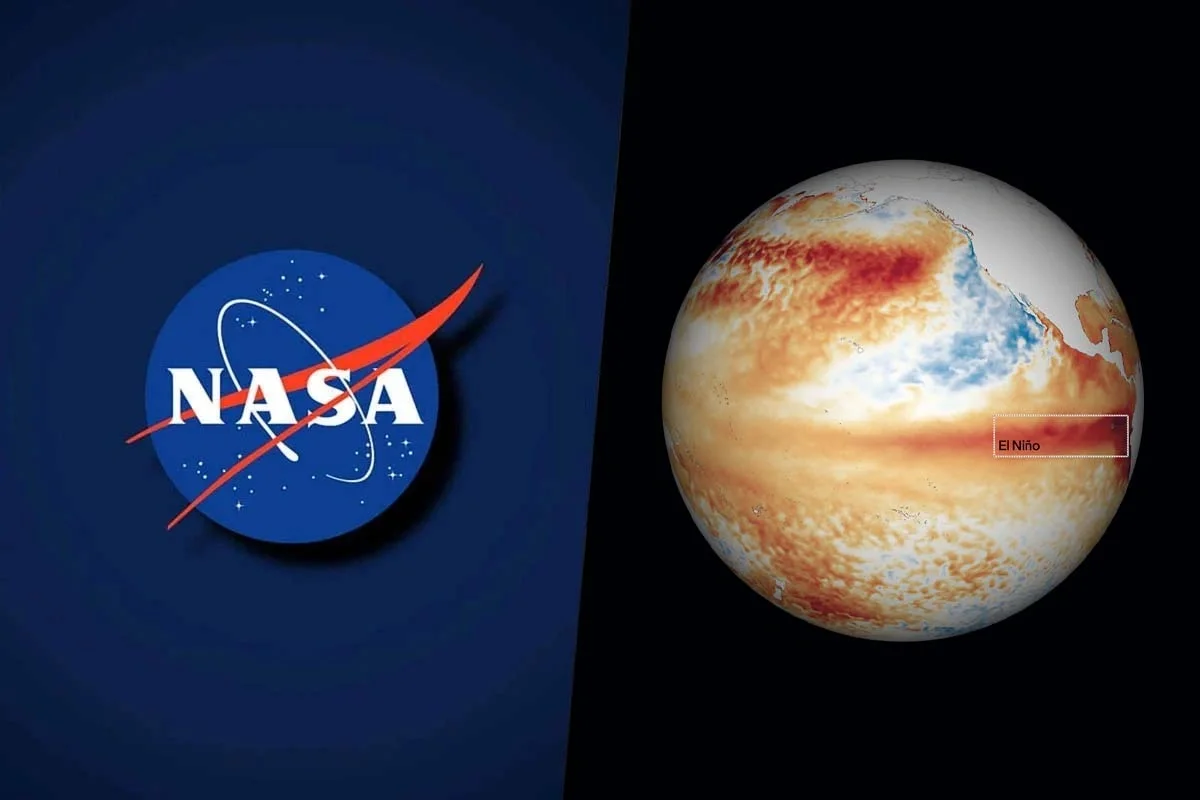
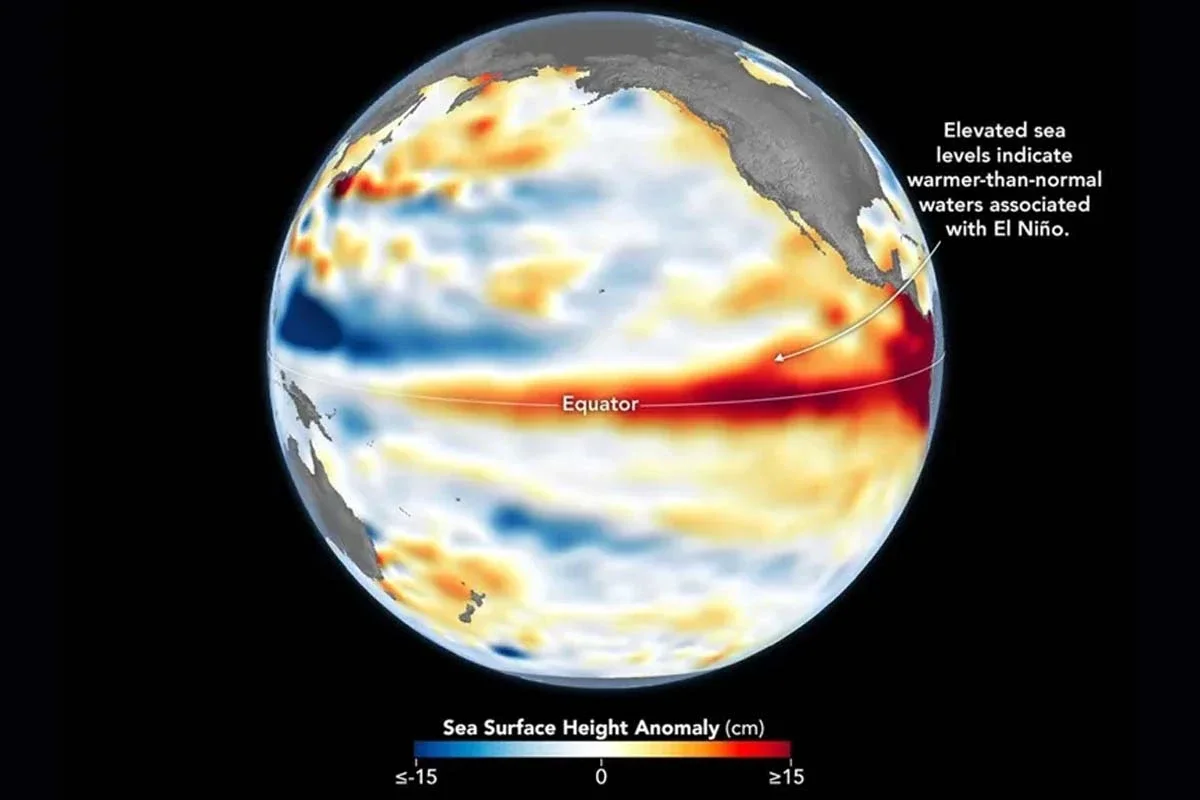
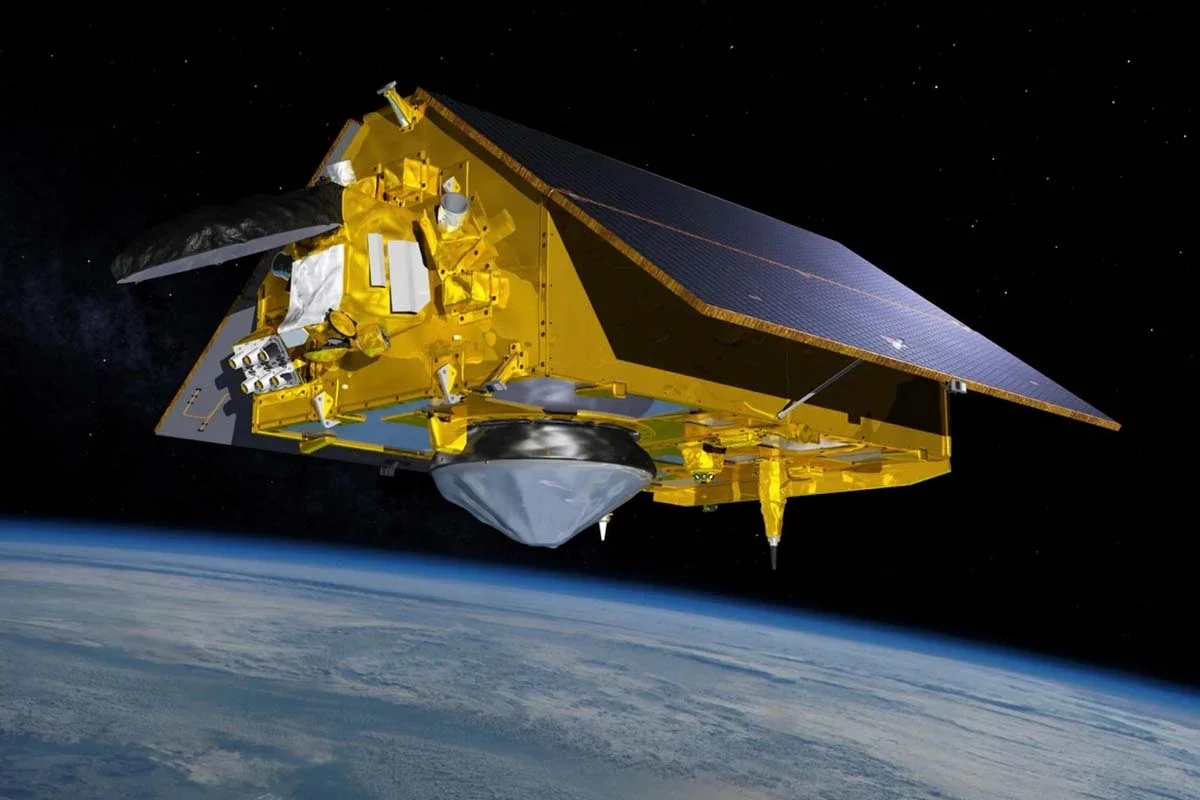
The NASA captured a gigantic warm water wave in the Pacific Ocean linked to the current phenomenon of El Niño. The imageswere obtained by the Sentinel-6 Michael Freilich satellite.
The data shows an extensive band of warmer waters and above-average sea levels extending along the equator of the Pacific.
NASA captured a gigantic wave of warm water in the Pacific Ocean
What NASA detected about El Niño in the Pacific Ocean
The observed formation corresponds to a Kelvin wave, a mass of warm water that travels across the ocean and temporarily alters the height of the sea surface.
The images captured on June 8 show red areas where the sea surface is above normal values and blue sectors where the opposite occurs.
According to information released by the NASA, in some points along the equator, sea height exceeds normal levels by more than 15 centimeters.
What did NASA detect about El Niño in the Pacific Ocean
How the Kelvin wave associated with El Niño works
Kelvin waves are generated when the winds in the western Pacific weaken or temporarily change direction.
This process allows warm water to gradually accumulate towards the east, increasing the thickness of the warmer surface layers.
How the Kelvin wave associated with El Niño works
The detected wave has already reached the western coast of South America, according to satellite observations.
The role of the Sentinel-6 Michael Freilich satellite
The Sentinel-6 Michael Freilich satellite was developed by NASA and the European Space Agency and began operations after its launch in 2020.
Its technology allows for measuring changes in ocean surface height with precision of just fractions of an inch every ten days.
The role of the Sentinel-6 Michael Freilich satellite
These measurements complement the sea surface temperature records used to monitor the evolution of El Niño.
Why scientists are closely monitoring this phenomenon
NASA had already identified other Kelvin waves this year, which anticipated the development of a new episode of El Niño.
Why scientists are closely monitoring this phenomenon
One of them was detected near Micronesia in January, while another appeared in March and raised sea levels off the coast of Peru by mid-May.
The conditions observed in the western Pacific during June show similarities to those recorded in 1997, a year associated with a particularly strong episode of El Niño