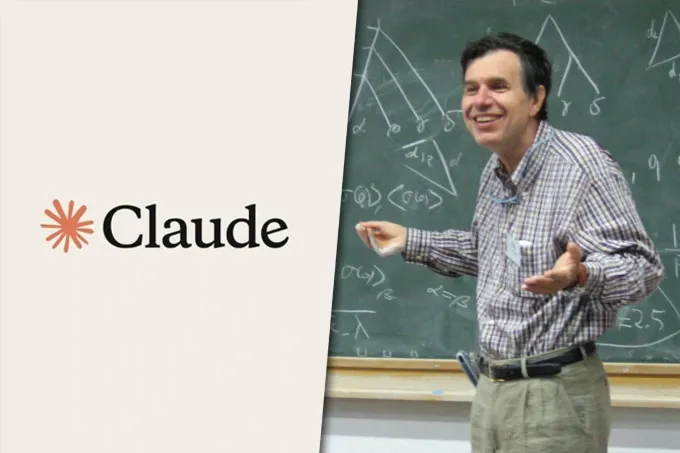
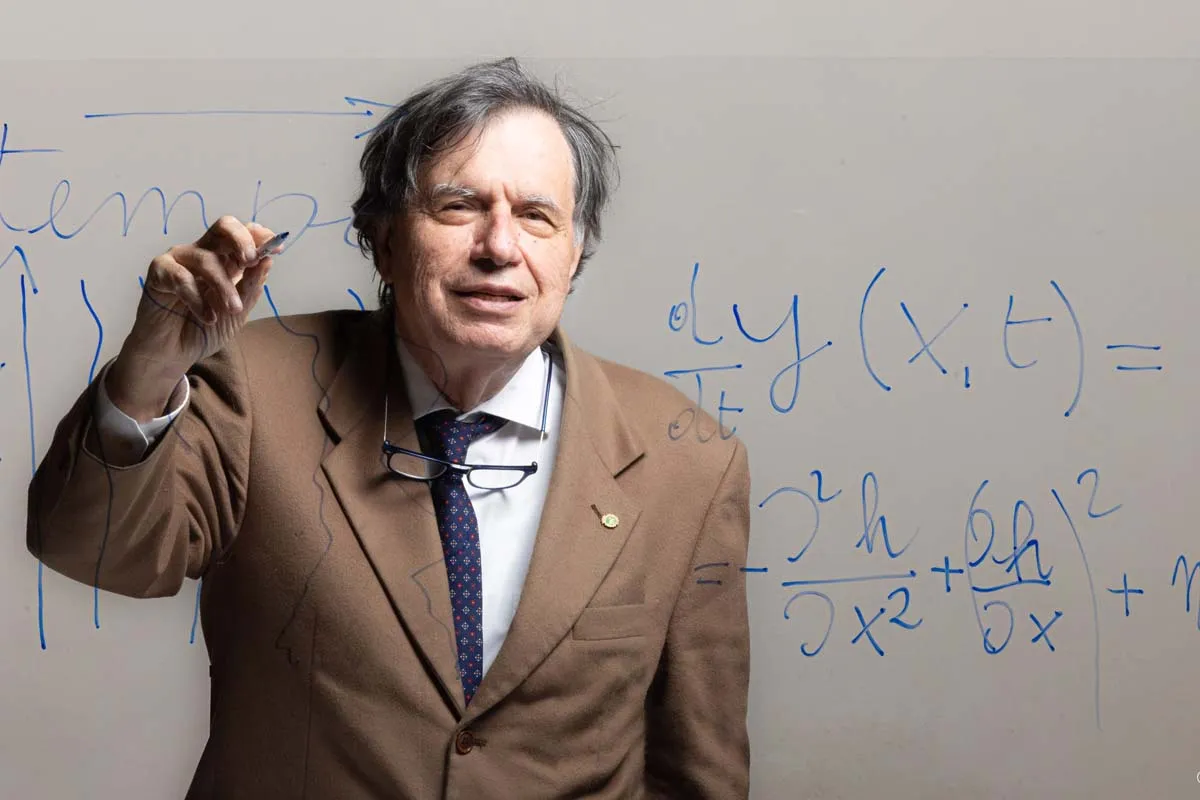
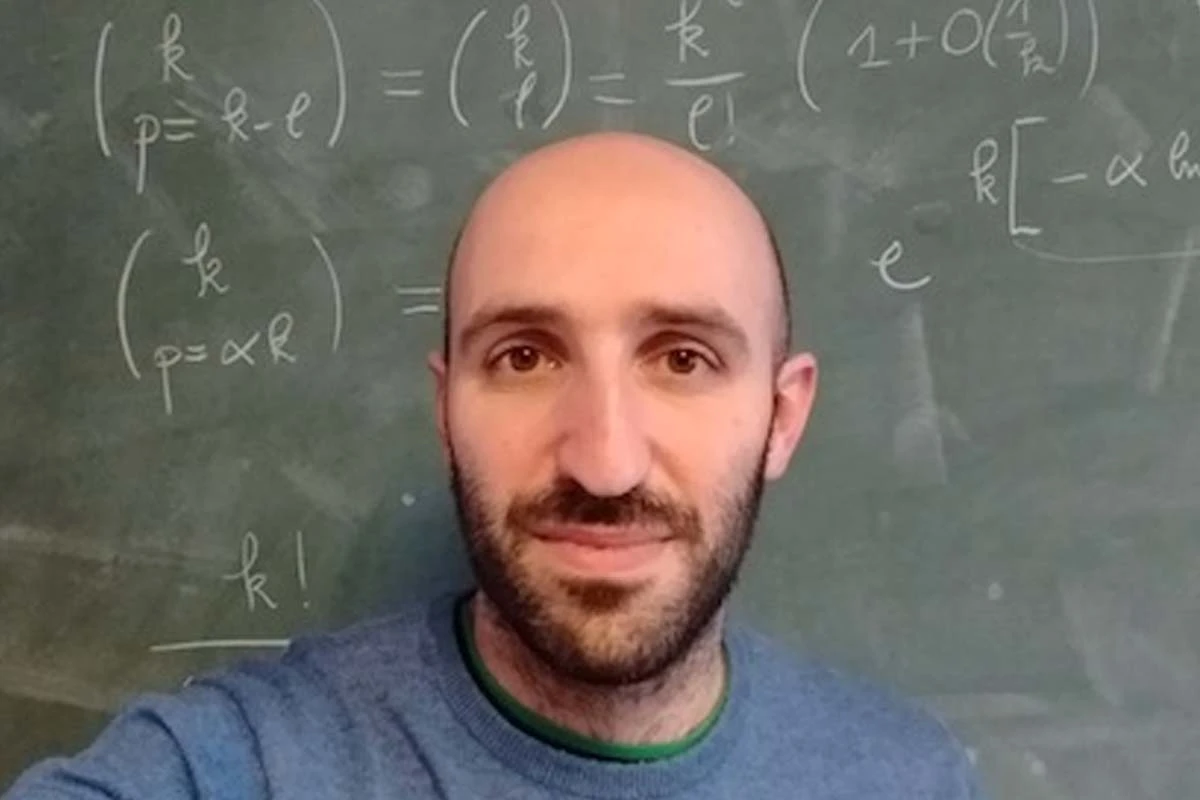
The physicist and Nobel Prize winner Giorgio Parisi, along with his collaborator Francesco Zamponi, managed to solve a mathematical problem that had remained unsolved for over a decade. The key was not a new physical theory, but the assistance of the artificial intelligence Claude, from Anthropic.
The solution was published in the Journal of Statistical Mechanics: Theory and Experiment. The physicists decided to revisit a problem related to the phenomenon known as “jamming”, a topic they were deeply familiar with and believed they had thoroughly addressed.
The physicists decided to revisit a problem related to the phenomenon known as "jamming"
What is the phenomenon of "jamming" in physics
Jamming describes the sudden transition of a fluid system to a rigid but disordered one. A simple example is a pool table covered with balls: as more balls are added, the table becomes congested until each one is fixed in place by its neighbors.
This disordered and completely “frozen” situation is known as a jammed state.
The mathematical enigma that persisted since 2014
Parisi, winner of the 2021 Nobel Prize in Physics, and Zamponi, both researchers at Sapienza University of Rome, had mathematically described jamming in a 2014 paper along with other collaborators.
Giorgio Parisi
In that work, they noted that two parameters (called a and b) always summed to 1, although they never managed to prove it mathematically. “The parameters a and b dictate exactly how the distribution of contact forces and small gaps [between the balls] scales when the physical system reaches that critical jamming point”, explained Zamponi.
How the idea of resorting to artificial intelligence emerged
An independent work by physicist Matthieu Wyart from the Swiss Federal Institute of Technology (EPFL) had arrived at the same relationship through a completely different approach. This suggested that entirely new physical concepts were needed to explain why a+b=1.
How the idea of turning to artificial intelligence came about
After a decade without progress, Parisi thought that generative artificial intelligence could offer a new perspective and turned to Claude from Anthropic.
How Claude helped solve the problem
After Claude successfully reproduced the numerical result from 2014, Parisi asked the AI to demonstrate why a+b=1.
“Giorgio initially sent me Claude's result while I was traveling, so I ended up reviewing it on a plane”, recalled Zamponi. “As I read the LaTeX file generated by Claude, it became immediately clear that the central idea was correct”, he added.
How Claude helped solve the problem
How many attempts it took to reach the solution
Although the initial result contained some errors that required revision, the fundamental idea was correct. In a total of just 40 prompts, the researchers obtained a verified and publishable analytical solution.
To the scientists' surprise, the solution was hidden directly in the equations, without the need for external physical assumptions or deep connections between functions.
How many attempts did it take them to reach the solution
What reflection this experience left for the researchers
“It is entirely possible that a pure mathematician working full-time on this type of equations would have found the solution”, noted Zamponi. “But this is a particularly interesting point for us because it shows how Claude gave us instant access to a vast repository of mathematical training and formal skills that were outside our usual domain”, he added.
For Zamponi, it does not matter whether Claude simply scanned the existing mathematical literature through pattern recognition or applied something akin to creativity: “We could not see the way forward, and Claude did”, he asserted.
How this collaboration between physicists and artificial intelligence continues
Zamponi is already applying this collaborative approach to a new problem related to the “random sequential addition of hard hyperspheres”.
Francesco Zamponi
As he explained, this is another interesting case study because, while AI significantly accelerates the writing and optimization of code, most conceptual ideas still required their intervention, suggesting that human guidance remains indispensable, at least in this case.