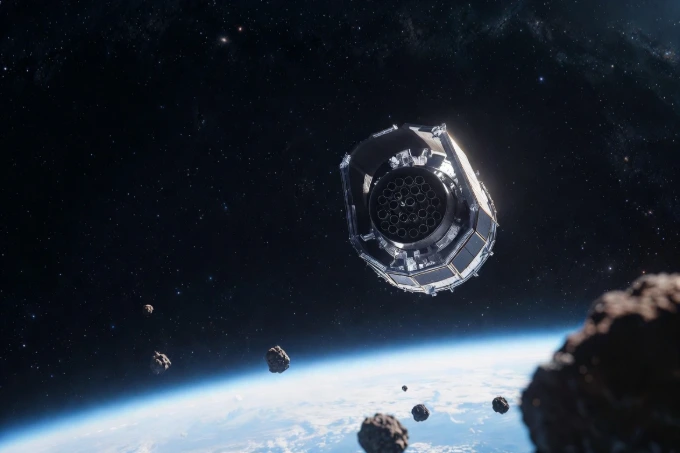

NASA's Roman telescope will also be used to detect dangerous asteroids

NASA's Roman telescope will also be used to detect dangerous asteroids
Imagen de Editorial Team
porEditorial Team
Argentina

The observatory, designed to study dark energy, has an enormous field of view that positions it exceptionally to identify space rocks that could threaten Earth

Add La Derecha Diario on
Share:

NASA plans to launch the Nancy Grace Roman Space Telescope at the end of August from the Kennedy Space Center in Florida Its main objective is to deepen our understanding of the universe, from the dark matter that holds galaxies together to the dark energy that accelerates the expansion of the cosmos. However, this instrument can also play a key role in protecting Earth from potentially hazardous asteroids.

A team of planetary scientists and astronomers will present in September how the Roman is exceptionally positioned to scan these bodies, gather data on their trajectories, sizes, and compositions. Named in honor of the agency's first chief astronomer, the telescope features a wide-field infrared camera with 300 megapixels. This allows it to cover a portion of the sky about 100 times larger than that of Hubble.

Thanks to its wide field of view, the Roman will discover thousands of new planets, tens of thousands of exploding stars, and catalog over a billion galaxies in great detail. By observing through our solar system, it is in a unique position to detect asteroids. It was not designed for planetary defense, but its capabilities make it a valuable tool for that task.

Last summer, the mission faced threats of budget cuts. Bryan Holler, a researcher at the Space Telescope Science Institute, explained that a colleague suggested showcasing the Roman's potential in planetary defense to increase its visibility among lawmakers and taxpayers. The proposal, which will be presented at the Europlanet Science Congress, indicates that the telescope can detect objects up to 60 feet long, a size comparable to the one that exploded over Chelyabinsk in 2013.
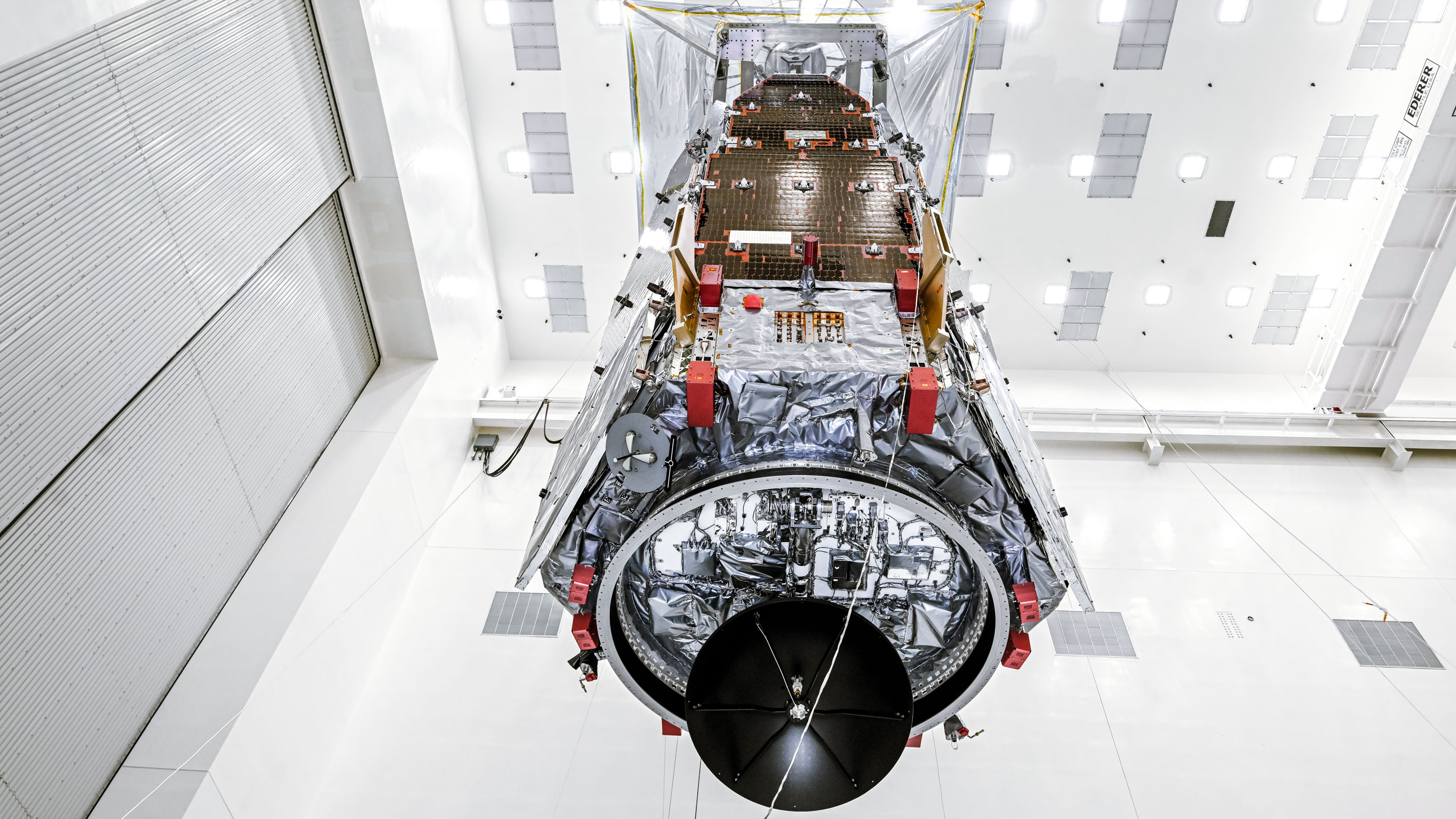
NASA's new space telescope for dark energy can also detect killer asteroids

Necessary adjustments and complementary work

The current software of the Roman discards trails caused by cosmic rays, failures, or asteroids to obtain clear images of the distant universe. Astronomers could intervene to analyze those trails and identify those corresponding to space rocks. Still, the instrument will not act alone. Its strength lies in complementing the James Webb Space Telescope.

The Roman's much wider field of view allows it to quickly examine several potentially hazardous asteroids. It can provide infrared observations of more objects than the Webb could cover in a reasonable time. If any are confirmed to have a collision trajectory, other telescopes, including the Webb, will be able to carry out the detailed follow-up necessary to assess damage or plan a deflection.

NASA's new space telescope for dark energy can also detect killer asteroids

The NASA Planetary Defense Coordination Office focuses mainly on asteroids 460 feet or larger. It is estimated that about 25,000 of them have orbits close to Earth, and just over half have not yet been found. There are also around 230,000 that are 165 feet, of which less than 10 percent have been located. An impact from one of these in a city would generate a force similar to that of a large atomic bomb, although without radiation.

To locate them, NASA funds a network of ground-based telescopes, but these only cover a part of the night sky and the atmosphere interferes. That is why the NEO Surveyor space telescope will be launched in 2027, which will be positioned between the Earth and the Sun and will observe in infrared. In a few years, it could find 90 percent of the asteroids capable of devastating cities in near-Earth orbits.


La Derecha Diario logo
TwitterInstagramYouTubeTikTokFacebook
Derecha Diario TV

Nosotros

  • Quienes Somos
  • Autores
  • Donar

Privacidad

  • Protección de datos
  • Canales
  • Sitemap
  • RSS

Contacto

  • info@derechadiario.com.ar
PUBLICIDAD
La Derecha Diario logoLa Derecha Diario logo
ESX logoInstagram logoYouTube logoTikTok logoFacebook
ARGENTINAUNITED STATESECUADORISRAELMEXICODERECHA DIARIO TV
  • ES
    XInstagramYouTubeTikTokFacebook
  • DERECHA DIARIO TV
  • Sections
  • ARGENTINA
  • UNITED STATES
  • ECUADOR
  • ISRAEL
  • MEXICO
  • URUGUAY
  • Countries
  • La Derecha Diario logoLA DERECHA DIARIO
  • La Derecha Diario México logoLA DERECHA DIARIO MÉXICO
  • La Derecha Diario Uruguay logoLA DERECHA DIARIO URUGUAY
  • La Derecha Diario Ecuador logoLA DERECHA DIARIO ECUADOR
  • La Derecha Diario Israel logoLA DERECHA DIARIO ISRAEL
  • La Derecha Diario Estados Unidos logoLA DERECHA DIARIO ESTADOS UNIDOS
  • Topics
  • GUERRA EN IRÁN
  • The Newspaper
  • QUIENES SOMOS
  • AUTORES
  • PUBLICIDAD
  • DONAR

Related news

Abelardo restores the relationship between Colombia and the US and announces a mega investment in the fight against terrorism

Abelardo restores the relationship between Colombia and the US and announces a mega investment in the fight against terrorism

Argentina is preparing a new satellite to monitor the Argentine Sea and combat illegal fishing

Argentina is preparing a new satellite to monitor the Argentine Sea and combat illegal fishing

The disastrous expropriation law of the communist Ramaphosa faces a judicial challenge over property rights

The disastrous expropriation law of the communist Ramaphosa faces a judicial challenge over property rights

A leftist group launched a million-dollar campaign to curb abortion restrictions in Missouri

A leftist group launched a million-dollar campaign to curb abortion restrictions in Missouri

Trump bets big on mining: He will invest 2 billion dollars in this sector and train thousands of engineers

Trump bets big on mining: He will invest 2 billion dollars in this sector and train thousands of engineers

Saudi Arabia, Turkey, and Pakistan sealed a mutual defense military pact

Saudi Arabia, Turkey, and Pakistan sealed a mutual defense military pact