The decision raises a question about the role that public universities should play regarding job and professional opportunities promoted by state agencies.
While university authorities maintain a political and budgetary confrontation with the administration of Javier Milei, SIDE continues to develop its search for personnel without relying on the collaboration of those institutions.
The campaign in public spaces demonstrates that the agency can bring its incorporation opportunities directly to interested parties, regardless of the positions taken by university leadership.
National intelligence and a discussion that demands responsibility
Criticism of SIDE has also been linked to journalistic information about the National Intelligence Plan, particularly following publications from La Nación that raised questions about its scope and the monitoring activities contemplated.
However, any discussion about the functioning of the intelligence system must be based on concrete information, distinguishing legal attributions from political interpretations and considering institutional control mechanisms.
Argentina needs professional, modern intelligence agencies prepared to face real threats. Strengthening these structures and attracting new talent is part of that challenge.
The SIDE call, far from being conditioned by the refusal of certain university authorities, moved forward. Now, the agency must continue with the selection process and provide the necessary details about the sought profiles and available opportunities.
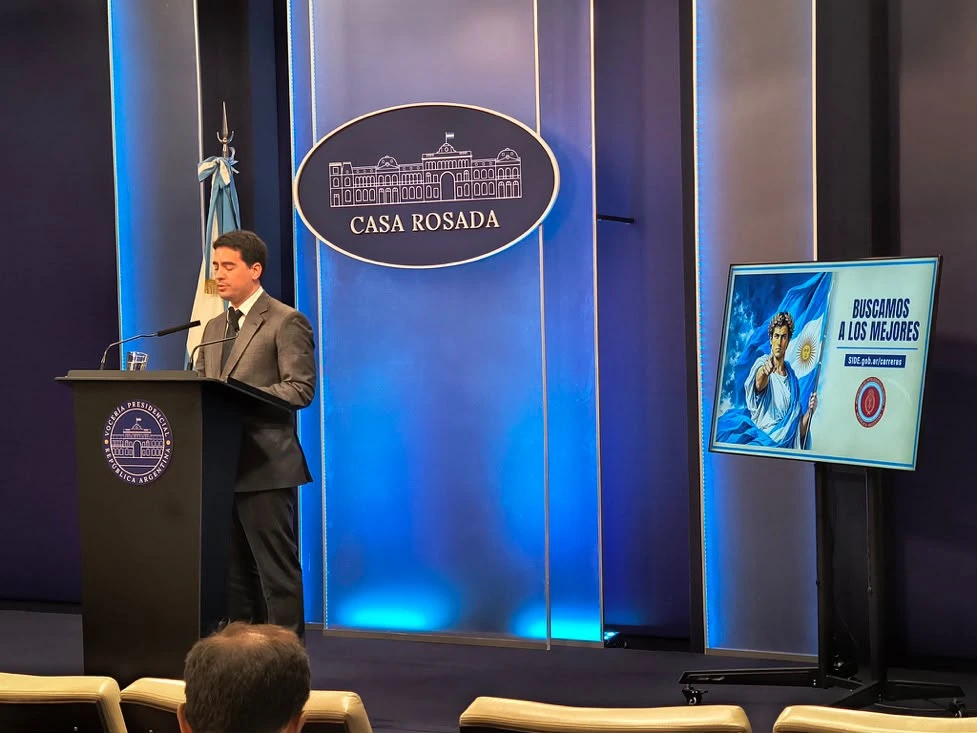
The State Intelligence Secretariat (SIDE) launched a call to incorporate new professionals into the National Intelligence Corps, as part of an initiative aimed at strengthening the agency's capabilities and adding human resources for the strategic tasks of the State.
The search even reached the vicinity of national universities and educational institutions, where posters began to appear with information about the possibilities of joining the agency. According to reports in university circles, the authorities of some institutions allegedly refused to cooperate with the dissemination of the call, prompting SIDE to carry out its campaign directly in public spaces.
The episode again exposes the tensions between certain sectors of university leadership and the national government, but it also highlights that the agency continues to pursue its recruitment objectives.
SIDE seeks professionals and aims to strengthen its capabilities
The incorporation of new members represents an important step for any intelligence agency. The formation of specialized teams, the incorporation of technical knowledge, and the search for professional profiles are central elements for developing tasks related to national security.
In this sense, the call opens an opportunity for students and graduates interested in these areas to approach a strategic institution of the State.
National intelligence requires trained personnel, technical preparation, and professional structures capable of responding to current challenges. In an international scenario marked by cyber threats, espionage, terrorism, and influence operations, having specialized agencies is essential.
SIDE is looking for professionals and aims to strengthen their capacities
The resistance of university authorities
One of the striking aspects of the call was the alleged refusal of some university authorities to facilitate its dissemination within the institutions.