
Sixteen mummies and a dog reveal a hidden funerary order in an Egyptian tomb

Sixteen mummies and a dog reveal a hidden funerary order in an Egyptian tomb
Imagen de Editorial Team
porEditorial Team
Argentina

A study in the Theban Necropolis shows how generations adapted the space over centuries, from elite burials to careful stacking in later periods

Add La Derecha Diario on
Share:

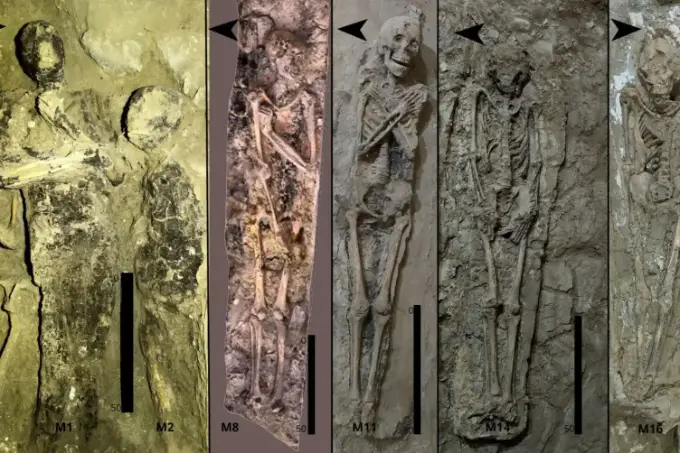
A burial chamber in the ancient Theban Necropolis, opposite Luxor, holds a story of careful reuse that spanned several centuries. Spanish researchers analyzed chamber three of tomb TT 209 and found sixteen mummified individuals, remains of at least four others, and a mummified dog. The space, built during Dynasty XXV, between 754 and 656 BC, was used until the Ptolemaic period, when it was finally abandoned.

The work, published in Frontiers in Environmental Archaeology, shows that it was not a chaotic accumulation. According to the first author, Dr. Jared Carballo-Pérez from the University of La Laguna, the detailed study of the bodies indicates “neither a chaotic accumulation nor a loss of the original ritual over time. Rather, there was a spatial logic in which each new deposit adapted to the presence of previous bodies: a kind of funerary memory in the processes of reuse.”
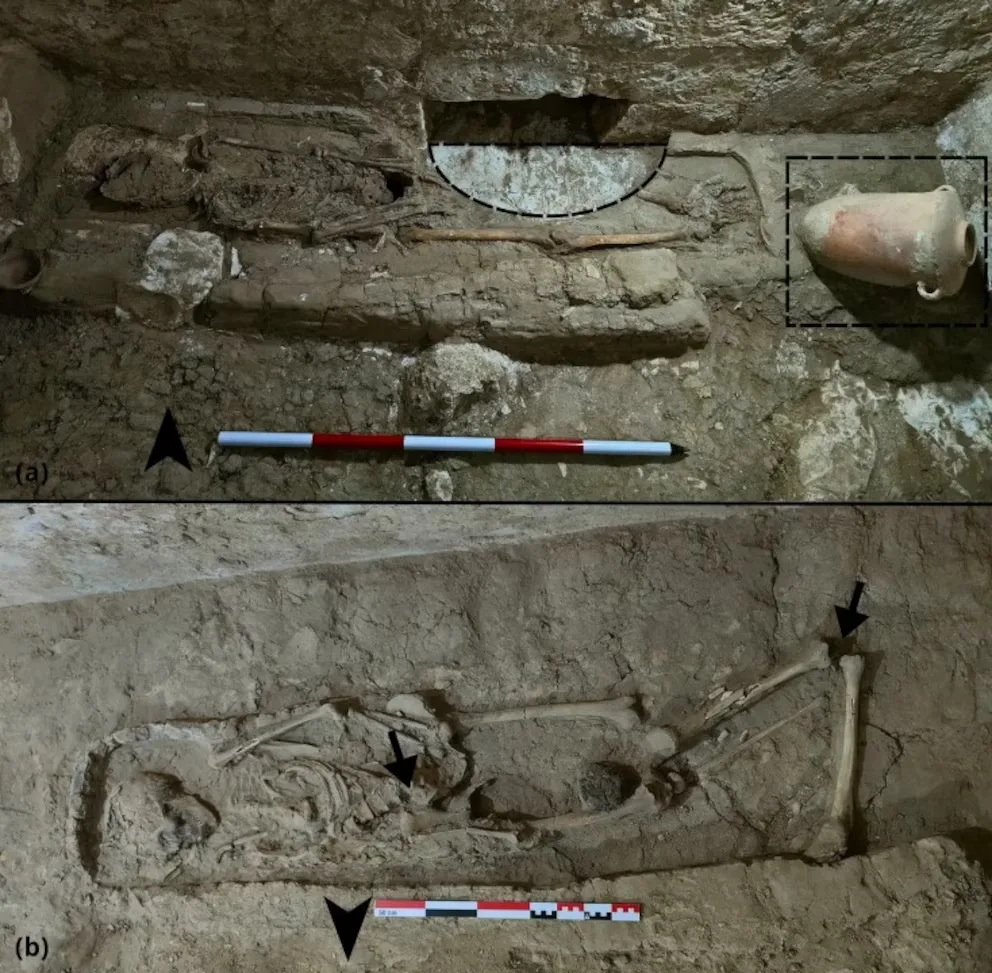
Imagen 1446326

The researchers excavated, photographed, and accurately documented the position and orientation of each body in relation to the architecture of the chamber. They identified nine funerary deposits, both individual and collective, along with objects associated with the deceased.

In the early stages, burials were usually more spaced out, and bodies were placed inside coffins. “The earliest individuals buried here appear to have had a high social status, as they were interred in coffins, with funerary nets and amulets, and with a set containing expensive objects, such as the contents of Phoenician amphorae, of which a large quantity was found alongside them,” explained the senior author, Dr. Miguel Ángel Molinero Polo, a professor of Egyptology at the same university.
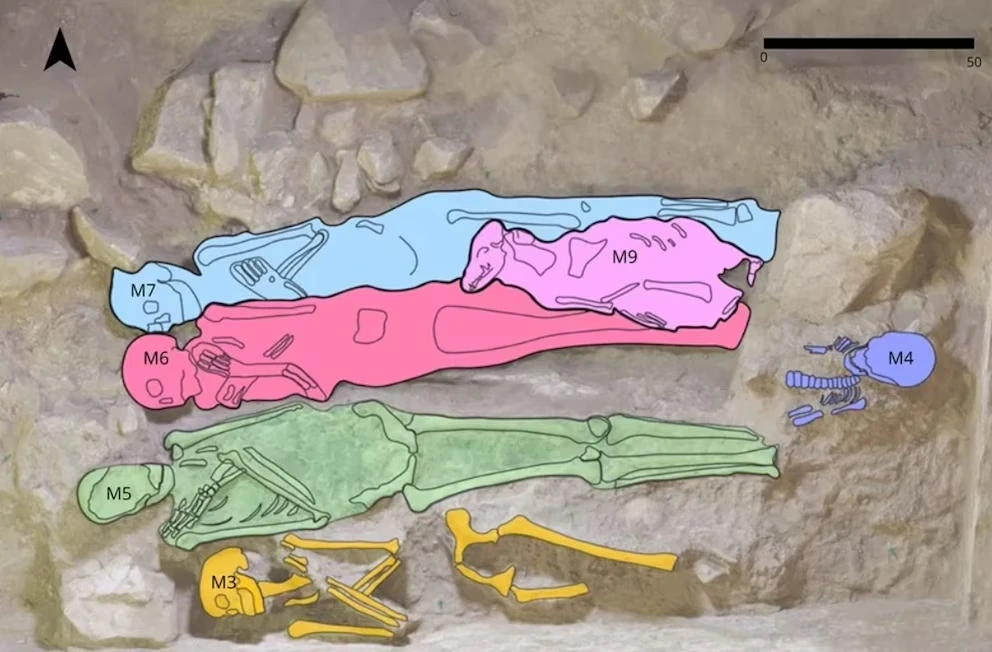
Imagen 1446328

Changes in practices over time

As the years went by, especially towards the end of Dynasty XXV and during the Persian period, around 680 to 404 BC, new bodies were placed in the remaining free spaces. The chamber became much denser. Variations in the position of the arms were also observed: in early burials, they were usually extended, while some later ones had one arm folded inward.

During the Persian period, another significant change was recorded. Instead of primarily relying on separate individual burials, people began to arrange the bodies vertically. In two-thirds of the deposits in the chamber, overlapping bodies were found. One of the most striking arrangements, dated to the Ptolemaic period, is located in the southeastern part of the chamber: four mummies and a mummified dog placed one on top of the other.
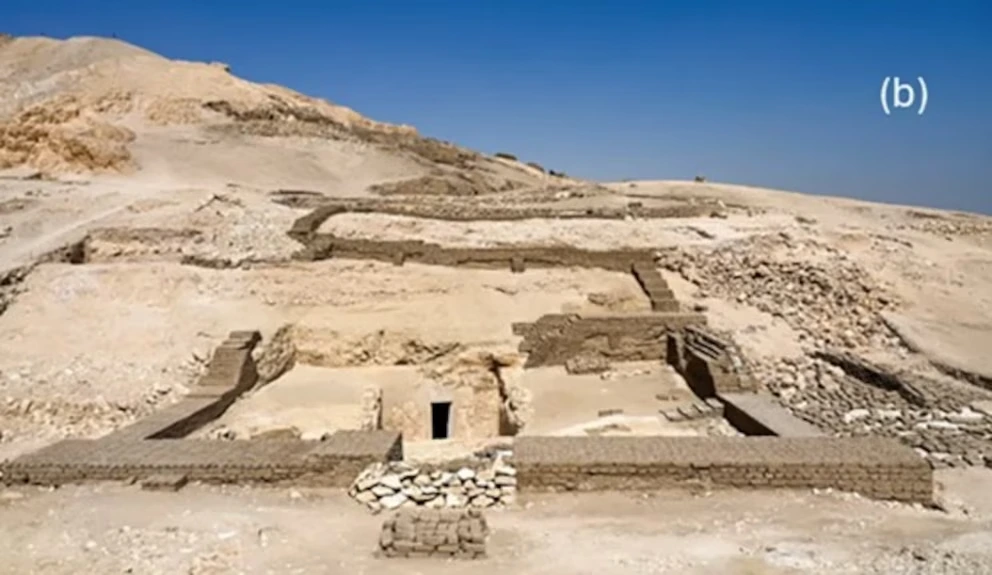

Imagen 1446327

“The bodies buried in vertical overlap did not have coffins, but were carefully mummified. They can also be associated with vertical jars that point to a specific ritual not found in the earlier phases of the tomb's use,” noted Molinero Polo.

The presence of the dog offers an additional clue about the beliefs or connections of those buried there. Carballo-Pérez highlighted: “One detail that seems quite beautiful to me is the presence of a mummified dog placed directly above the mummies of a man and a woman. This could indicate a close relationship between these human individuals and the animal, an idea that I think is quite easy to empathize with.” Molinero Polo added that it could also reflect a ritual change, in which the animal took on the role of psychopomp, a symbolic helper in the journey to the afterlife.

A funerary memory that remained alive

Other changes in the arrangement of the bodies reinforce the idea that funerary traditions evolved continuously, rather than simply disintegrating. In later deposits, for example, some individuals were buried with both arms crossed over the chest, in the position that Egyptologists call osirian.

Together, these patterns suggest that the increasingly crowded tomb did not become disorganized nor lose its cultural traditions. On the contrary, the chamber was repeatedly reactivated. Each new burial modified the organization and meaning of the available space, but always taking into account previous deposits.

Reconstructing each stage of the tomb's history is not always possible. In some deposits, researchers cannot determine the exact order in which the bodies were added or the precise intentions behind their placement. The chamber remained in use for centuries and underwent several disruptive events: it was flooded multiple times, suffered fires, and was repeatedly entered by people, which moved debris and complicated the archaeological record.

Even with these limitations, the findings could change the way archaeologists interpret other densely occupied funerary spaces. “However, what we present means that deposits previously considered ‘disordered’ can be reinterpreted,” concluded Carballo-Pérez. “This helps us develop a better understanding of the social behaviors behind funerary practices.”


La Derecha Diario logo
TwitterInstagramYouTubeTikTokFacebook
Derecha Diario TV

Nosotros

  • Quienes Somos
  • Autores
  • Donar

Privacidad

  • Protección de datos
  • Canales
  • Sitemap
  • RSS

Contacto

  • info@derechadiario.com.ar
PUBLICIDAD
La Derecha Diario logoLa Derecha Diario logo
ESX logoInstagram logoYouTube logoTikTok logoFacebook
ARGENTINAUNITED STATESECUADORISRAELMEXICODERECHA DIARIO TV
  • ES
    XInstagramYouTubeTikTokFacebook
  • DERECHA DIARIO TV
  • Sections
  • ARGENTINA
  • UNITED STATES
  • ECUADOR
  • ISRAEL
  • MEXICO
  • URUGUAY
  • Countries
  • La Derecha Diario logoLA DERECHA DIARIO
  • La Derecha Diario México logoLA DERECHA DIARIO MÉXICO
  • La Derecha Diario Uruguay logoLA DERECHA DIARIO URUGUAY
  • La Derecha Diario Ecuador logoLA DERECHA DIARIO ECUADOR
  • La Derecha Diario Israel logoLA DERECHA DIARIO ISRAEL
  • La Derecha Diario Estados Unidos logoLA DERECHA DIARIO ESTADOS UNIDOS
  • Topics
  • GUERRA EN IRÁN
  • The Newspaper
  • QUIENES SOMOS
  • AUTORES
  • PUBLICIDAD
  • DONAR

Related news

YPF and PedidosYa have sealed a partnership to bring more than 600 Full stores to delivery

YPF and PedidosYa have sealed a partnership to bring more than 600 Full stores to delivery

France expels two Iranian diplomats after accusing Tehran of attacking its representatives

France expels two Iranian diplomats after accusing Tehran of attacking its representatives

Venezuela signed a contract with a U.S. company for the development of its oil industry

Venezuela signed a contract with a U.S. company for the development of its oil industry

The judge who blocked the new FBI headquarters faces criticism for his history against Trump

The judge who blocked the new FBI headquarters faces criticism for his history against Trump

Trump launched the most crushing economic operation in history against Iran and warned the regime's allies

Trump launched the most crushing economic operation in history against Iran and warned the regime's allies

The Milei Government will incorporate drones and planes to monitor the Argentine Sea

The Milei Government will incorporate drones and planes to monitor the Argentine Sea