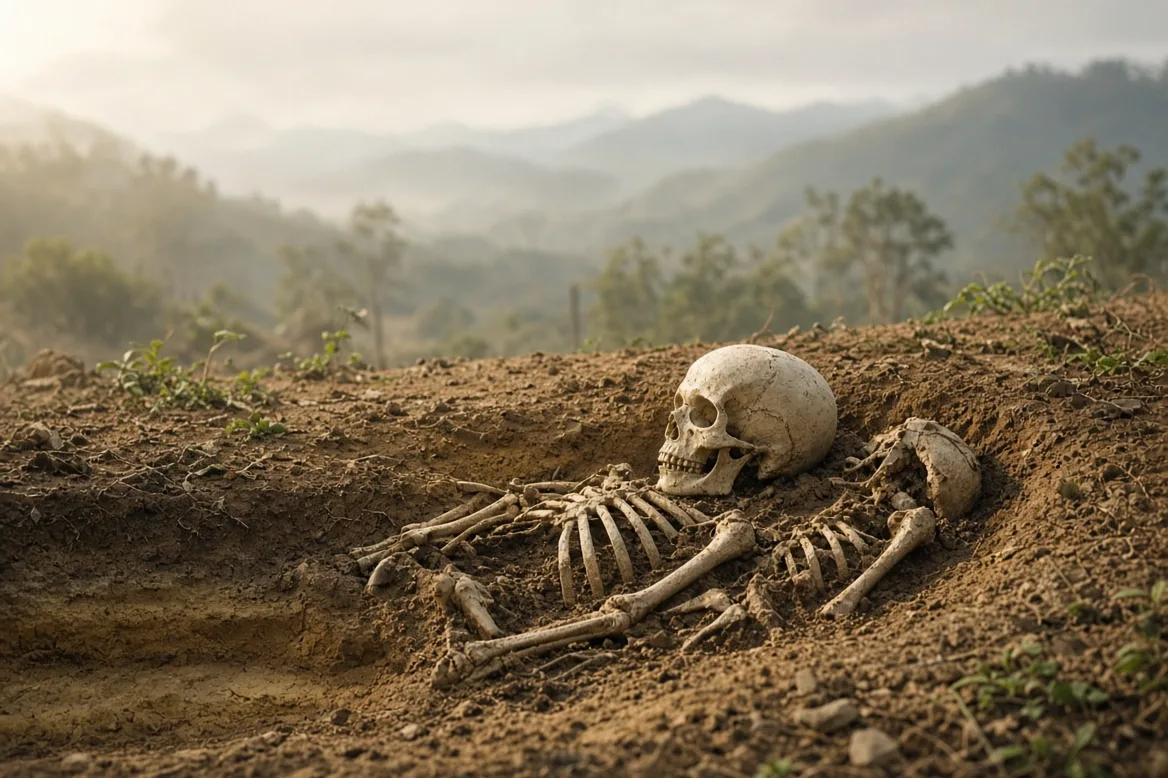
An international team led by researchers from Charles Sturt University found evidence in the skeletons of Vietnamese children dating back about 3,500 years that challenges a deeply rooted idea in paleopathology. Until now, the mother-to-child transmission of certain infections was almost taken as proof of venereal syphilis. New data indicate that other treponemal diseases, such as yaws, could also be transmitted in this way.
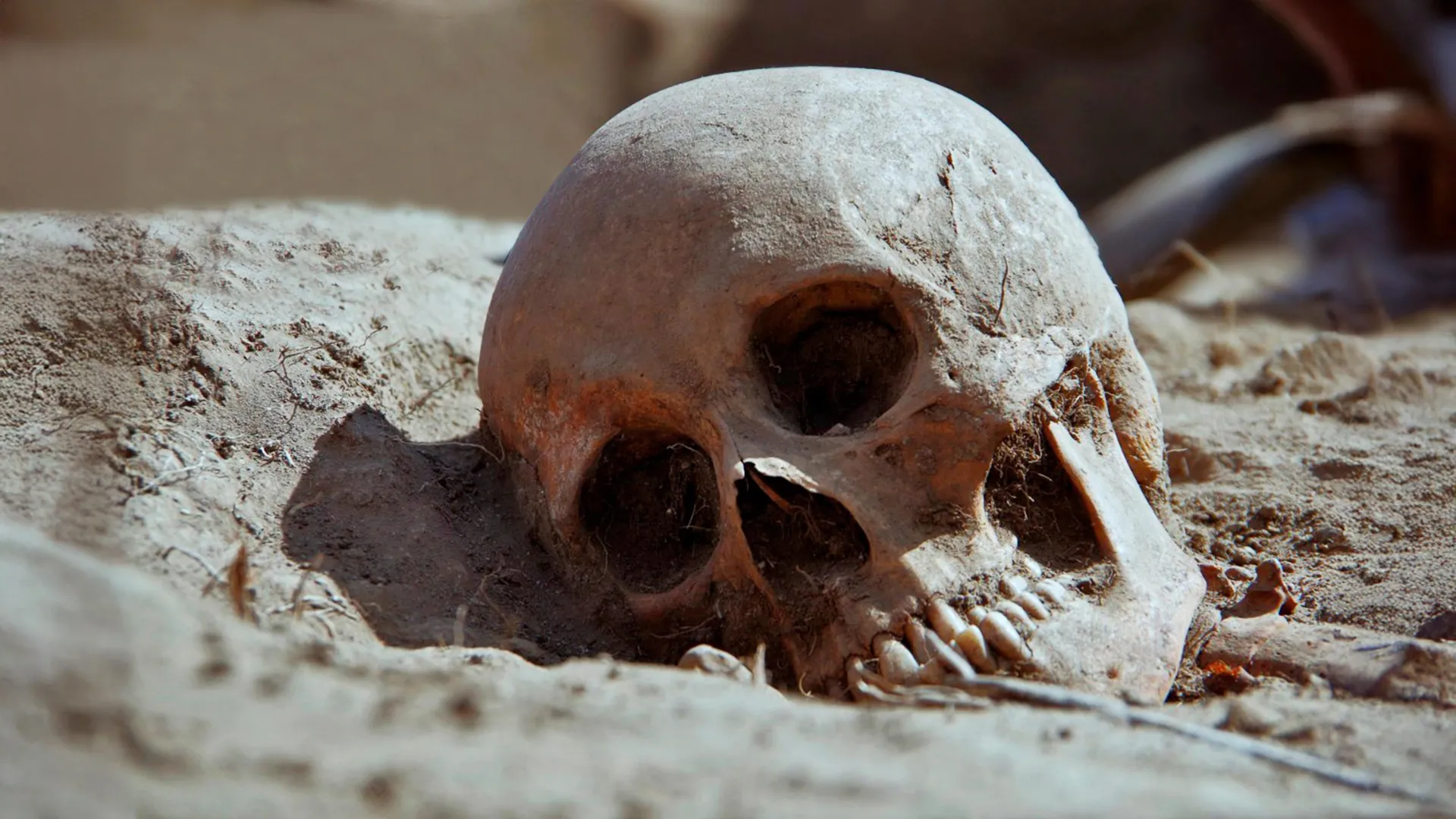
The specialists analyzed remains of 309 individuals from 16 archaeological sites in northern and southern Vietnam, with dates ranging from 10,000 to 1,000 years ago. Only three young children showed clear signs of congenital treponematosis: characteristic dental anomalies and typical bone lesions of the infection. These remains date back at least 3,500 years.
Two of the children came from Man Bac, a site in the north where unusually high rates of treponemal disease had already been recorded. There, most cases were concentrated in children and adolescents, an epidemiological pattern more typical of non-venereal infections that spread through skin contact than of sexual syphilis.
“For decades, congenital infection in archaeological remains was often interpreted as solid evidence of venereal syphilis,” explained the lead author, Dr. Melandri Vlok. “Our research shows that this assumption is not always correct. Other treponemal diseases could also have been transmitted from mother to child.”
Implications for the Origin of Syphilis
The finding has direct consequences for one of the longest debates in the history of medicine: where syphilis originated. Many studies of ancient remains used the presence of congenital transmission to argue that the disease existed outside of America before Columbus's voyages. It is now clear that this criterion alone is insufficient to distinguish venereal syphilis from other treponematoses.
So far, there is no confirmed biological or genetic evidence of pre-Columbian venereal syphilis either within or outside of America. In contrast, genetic analyses of European and American remains reveal several treponemal diseases in ancient populations, indicating a much more complex evolutionary history than previously thought.
In tropical regions like Southeast Asia, recovering ancient DNA is especially difficult due to preservation conditions. Additionally, the destructive sampling of human remains raises increasingly intense ethical debates. “In tropical environments, recovering ancient DNA is incredibly complicated, and destructive sampling raises important ethical questions,” noted co-author Minh Tran, a doctoral student at the University of the Philippines.
The researchers emphasize that the bacterium Treponema pallidum, responsible for this group of diseases, shows remarkable adaptability. Instead of focusing solely on the origin of syphilis, they propose studying how different treponematoses evolved alongside human societies and environmental changes. Yaws, for example, continues to affect over 150,000 people in tropical areas and can cause permanent disabilities. Today, it is re-emerging partly due to the climate crisis.
The work, published in the International Journal of Osteoarchaeology, compels a reinterpretation of skeletal evidence that was previously automatically labeled as congenital syphilis. Some of these lesions could correspond to different diseases. Understanding this complexity is key to reconstructing how infections shaped human history.