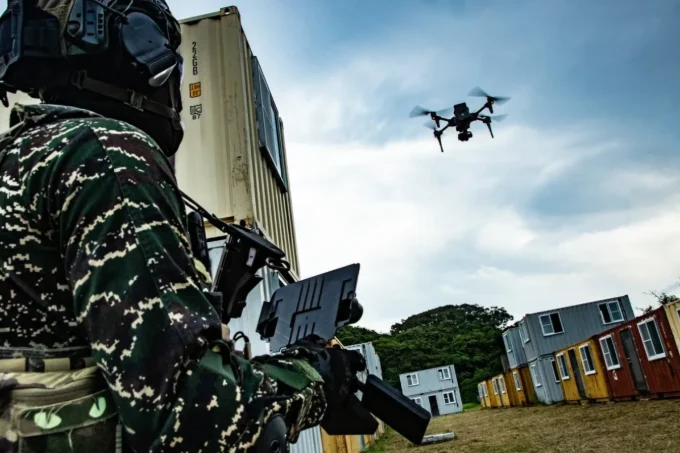
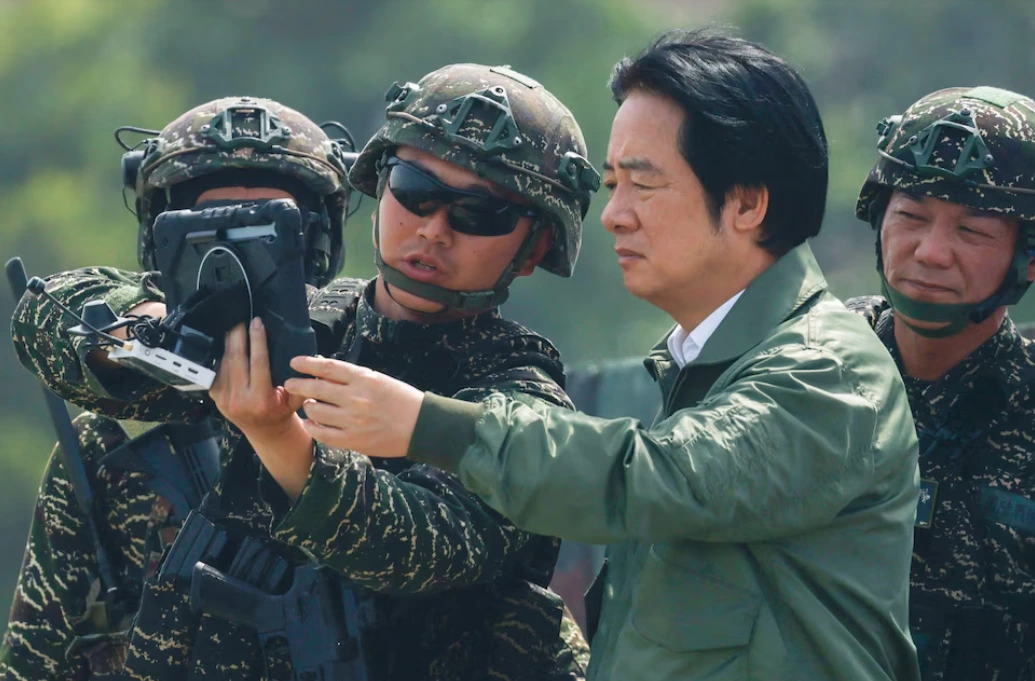
The Taiwanese Air Force is preparing to create a specialized unit for combat drones capable of conducting long-range attacks against targets in Chinese territory, in a strategic shift aimed at strengthening the island's offensive capability in the face of a potential aggression from the People's Liberation Army.
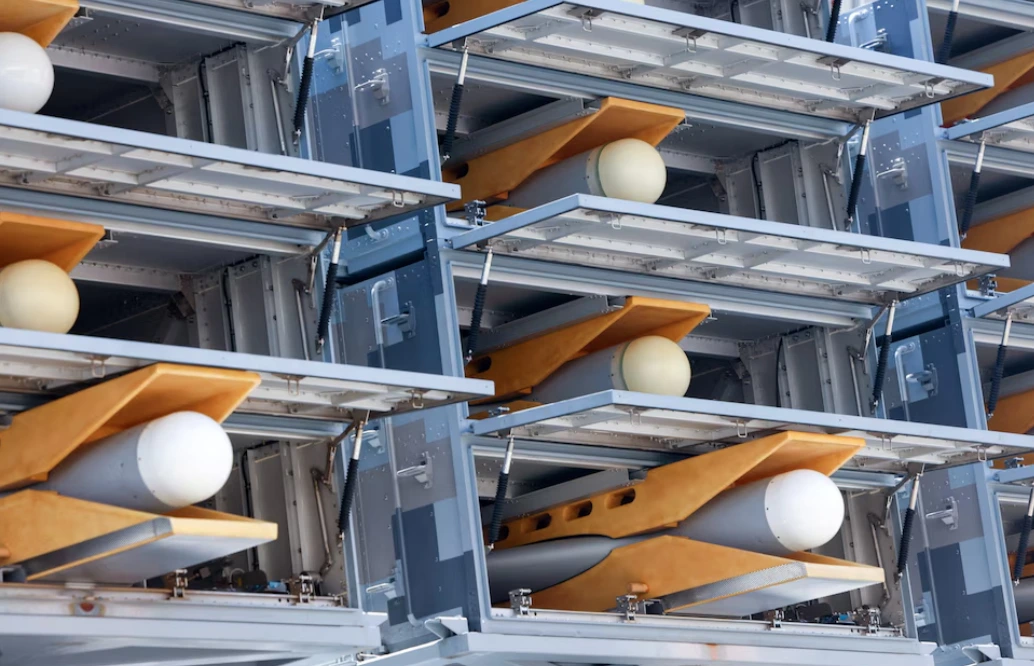
According to Taipei Times, based on the testimony of a high-ranking military official speaking on condition of anonymity, the new structure will utilize various types of unmanned aerial vehicles and will include among its main tools the Chien Hsiang, loitering munitions developed in Taiwan specifically to locate and destroy radar systems.
The strategy aims to use low-cost drones in large quantities to saturate Chinese air defenses, forcing their radar systems to activate and expose themselves to attacks.
Taiwan seeks to neutralize Chinese radars
According to the published information, Taiwan's Air Defense and Missile Command has already deployed around 200 Chien Hsiang drones on the main island and in various peripheral territories.
The operational concept involves launching these devices en masse over the Taiwan Strait to provoke a reaction from Chinese forces. Once the radars are activated to detect or intercept the swarm of drones, the unmanned aircraft could target those facilities.
Taiwan seeks to neutralize Chinese radars
The goal is to degrade China's ability to detect and shoot down Taiwanese aircraft. If the radars and other defense systems are neutralized, the Taiwanese Air Force could have a window to use its fighter jets, including the Lockheed Martin F-16 and the AIDC F-CK-1 Ching Kuo.
The strategy represents a shift from a posture primarily focused on resisting and defending the island's airspace.
Swarm of cheap drones against Chinese defenses
One of the main elements of the new strategy will be the use of swarm of cheap and disposable drones, designed to force the adversary to expend much more costly defense systems.
The logic is asymmetric: Taiwan intends to use relatively inexpensive vehicles to threaten radars and air defense systems whose costs can be considerably higher.
The future unit would combine the Chien Hsiang with a new attack system recently acquired and built with commercially available civilian components. According to the official cited by Taipei Times, each device would cost several million Taiwanese dollars, well below previous systems that reached tens of millions.
The new model features satellite positioning and image recognition to identify and lock onto targets. Taiwan has not publicly confirmed whether it is the Mighty Hornet II or another recently acquired attack system.
The strategy has already been tested
The concept of using drones alongside manned aircraft was tested during the military exercises Tien Lung, held from April 7 to 9.
The strategy has already been tested
During those maneuvers, Air Force pilots participated in simulated combat and coordinated attack exercises with unmanned aerial vehicles. The goal was to assess how drones can complement fighters and reduce their exposure to enemy defenses.
The Chien Hsiang, developed by the Chungshan National Institute of Science and Technology, is particularly important for this strategy due to its function as loitering munitions specialized in attacking radars.
Taiwan is also preparing its defenses against drones
While developing offensive capabilities, Taiwan is also strengthening its systems to face possible mass attacks from Chinese drones.
During the military exercise Han Kuang, Taiwanese personnel were observed using anti-drone systems developed by the same military research and development institute. The island's forces conducted exercises aimed at responding to simulated attacks using swarms of unmanned aircraft.
The preparation reflects a new reality in Taiwan's military planning: drones can be used both to saturate the enemy's defenses and to protect one's own facilities.
The development of this new unit thus shows how Taipei seeks to incorporate lessons from recent conflicts, where low-cost drones demonstrated their ability to alter the balance between extremely costly military platforms and unmanned systems capable of operating in large quantities.