
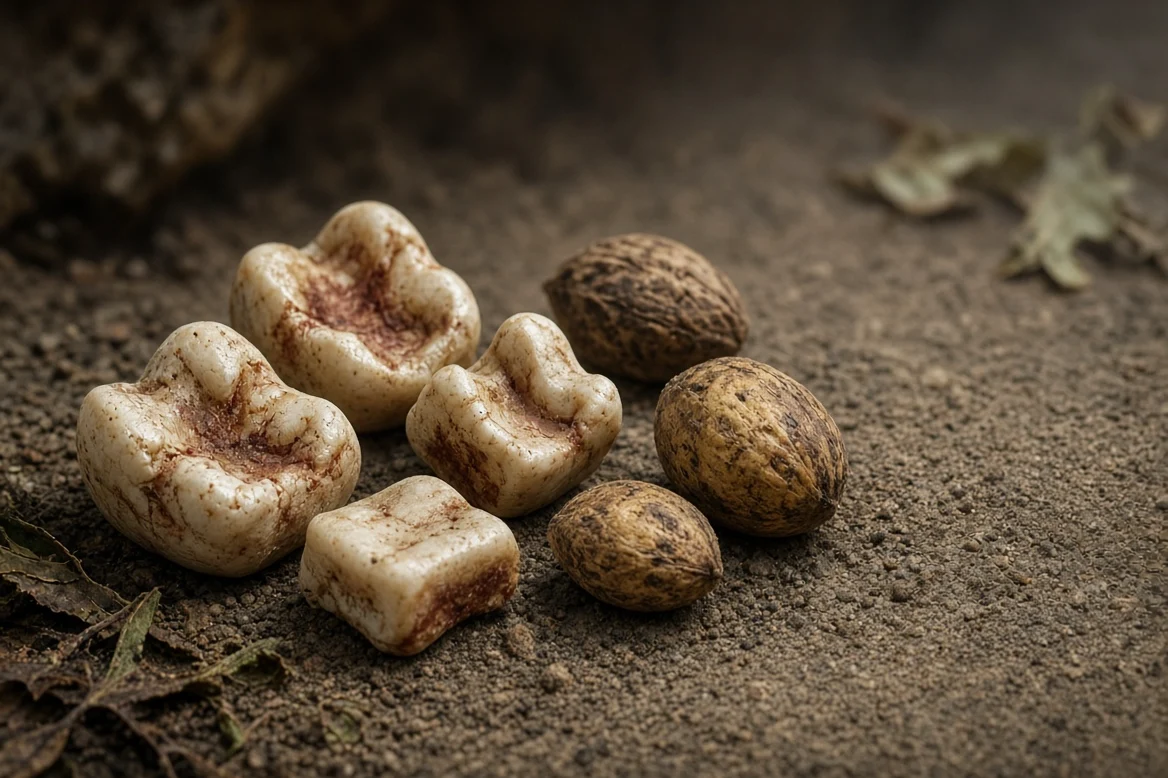

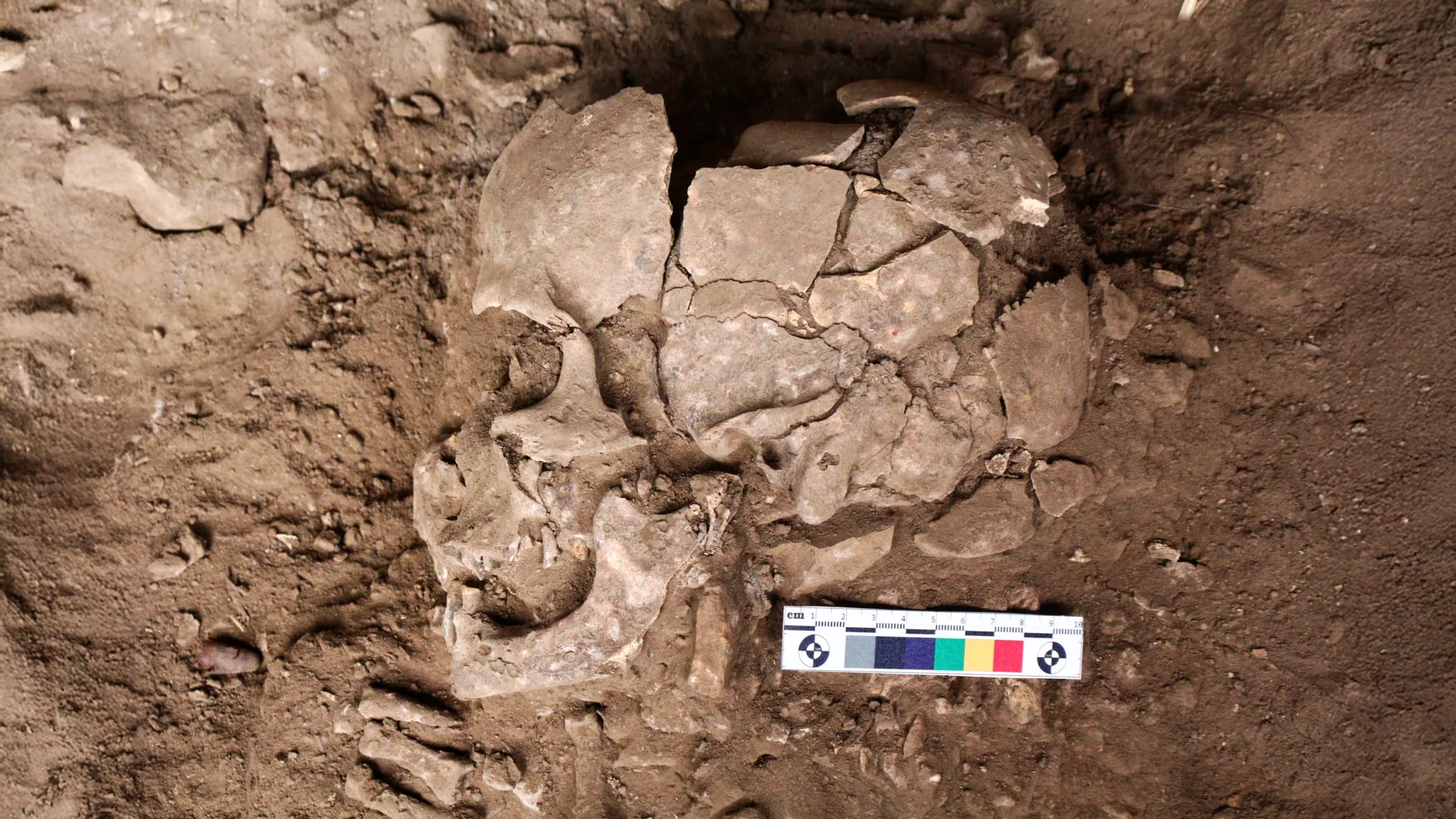
Archaeologists from Griffith University found evidence that human groups on the island of Sulawesi, Indonesia, regularly consumed betel nut up to 25,000 years ago. The finding is based on bone remains of two hunter-gatherers and combines dental wear analysis with biochemical testing.
One of the individuals lived between 25,000 and 16,000 years ago; the other, between 7,600 and 6,300 years ago. Both exhibit a particular dental wear pattern: deep, rounded grooves on the teeth. The researchers interpret this pattern as the result of repeatedly sucking whole betel nuts.
In addition to the wear, the analyses detected arecoline, the main psychoactive alkaloid of the nut, within the dental tissues. This chemical presence reinforces the idea that these individuals ingested the substance frequently and for extended periods.
Until now, it was thought that the widespread use of betel nut began in the Neolithic or Bronze Age, about 3,500 years ago. The new study pushes this practice back to the late Pleistocene, long before the advent of agriculture.
 A substance with psychoactive effects
The betel nut comes from the Areca catechu palm and is currently the fourth most consumed psychoactive substance in the world, after alcohol, caffeine, and nicotine. It produces a mild euphoria and increased alertness.
Today, it is chewed as a "quid" along with slaked lime and other ingredients. The lime accelerates the release of the active compounds. However, the team's experiments showed that simply sucking the intact nut already releases enough arecoline to generate physiological effects.
 Possible pain relief at a high cost