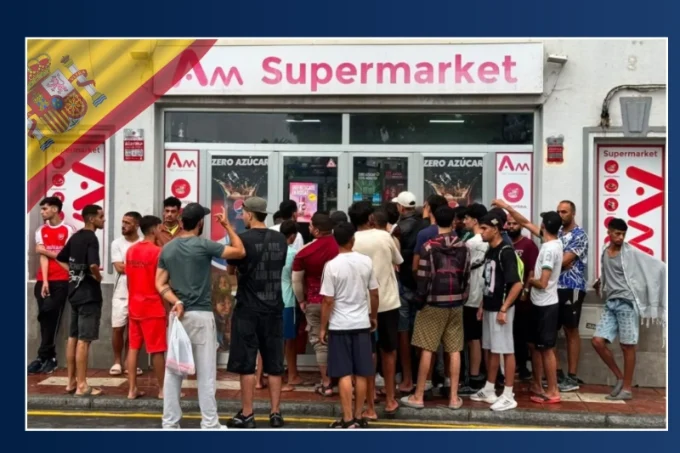
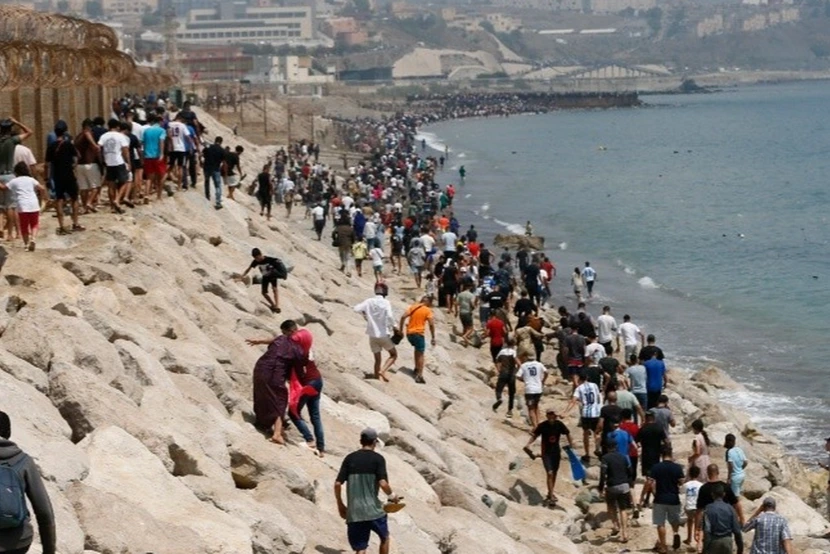
Merchants in Ceuta experienced two days of fear and uncertainty after the massive entry of illegal immigrants from Morocco overwhelmed the operational capacity of the city and left scenes of looting, thefts, and establishments forced to close due to the inability to guarantee safety.
From the urban center to areas like Puertas del Campo and the Mixto neighborhood, numerous owners lowered their shutters or began to manually regulate customer entry. This measure aimed to prevent dozens of people from accessing the stores simultaneously and to protect both the workers and those who were already shopping.
While some businesses served people who had arrived with money and needed to buy clothes, medications, or replace belongings damaged during the crossing, other establishments reported losses of merchandise, harassment, and looting carried out by Muslim groups roaming the streets in search of food, but also of high-value commercial products.
Arantxa Campos Gorriño, president of the Confederation of Entrepreneurs of Ceuta, explained that the entry of tens of thousands of people in a few hours made it impossible to maintain the usual functioning of a city of approximately 83,000 inhabitants.
The business leader even recounted that some stores received immigrants seeking assistance because their iPhone 17 had gotten wet. However, at the same time, other food establishments suffered thefts and crowds of people demanding food and drink.
The National Police had to intervene due to the entry of immigrants into schools, forced vehicles, and various attempts to occupy homes and businesses. Some cars were opened to steal items, while others may have been used as makeshift shelters for sleeping.
Most businesses had closed by Thursday afternoon, upon realizing that tens of thousands of people were entering uncontrollably from Morocco. The Parques de Ceuta Shopping Center made the decision after reinforcing its security for several hours, while some cafes and food stores attempted to reopen this weekend.
This Saturday, the Confederation of Entrepreneurs reported that establishments began to resume their activities, although “with caution.” The reopening occurred after authorities confirmed that a reinforcement of police presence would be maintained at various points in the city.
The Moroccan invasion of Ceuta
According to data transmitted by the Spanish government to the business entity, around 5,000 people were still in Ceuta out of approximately 50,000 who had entered on Thursday. The employers' association called for calm, responsibility, and support for local commerce as the city slowly moved towards normalcy.
Despite the reopening, business owners questioned the management of the border and the relationship of Pedro Sánchez's socialist government with Morocco. Campos demanded a bilateral relationship of equality and not of “servility,” and warned that humanitarian assistance must be accompanied by territorial control and protection for those who live and work in Ceuta.