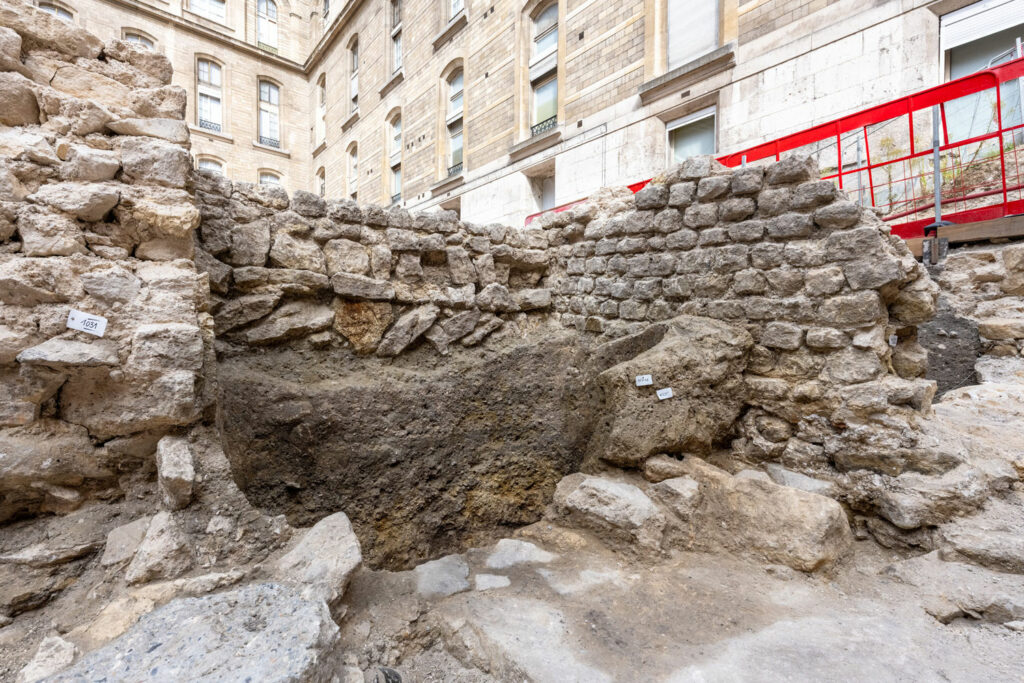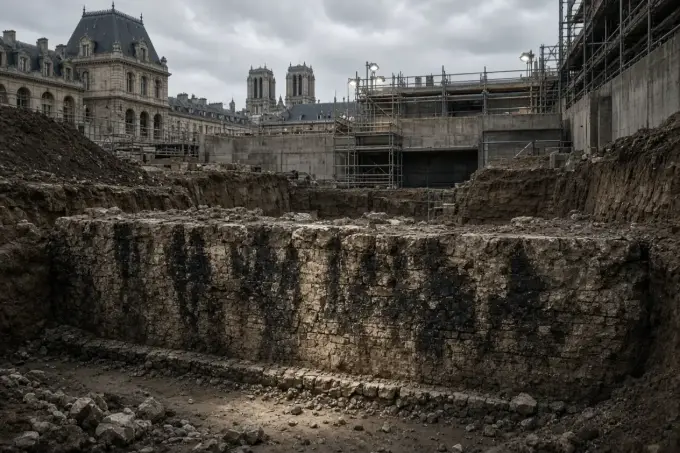

In the very center of Paris, beneath the Hôtel-Dieu hospital located on the Île de la Cité, excavation work uncovered a section of wall about 20 meters long. The discovery occurred very close to the Notre Dame Cathedral and may correspond to the ancient walls of Lutetia, the original settlement of the Gallic tribe of the Parisii.
The structure appeared in an area that had so far yielded few remains from that very early stage. Specialists link the wall to the city's defenses prior to the Roman conquest. The location, in the heart of the island that has always been the core of the city, adds value to the discovery.
Alongside the wall, charred material was recovered. Carbon dating analyses place the burning of that material between 200 and 10 BC. This time range is crucial because it overlaps with an episode narrated by Julius Caesar in his Commentaries on the Gallic War.
The Roman general recounts that the Gauls burned their own village before facing the legions in the Battle of Lutetia, which took place in 52 BC. The coincidence between the material evidence and the historical account generates particular anticipation among researchers.
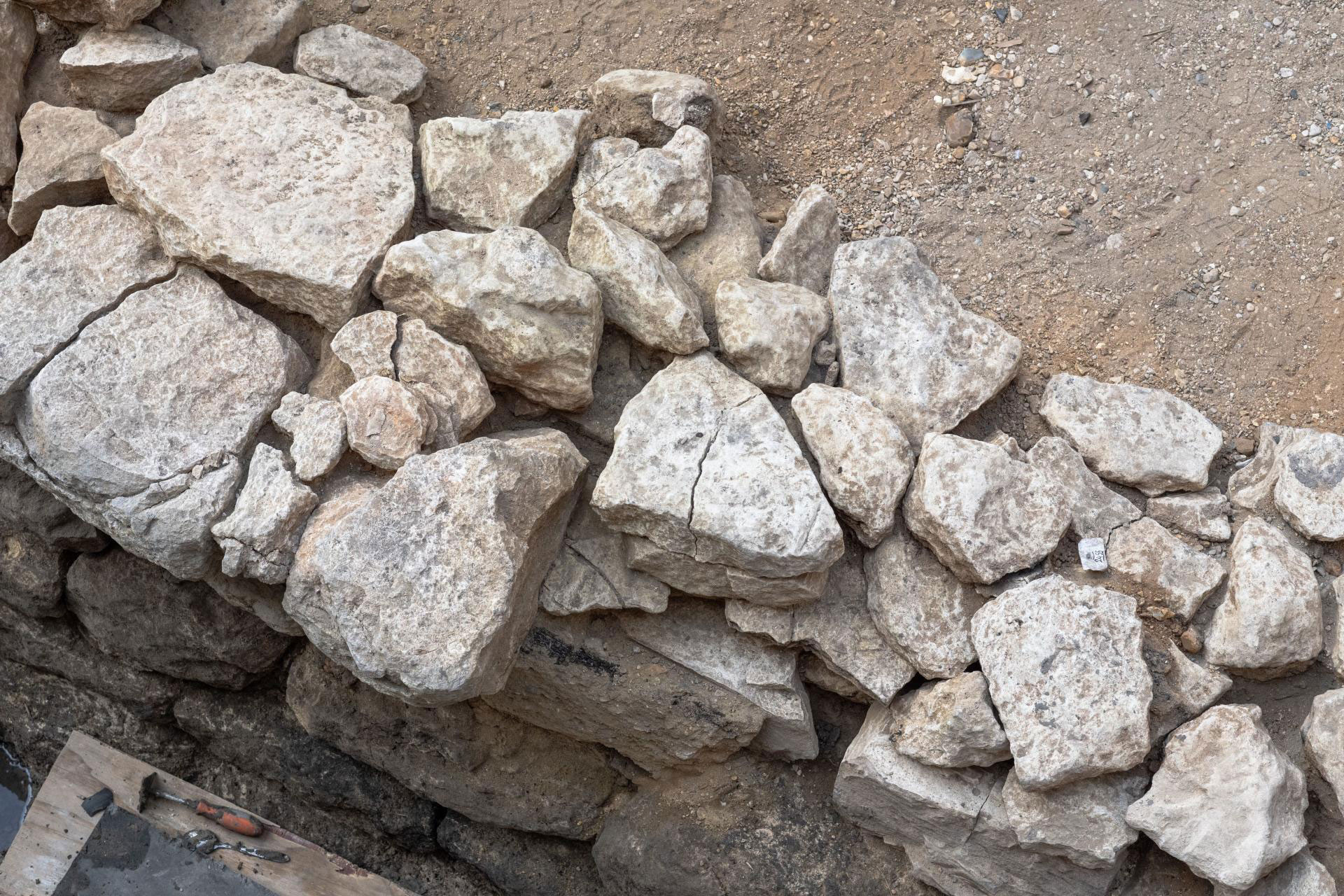
A Possible Testimony of Gallic Lutetia
The French Minister of Culture, Catherine Pégard, cautiously but enthusiastically described the finding. “We could be facing one of the most important remains ever discovered to understand Gallic Lutetia,” she stated. She added: “Scientific caution still requires us to verify its function and chronology, but the convergence of evidence is particularly remarkable at this stage.”
The Parisii occupied the region long before the arrival of Rome. Their settlement, known as Lutetia, was located on the island and the banks of the Seine. Over time, this small Gallic city transformed into the embryo of modern Paris. Therefore, any remains that can be associated with that period acquire exceptional value.