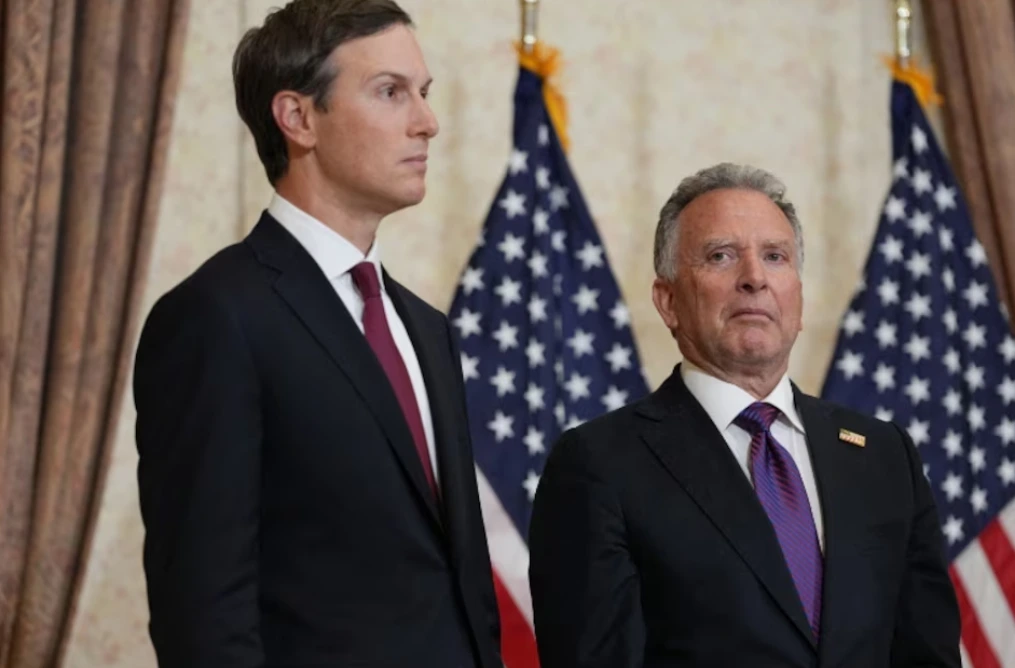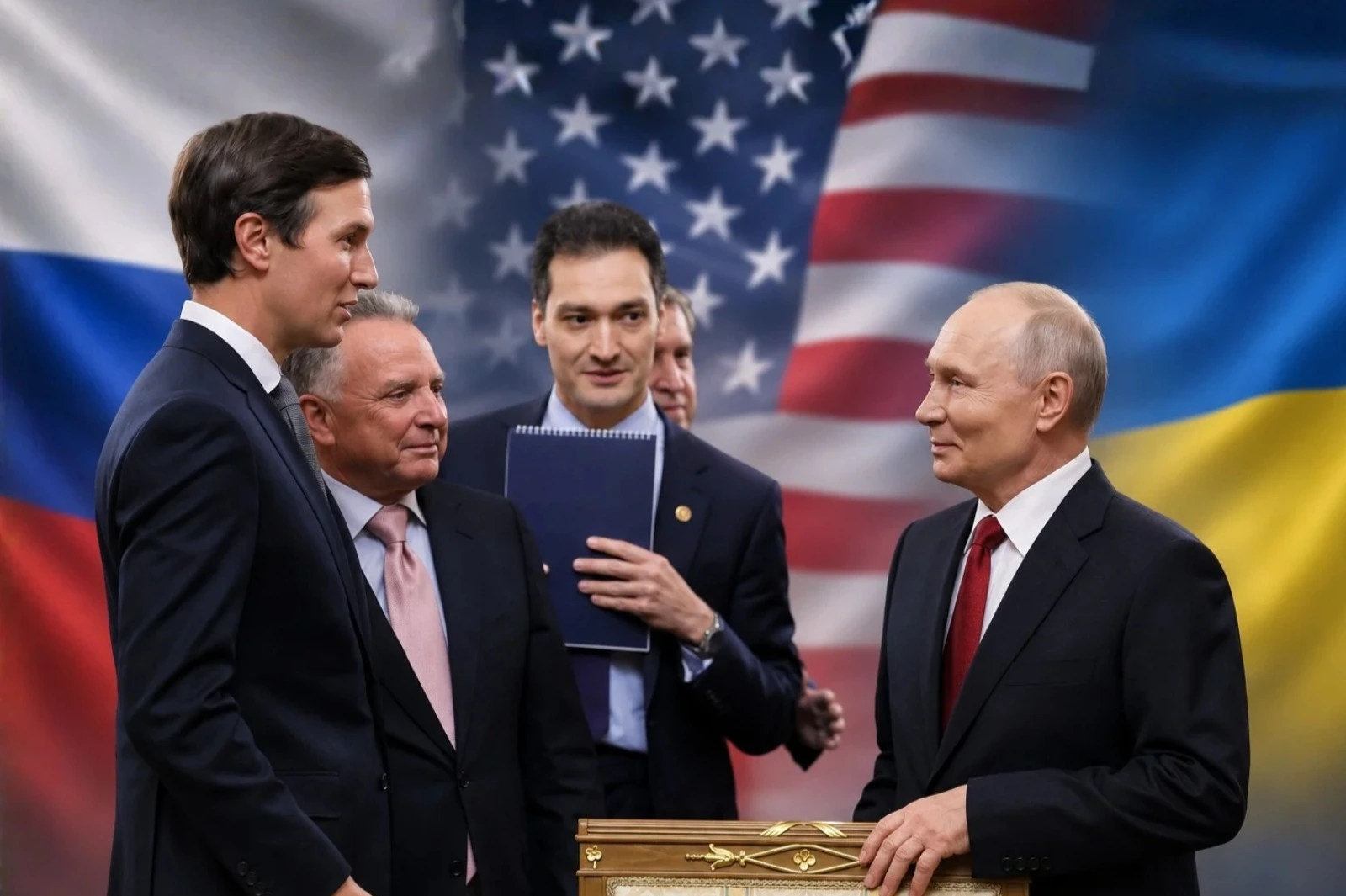

The special envoys of the President of the United States, Donald Trump, arrived at the Kremlin this Thursday to hold a meeting with Vladimir Putin and advance negotiations aimed at ending the war in Ukraine. The meeting, led by businessman Steve Witkoff and Jared Kushner, son-in-law of the U.S. president, took place after two days of talks between Russian and Ukrainian representatives in Abu Dhabi.
The meeting represents a new step in the diplomatic strategy promoted by Trump to reach a peace agreement and open a negotiated exit to the conflict. The American emissaries arrived in Moscow shortly after 1:00 PM local time, aiming to review the progress made in the United Arab Emirates and explore new possibilities for understanding.
Before the meeting, Kushner had anticipated that Washington's intention was to take advantage of the opportunities that arose during the previous talks. The U.S. envoy stated that there were some openings to advance and that the meeting with Putin would allow them to review the points discussed in Abu Dhabi and seek concrete results.
Trump seeks to consolidate diplomatic advances and bring positions closer
The Kremlin's international policy advisor, Yuri Ushakov, confirmed that the talks would address all issues related to the possibility of reaching a peaceful settlement. However, he also made it clear that Moscow has objections to the direct participation of European countries at the negotiating table.
Ushakov questioned the European Union's ability to designate a single representative and stated that, so far, European governments had not managed to agree on who should take on that responsibility.
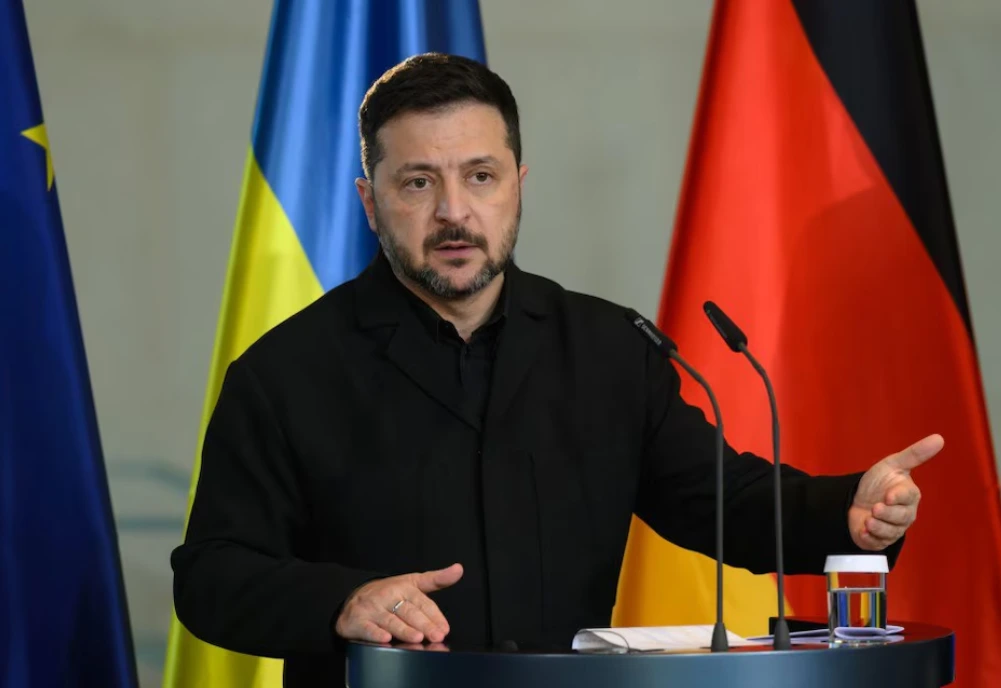
The discussion arose after the United States and Ukraine raised the possibility of incorporating Europe as part of the negotiations. Ukrainian President Volodymyr Zelensky asked Brussels to choose a negotiator this month, while Kushner encouraged Ukraine's European partners to quickly resolve that issue.
The Trump envoy considered that achieving a unified representation would be an important advance for Europe, even before Russia formally accepts its participation in the talks.
Russia acknowledged progress in Abu Dhabi and questioned the European role
From Moscow, there were also signals that the talks in the United Arab Emirates allowed for progress. Russian Deputy Foreign Minister Sergey Ryabkov, who participated for the first time in negotiations with Ukraine since the beginning of the war, assured that there had been advances and emphasized the importance of avoiding the mistakes of previous diplomatic attempts.
As he explained, one of the main axes of the talks was the architecture of European security, a central issue for the Kremlin's strategic demands.
Ryabkov, however, harshly questioned the position of European governments. He stated that they show no willingness to use common sense and considered that U.S. representatives should help them change their stance.
He also warned that incorporating Europe into the negotiations could lead to a setback and jeopardize the diplomatic efforts currently underway.
For his part, the head of the Russian delegation, Vladimir Medinsky, raised the need to build a sort of "new Yalta," referring to the 1945 conference where the victorious powers of World War II defined much of the post-war international order.
The reference raised concerns among European officials, who interpret the proposal as a possible Russian demand to limit NATO's expansion into Eastern Europe and reduce Western military support for Ukraine.