Walter Erviti began a new professional stage at Rayados de Monterrey. After coaching three teams and going through an irregular period as a coach, the Argentine decided to step down from the position and take on a role within the sports structure of the Mexican club.
The decision came amid a deep restructuring of Monterrey, which aims to move past several seasons with results below expectations and design a project with long-term goals.
Walter Erviti, new member of the sports structure of Rayados
The changes in the institution included the departure of Tato Noriega as sports director and the arrival of Dennis te Kloese to take that position. At the same time, Rayados brought in Erviti, who will perform a role related to sports planning and supporting the coach.
The Argentine will have among his responsibilities to collaborate in building a sustainable project, support the coaching staff, and participate in decisions aimed at preserving the club's sports heritage.
“I am happy and learning in Mexico, it is a club for which I have a lot of affection and I feel comfortable working here. To be a sports secretary, one must have a long-term vision. The coach lives more from day to day and from match to match, a sports director occupies a more institutional role and defends the club's heritage. Each institution has its microclimate, and it is up to the player to give their all and separate themselves from what happens outside,” he explained.
Why Walter Erviti stopped being a coach
The former midfielder also referred to the differences between coaching a team and holding a position within the sports management. As he explained, the daily dynamics of the coach ended up being an aspect he did not enjoy.
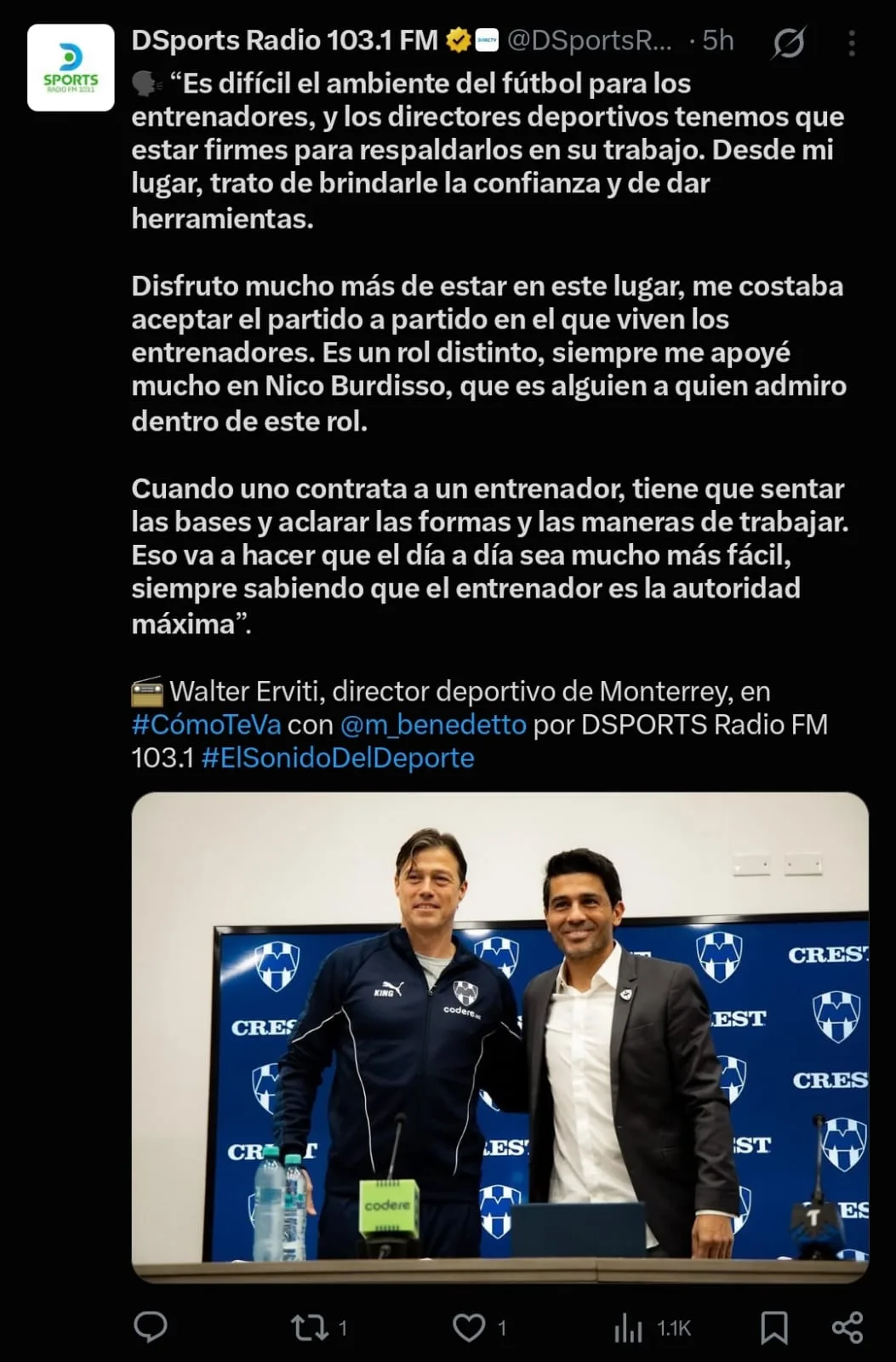
“The football environment is difficult for coaches, and sports directors have to be firm to support them in their work. From my position, I try to provide confidence and give tools. I enjoy being in this role much more, it was hard for me to accept the match-to-match life that coaches live,” he stated.