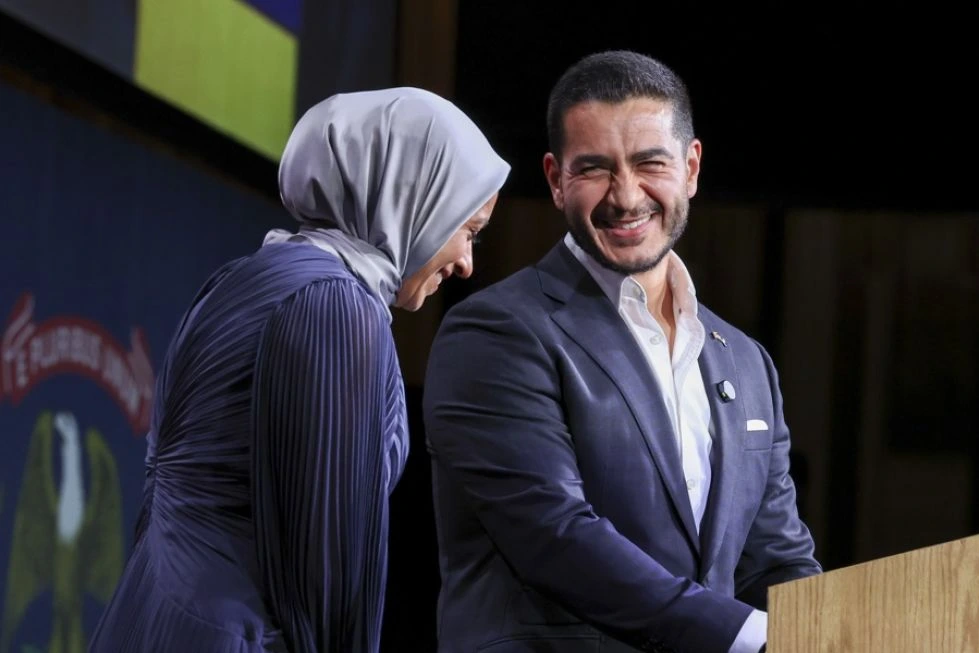
On November 3, following the midterm elections, the Democrats regained control of both chambers of the U.S. Congress. However, the most revealing fact of the day was another: Abdul El-Sayed, elected from Michigan, will be the first Muslim senator in U.S. history.
Abdul—born in Michigan and the son of Egyptian immigrants—was elected as a figure of the progressive wing, backed by Bernie Sanders and Ocasio-Cortez, and announced that he will swear on a Quran when he takes office in January.
It is worth remembering that in January, Zohran Mamdani took office as the mayor of New York, also as a Democrat, swearing on two Qurans with Sanders himself administering the oath.
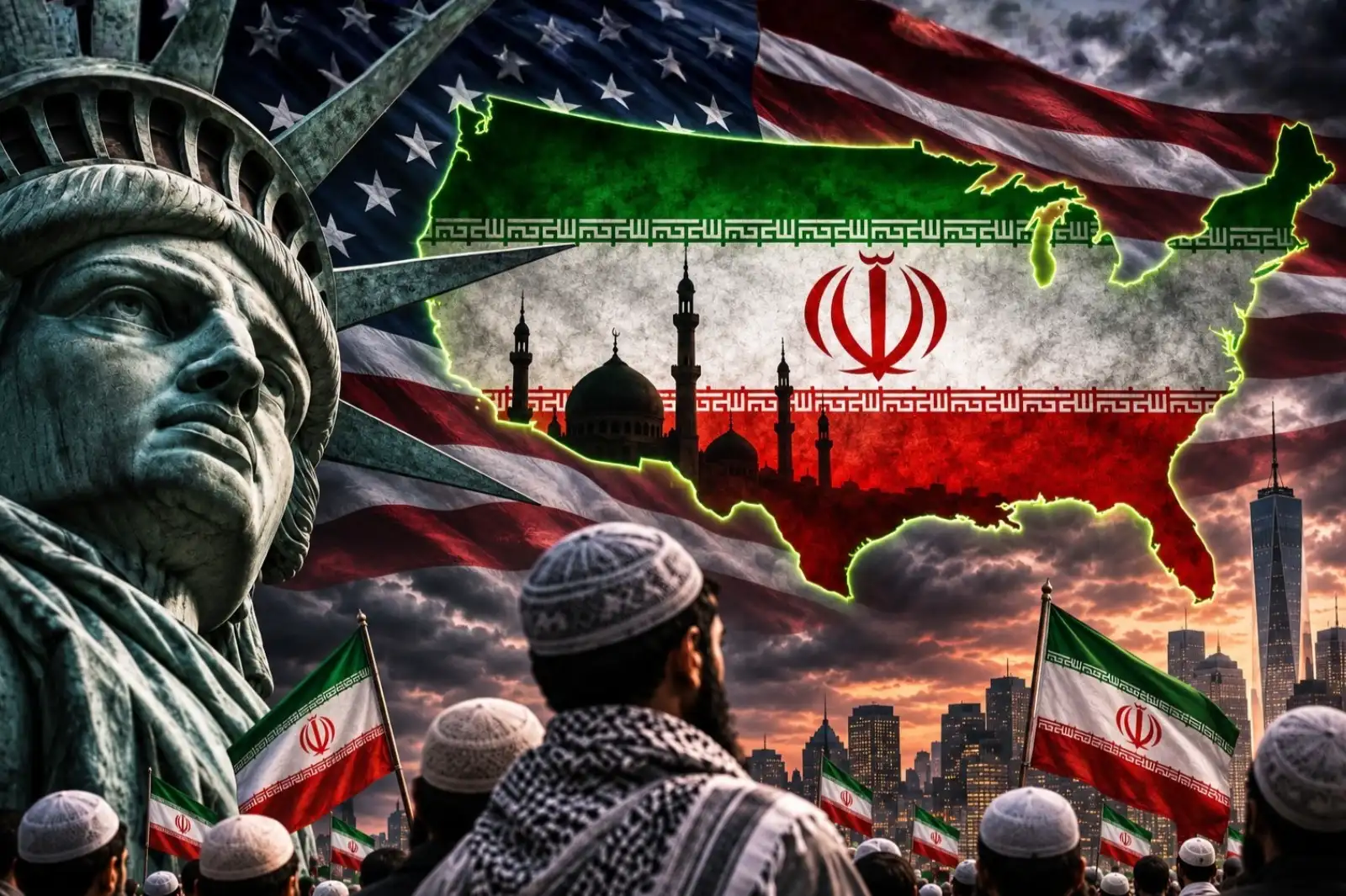
In this context, it is pertinent to analyze the shift that the U.S. election left, the historical precedent that this coalition seems to ignore, and why Argentina today has the responsibility of being the beacon of the West, not only on the continent but also in the world.
Abdul El-Sayed and his wife.
The New Map of Congress
The U.S. Senate is now represented by a Democratic majority in its seats, with 55 against 44 Republican seats, with Alaska still undecided. Likewise, in the House of Representatives, they also achieved the majority, with 245 against 147 seats.
What drew attention was the Republican defeat in traditionally red states. Kansas elected a Democratic senator for the first time since 1932, Mississippi did so for the first time since 1982, in Texas the Democrat Gina Hinojosa won the governorship after more than three decades of Republican control, and Susan Collins lost her seat in Maine.
However, the result of the midterm elections is not an anomaly but a rule. Since 1934, there have only been three occasions when the president's party won these elections: Roosevelt in 1934, Clinton in 1998, and Bush in 2002.
But the composition matters more than the arithmetic, as El-Sayed won in Michigan and James Talarico in Texas, reinforcing the left wing. Thus, the new Senate will have three progressives where there was previously one. “I was not on the ballot and, if I had been, we would have won by a landslide!” declared President Trump hours after the election.
Congress of the United States.
The Lesson Iran Left for the Left
A precedent of what happens when the political left decides to ally with Islam is found in Iran. In 1979, against the Shah's regime, the entire opposition spectrum aligned, from the Tudeh Communist Party and the Fedaiyan to the People's Mujahedin and the Khomeinist clergy. The Iranian left believed it shared a revolution and that power would then be distributed, but there was no such distribution.
As soon as he took control of the state, Khomeini outlawed his own allies, imprisoned their leaders, and executed them, in a process that culminated in the mass executions of political prisoners in 1988.
In this way, women lost in a few years what they had gained in decades. The Family Protection Law was repealed, the mandatory hijab was imposed, they were removed from the judiciary, and the legal age for marriage was lowered, among other extremist measures.
Interestingly, the objective was never hidden. The velayat-e faqih, the doctrine of the Islamic jurist's guardianship over all political life, was formulated by Khomeini himself in 1970, in a series of lectures given in Najaf and published that same year.
Iranian Revolution.
In them, he argued that the monarchy was an illegitimate institution and that only the government of a prominent Islamic jurist can ensure that sharia is applied correctly. In other words, it was written nine years before the revolution; simply, no one wanted to read it.
It should not be overlooked that these processes did not occur in remote centuries. Just as in Tehran, in 1960s Kabul there were female doctors and university students, and today Afghan women are banned from secondary education.
In Nasser's Egypt, the veil was a minority, and the president himself publicly mocked those who proposed imposing it, while in secular Turkey it was banned in universities until fifteen years ago. It is evident that none of those societies believed that regression was possible, and all took less than a generation.
Argentina, the Southern Beacon of the West
While Europe discusses its own identity, Argentina is clear about the position it must occupy in the decades to come. Milei was emphatic at the Annual Gala of the Faro Foundation, where he stated that “the American continent has everything necessary to redeem a lost West, and alongside the United States in the north, Argentina can be its southern beacon.”
This proposal inverts a historical relationship, because for two centuries America received its institutions and ideas from Europe, and today it seems that the Old Continent needs someone to remind it what they were.
It is crucial to understand that none of the societies that today serve as a warning believed that regression was possible. Argentina is still on time precisely because it has not yet begun, and that advantage is maintained only with awareness and political will.
President Javier Milei.
Conclusion
It is pertinent to understand that the U.S. election is not a domestic matter. It defines who leads the main power of the West and with what coalition, and what advanced on November 3 was not simply a majority but a current with its own worldview.
The Democratic Party persists in the same error with its open borders, but the most advanced case is in Europe, which seems to have learned nothing from the lesson of the Middle East. It is the same distraction that in 1979 cost the lives of those who believed they could manage the alliance between the left and Islam.
For Argentina, the scenario demands something more than mere observation. The country does not contribute to the West only resources but something crucial that is difficult to find today: the conviction that Western values are worth defending.