River Plate advances with an unprecedented initiative in Argentine sports: the creation of an Interreligious Commission that will incorporate assistance and spiritual support
The evangelical leaders involved in the project explained that the approach to players requires sustained effort. Among the planned activities are visits to athletes and invitations to participate in family talks and gatherings related to biblical content in sports contexts.
The goal is to create spaces of trust where young people can find spiritual support during the different stages of their careers.
An experience that could extend to other clubs
Although River appears to be the institution that is most advanced in implementing this model, the initiative could be replicated in other sports entities in Argentina.
According to the project's promoters, some clubs have already expressed interest in creating similar spaces to provide spiritual assistance to the young people who are part of their structures.
The intention is for these programs to be adaptable to the characteristics of each institution and to consider the religious diversity of the athletes.
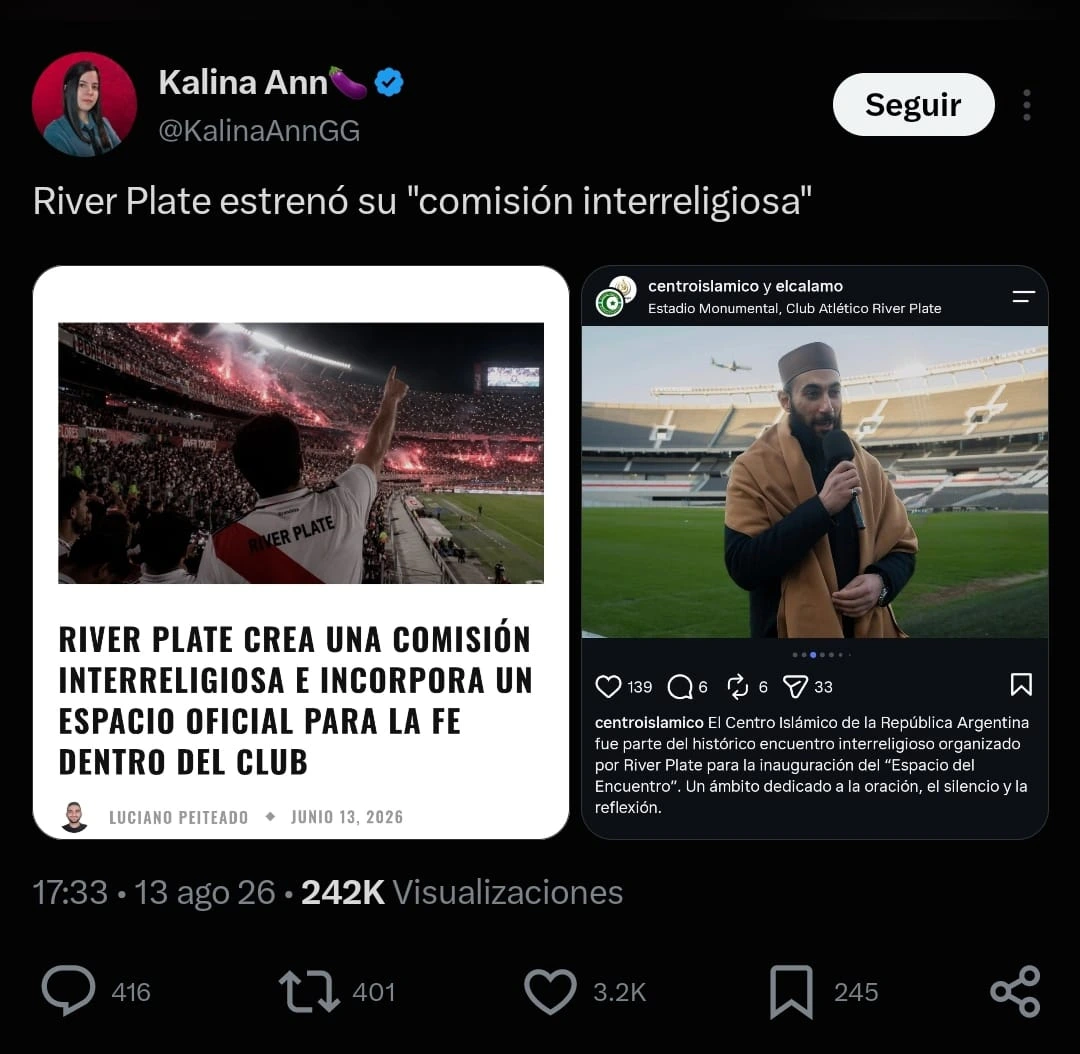
The relationship between religion and sports is entering a new phase in Argentina following River Plate's decision to formalize a space dedicated to spiritual support. The Núñez institution created an “Interreligious Commission,” which will include representatives from evangelical, Catholic, Jewish, and Muslim communities.
The initiative represents an unusual step within Argentine football, as it seeks to systematically incorporate a dimension that until now has mainly appeared through individual actions of the athletes themselves or club members.
One of the main objectives will be to develop sports chaplaincy tasks, a practice that has precedents in international competitions and is more prevalent in high-performance sports in countries like the United States and various institutions in Europe.
Unusual proposal at River
What is sports chaplaincy?
The proposal aims to support athletes not only in their professional performance, but also in personal, family, and emotional matters related to the demands of competition.