The President of the United States, Donald Trump, announced on Tuesday that U.S. troops will complete their withdrawal from Iraq on September 30, considering that the Arab country is now prepared to fully assume its own security and that the bilateral relationship will enter a new phase focused on investment, economic cooperation, and energy development, replacing the military presence that has characterized the last two decades.
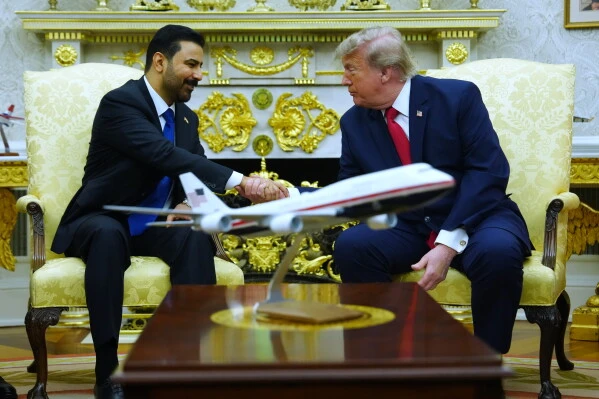
The announcement was made during a meeting in the Oval Office with Iraqi Prime Minister Ali al-Zaidi, who fully supported the strategy and assured that his country's security forces are ready to protect Iraq without the need for a permanent U.S. military presence.
''We don't believe we need to have troops there,'' Trump stated regarding the future of the mission in Iraq. The President explained that the United States will continue to be a partner of Baghdad, but with a different approach. ''We are there to help them. We are there to protect them if necessary. But we don't believe that will be necessary,'' he added.
Donald Trump announced the withdrawal of all troops in Iraq during a meeting with the Iraqi Prime Minister in the Oval Office
The President maintained that the strategic landscape in the Middle East has changed substantially in recent months, mainly due to the weakening of Iran, a country he has blamed for years for destabilizing the region by supporting militias and armed groups.
According to Trump, Iran's military capability has been significantly reduced, which has allowed to create favorable conditions for Iraq to consolidate its sovereignty and strengthen its security institutions without relying on foreign troops.
The withdrawal is part of an agreement reached between Washington and Baghdad in 2024 to gradually end the military mission of the international coalition. Since September 2025, the withdrawal of U.S. forces began, although a contingent remained temporarily in advisory and support roles for operations against remnants of the terrorist group ISIS, especially in coordination with actions developed in neighboring Syria.
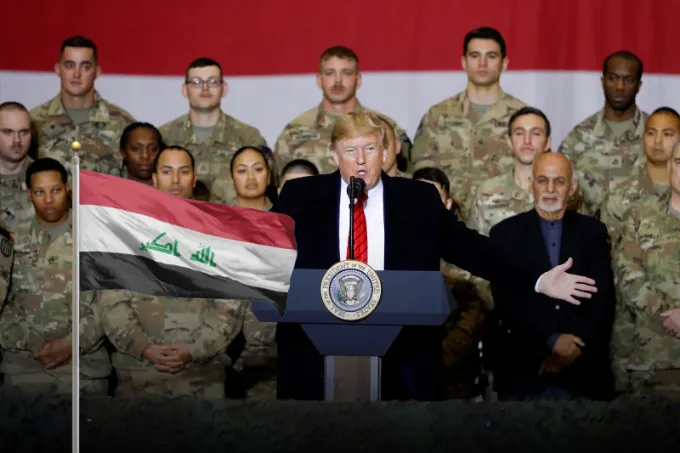
Before the start of that reduction, around 2,500 U.S. troops remained in Iraq, a figure much lower than the nearly 170,000 soldiers deployed during the peak of the war in 2007. After the withdrawal in 2011, the United States sent troops back in 2014 to lead the international campaign against ISIS, which then controlled large areas of Iraq and Syria.
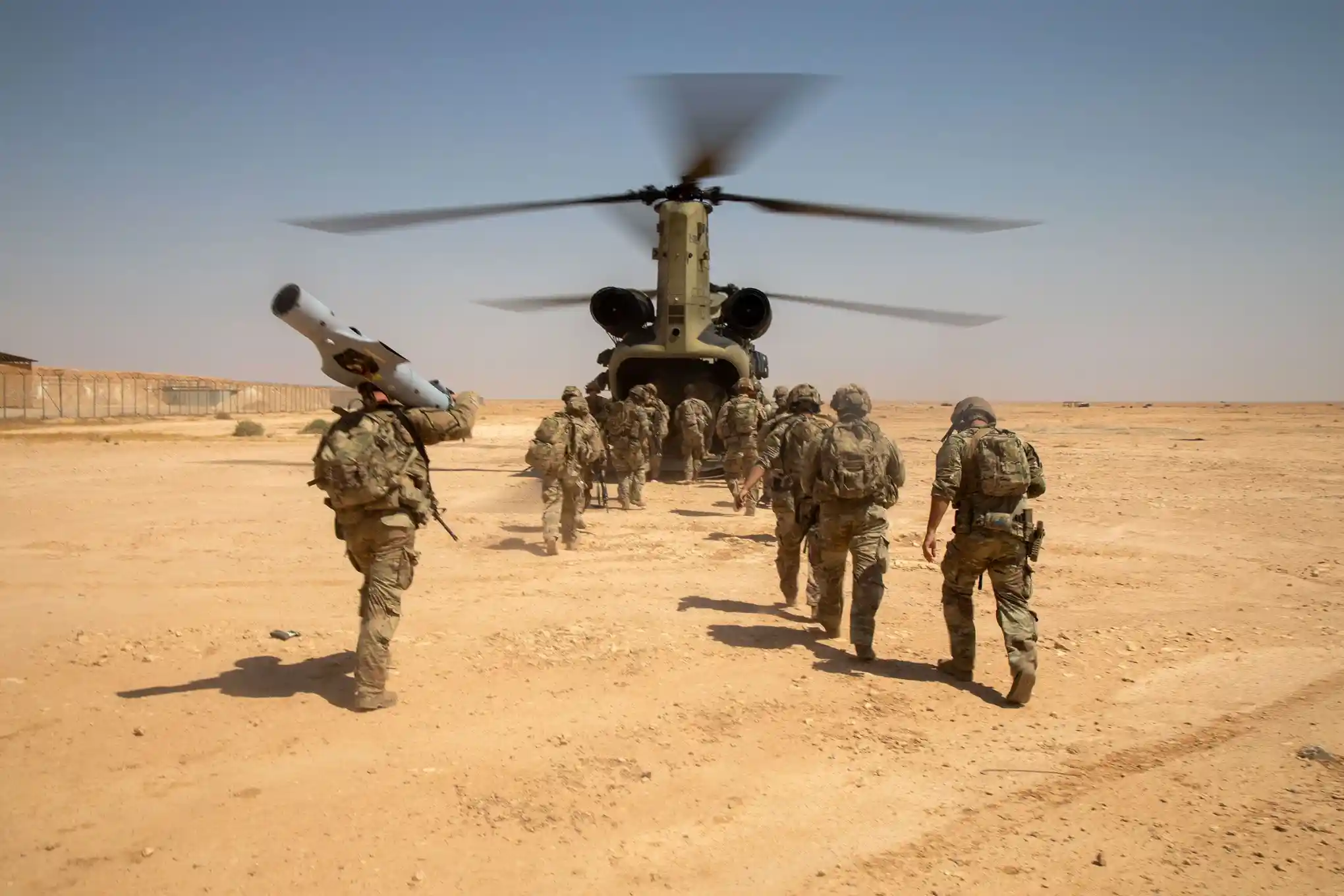
More than 2,000 U.S. troops remained stationed in Iraq following the last troop deployment in 2014 to combat ISIS
During the meeting, Prime Minister Ali al-Zaidi stated that the exit of U.S. troops will allow for a new phase in relations between the two countries, based on economic cooperation and investments.
''On September 30, U.S. forces will be out of Iraq, while U.S. companies will be inside Iraq,'' declared the head of the Iraqi government, who highlighted Baghdad's interest in attracting U.S. capital to boost economic growth and modernize strategic sectors, especially energy.
Al-Zaidi also assured that, once the coalition mission officially concludes, there will be no justification for armed groups to operate outside state control. In that sense, he stated that the monopoly on weapons must rest exclusively with national institutions.
''Limiting weapons to the state is a decision, not an option,'' the Prime Minister asserted, in a statement interpreted as a message to the militias linked to the Popular Mobilization Forces, several of which maintain close ties with Iran and have exercised significant political and military influence in the country for years.
Washington has long insisted on the need for these organizations to be fully subordinated to Iraqi authorities to strengthen institutional stability and reduce Tehran's influence.
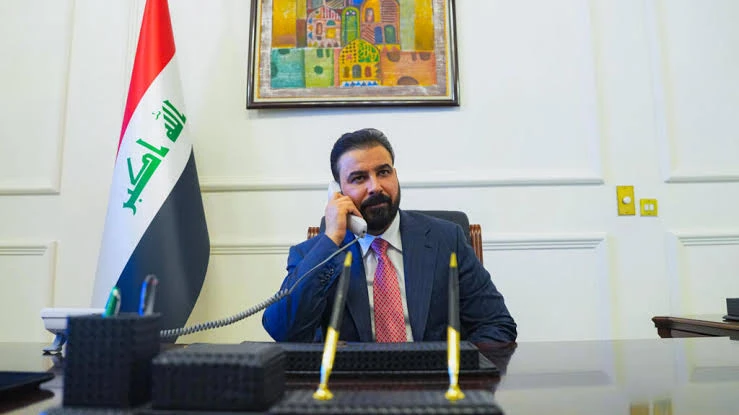
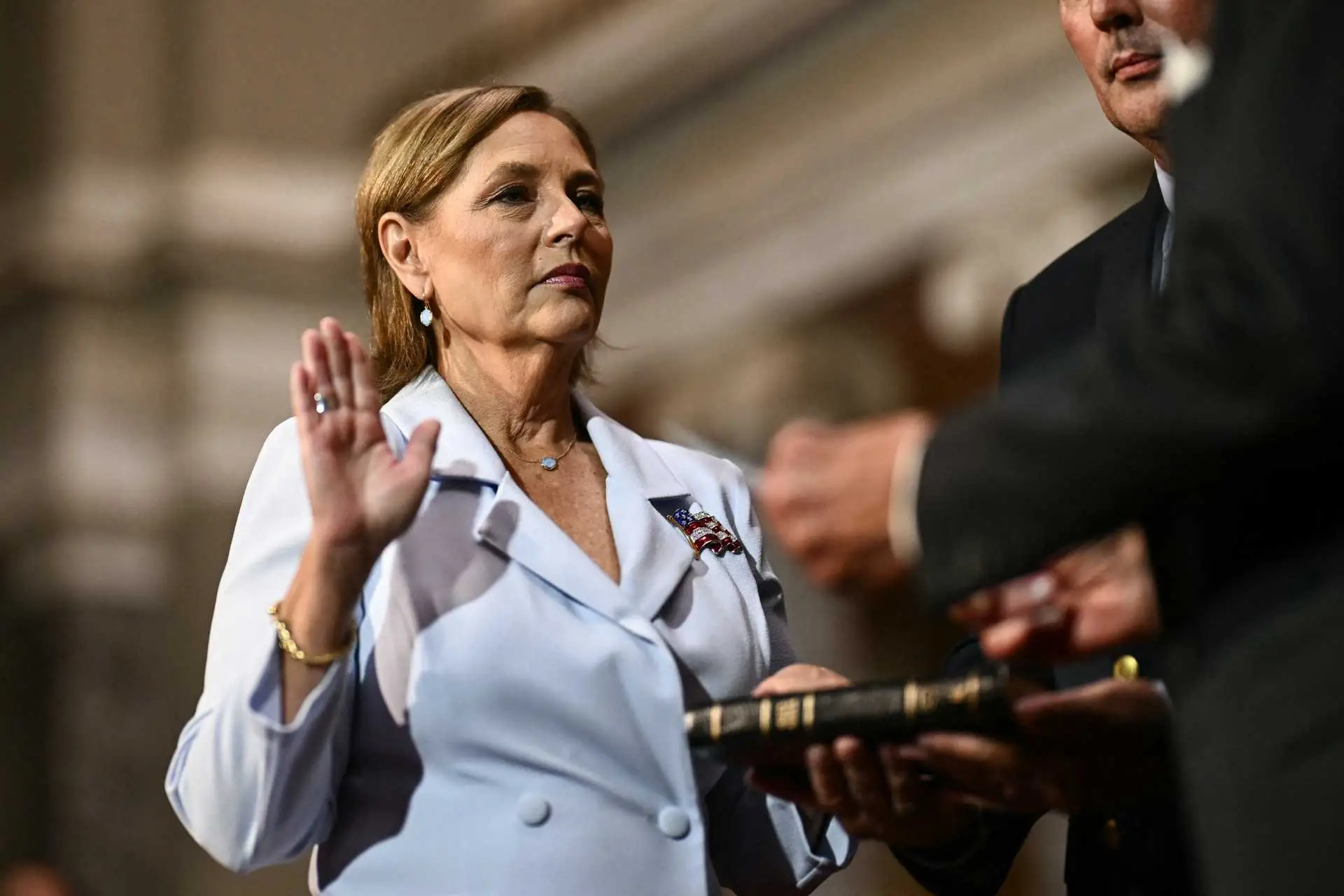
The Iraqi Prime Minister confirmed that they will seek to encourage the approach of U.S. capital and that the militias will be subordinated to the state
The Trump administration believes that the evolution of the regional situation allows for replacing military cooperation with a long-term economic alliance. The White House emphasized that several U.S. companies are preparing new investments in Iraq, mainly in the energy and infrastructure sectors, as part of strengthening the bilateral relationship.
During the meeting, Donald Trump repeatedly praised the Iraqi Prime Minister, whom he called ''a great leader'' and assured that he will have an important influence in the Middle East. The President also stated that he politically supported his candidacy during the process that allowed overcoming months of institutional blockage in Iraq.
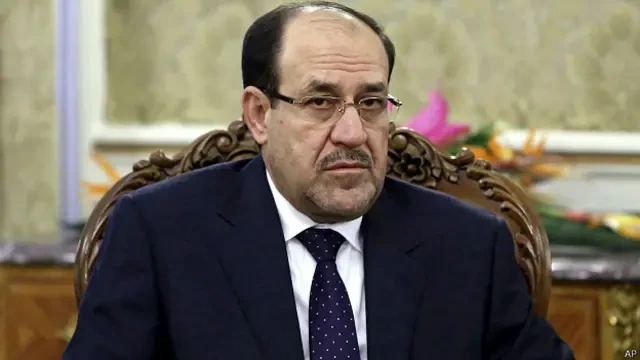
Al-Zaidi came to power this year as a consensus candidate after prolonged negotiations among the main Iraqi political forces. The U.S. administration had previously expressed its opposition to a possible return of former Prime Minister Nouri al-Maliki, considering that he maintained excessive closeness to the Iranian regime.
For Washington, the military withdrawal represents the closing of a chapter that began more than two decades ago with the operation in Iraq and the beginning of a new relationship based on economic cooperation, institutional strengthening, and support for an Iraqi government that now has the necessary capabilities to ensure the country's security and advance with greater independence against external pressures.
The Trump administration supported al-Zaidi in the face of the threat that the Iran-backed former Prime Minister Nouri al-Maliki could return to power