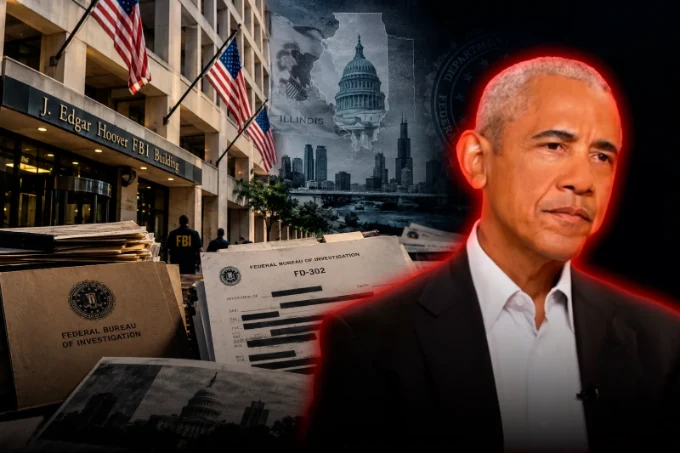
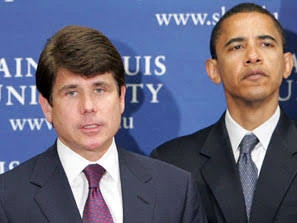
New FBI documents about the scandal that shook Illinois in 2008 have once again put under scrutiny the conversations held between the circle of Barack Obama and the administration of then-Governor Rod Blagojevich to determine who would fill the Senate seat that Obama left vacant upon assuming the presidency.
The records contain the interviews that the FBI conducted with Obama and his future chief of staff, Rahm Emanuel, just days after Blagojevich's arrest. The documents had remained out of public reach and were not included in the two criminal proceedings related to the case.
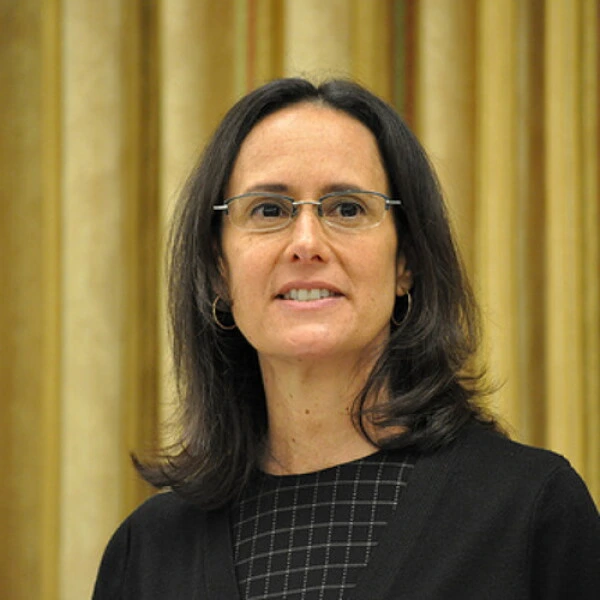
The information is relevant because Blagojevich has maintained for years that he never intended to ''sell'' the Senate seat and that he was negotiating the possibility of appointing Lisa Madigan, then Attorney General of Illinois and daughter of the powerful former Speaker of the State House, Mike Madigan. According to the ex-governor's account, the appointment could facilitate Mike Madigan's support for initiatives from his administration related to health and budget.
New FBI documents revealed the conversations between Barack Obama and the former governor of Illinois to appoint the successor of the Democrat in the Senate
The new FBI notes confirm that Lisa Madigan's name was indeed present in the conversations between Obama's team and Blagojevich's government. In Emanuel's interview, investigators recorded that on December 8, 2008, he and David Axelrod met with Democratic Senator Dick Durbin and agreed that Madigan would be a good candidate.
After that meeting, Emanuel contacted John Harris, Blagojevich's chief of staff, to convey the arguments in favor of appointing Madigan. The notes from Obama's interview also indicate that the then-president-elect was asked whether he knew that Emanuel had spoken with Blagojevich's administration about Madigan as a possible candidate.
These documents once again highlight the connections between several of the key figures of the Illinois Democratic Party at a time of intense political negotiation. In addition to Obama, Emanuel, Axelrod, and Durbin, the conversations involved members of a state political structure that had been marked for years by the enormous influence of Mike Madigan.
The former Attorney General of Illinois was seen as Obama's top choice to fill his seat in the Senate
The case is particularly striking because Blagojevich was arrested on the morning ofDecember 9, 2008, just one day after the meeting in which Emanuel, Axelrod, and Durbin discussed Lisa Madigan's candidacy. Then-U.S. Attorney Patrick Fitzgerald stated that authorities had intervened to stop what he described as an ongoing political corruption activity.
Blagojevich, however, now interprets the documents differently. After learning their content, he stated that they demonstrate that the issue of Lisa Madigan was ''very present'' and that he was close to finalizing that appointment. He also reiterated his challenge to Fitzgerald's description of the federal operation and denied that there was the alleged “surge” of crimes that justified his arrest.
The revelations also show that the process for choosing Obama's successor was broader than it might have initially seemed. Obama had first considered Valerie Jarrett, one of his closest collaborators, but ultimately decided to bring her into the White House as a senior advisor. Emanuel, according to his interview with the FBI, had preferred that Jarrett occupy the Senate seat.
Subsequently, other names emerged, including Tammy Duckworth, Jan Schakowsky, and Jesse Jackson Jr. Obama stated that he did not want to ''tip the scales'' for any candidate, although he authorized Emanuel to inform the governor's office that he was interested in having the new senator be someone capable of representing Illinois and retaining the seat in the 2010 elections.
Ultimately, Blagojevich appointed Roland Burris, who did not seek reelection. Republican Mark Kirk won the seat in 2010 and was later defeated by Duckworth in 2016.
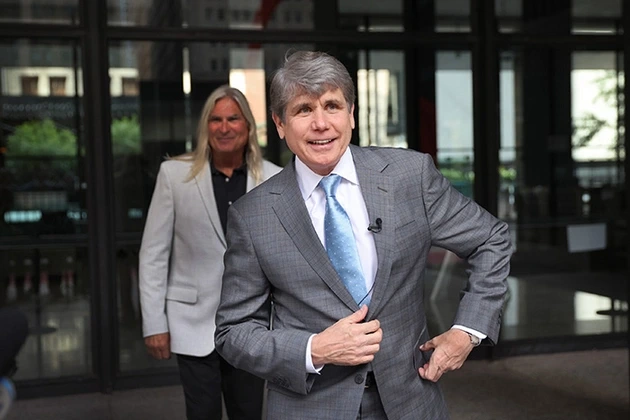
The former governor of Illinois was arrested the morning after a conversation between Rahm Emanuel, David Axelrod, and Dick Durbin regarding apparent acts of corruption