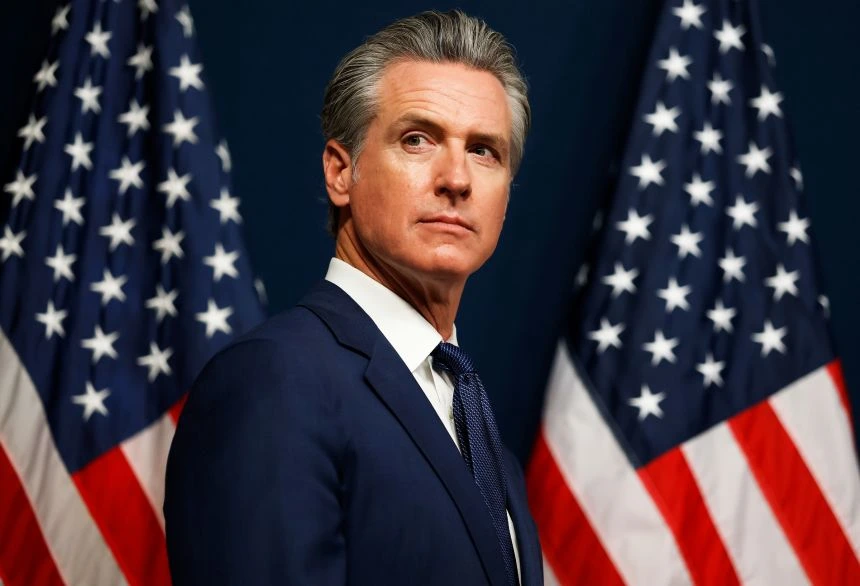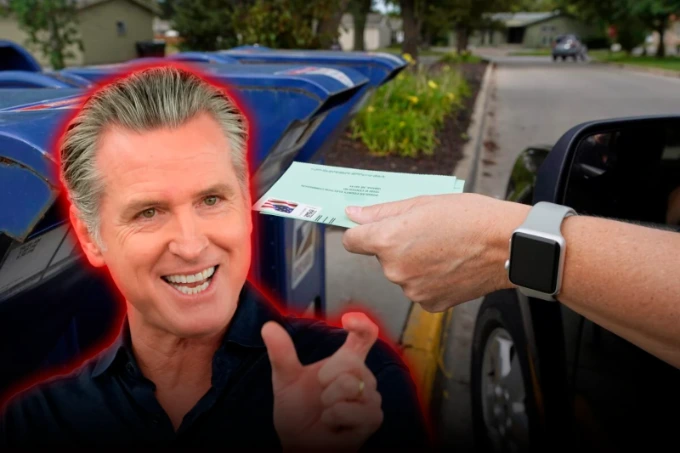

The Democratic governor of California, Gavin Newsom, announced that his administration will sue the government of President Donald Trump again to attempt to block federal restrictions on mail-in voting, after the Supreme Court temporarily allowed parts of an executive order aimed at reinforcing electoral integrity to take effect.
The Supreme Court's decision, made by a vote of 6 to 3, represents a victory for the Trump administration and allows certain challenged provisions to go into effect while litigation continues. The ruling lifted a preliminary injunction that had prevented the order from being applied in 23 states before the November midterm elections.
However, the justices clarified that their decision specifically referred to the preliminary injunction and did not yet determine the final legality of the executive order. This means that lower courts will continue to examine the challenges presented against the provisions.

Newsom reacted strongly against the ruling and accused the Trump administration of trying to disenfranchise voters. The leftist governor described the new rules as "Orwellian" and stated that California will return to the courts to prevent their implementation.
Gavin Newsom's stance has drawn criticism because, instead of waiting for the final outcome of the judicial process, the governor has once again turned the electoral dispute into a political confrontation with the White House. His statements also portray Trump's measures as an attempt to "strip" citizens of their right to vote, despite the administration arguing that its goal is to establish additional mechanisms to verify the eligibility of those receiving mail-in ballots.
Trump's decree stipulates that federal agencies create lists based on the citizenship of eligible voters and orders the United States Postal Service (USPS) to deliver certain mail-in ballots only to individuals included on approved lists.
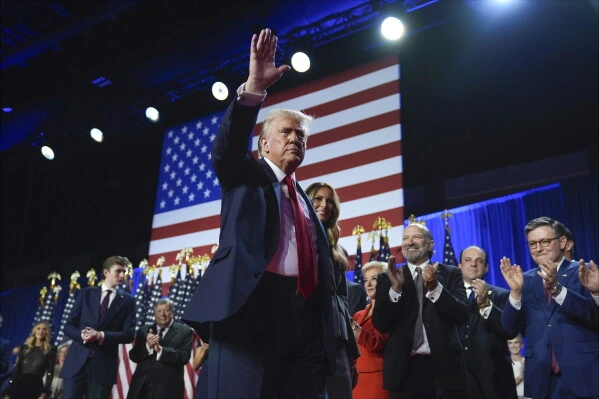
From the administration's perspective, these measures aim to strengthen controls over the electoral system and reduce potential irregularities. The Supreme Court, when analyzing one of the challenged provisions, concluded that the instruction directed to the Department of Homeland Security to create and distribute state citizenship lists was an internal directive from the president to a federal agency and did not impose obligations directly on the states.