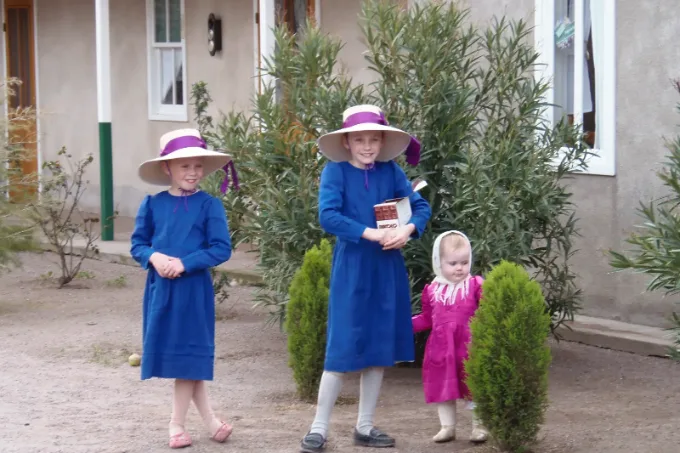
The recent ruling by the Supreme Court of Justice that supported the Mennonite families in Florida marks a turning point. These parents, faithful to their community and religious tradition, chose to educate their children at home, with support from teachers in their own community and a virtual monitoring system from a "umbrella" school in the United States. The Justice understood that the right to education was not being violated: the children learn, are evaluated, and can certify their knowledge. More importantly, it reaffirmed a fundamental principle: the preferential right of parents to decide how to educate their children.
This right is not a concession from the State. It is an inalienable right of the family. The Uruguayan Constitution establishes this clearly. Article 41 states that the care and education of children, so that they reach their full physical, intellectual, and social capacity, is the duty and right of parents. Article 68 guarantees freedom of teaching and expressly recognizes that every parent or guardian has the right to choose the teachers and institutions they wish for their children's education. It is not a privilege of a religious minority: it is a guarantee for all Uruguayan families.
The Mennonites did not invent anything new. They simply exercised, coherently, what the Constitution recognizes for them. They organized classrooms in their colony, combined in-person classes in Spanish and English with a remotely supervised curriculum, incorporated practical subjects (carpentry, mechanics, cooking, entrepreneurship), and maintained serious monitoring. Far from isolating the children, they offered a formative environment consistent with their values, without giving up academic rigor. The State attempted to impose attendance at official centers. The Justice reminded that freedom of teaching is not exhausted in the option between public and private schools.
Uruguay cannot look the other way. Its educational system has been dragging a rigid structure for over a century, designed for another era. The frontal teaching model, the fragmentation by subjects, the funnel that leaves half of the youth out before finishing high school, and the disconnection with the demands of the 21st century are symptoms of structural obsolescence. While it is discussed time and again how to "transform" a system that fails to ensure that 50% of adolescents complete secondary education, some families demonstrate that it is possible to educate seriously outside that framework. Pretending that this option does not exist, or that it is only tolerated under suffocating bureaucratic conditions, is to disregard the rights of parents.
The Mennonite experience is not a unique model nor a threat. It is proof that there are legitimate alternative paths when parents fully assume their responsibility. The State has the duty to ensure that no child is left without education. It does not have the monopoly on defining how that education should be imparted, as long as effective learning is ensured and the fundamental rights of the minor are respected. Ignoring this principle turns compulsory education into a tool of ideological uniformity instead of a service to the development of each person.
Allowing families to emulate experiences like those of the Mennonites does not weaken the public system: it forces it to compete for quality and to remember what its true role is. A society confident in its institutions does not fear educational diversity. A society that respects the dignity of individuals recognizes that parents, not the state apparatus, are the primary responsible parties for raising their children.
The ruling in favor of the families in Florida is not an isolated episode. It is an invitation to recover the original sense of freedom of teaching. Uruguay needs an educational system that stops looking to the 20th century and opens up to the possibilities of the present. And, above all, it needs to respect the inalienable right of each family to choose what they consider best for their children. That right is not negotiable. It is defended.