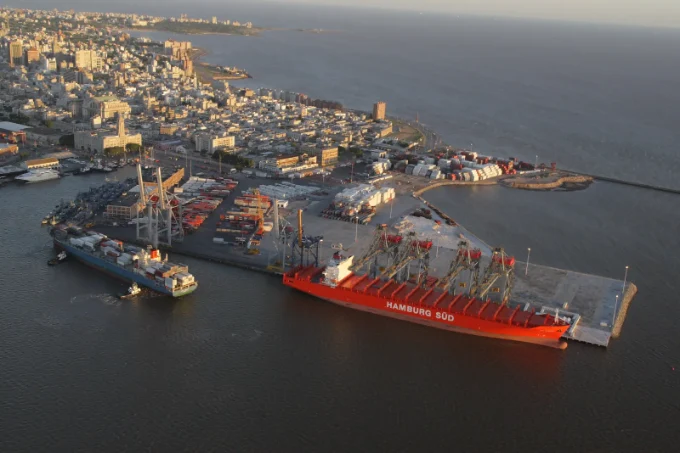
The five largest shipping companies in the world after MSC wrote to the Uruguayan government. Not to one ministry: to six. Transport, Economy, Labor, Industry, Livestock, and Foreign Affairs. Maersk, CMA CGM, Hapag-Lloyd, ONE, and Cosco, the companies that decide which ports exist on the map of global trade and which are an expendable stop, signed a letter with a subject that needs no translation: "Serious concern over indefinite strike at the Port of Montevideo."
The content is worse than the title. Uruguay is already perceived by global operators as an "unsafe and unstable" enclave. More than 35 days with operations affected so far in 2026. Strikes since October 2025. Canceled stops. Imports unloaded at other ports in the region. And a warning that in the language of these companies is equivalent to an eviction notice: risk to the continuity of jobs in the industry in Uruguay.
MSC, the largest of them all, did not sign the letter. It was unnecessary. It had already responded with its feet.
What MSC did without saying anything
In June, MSC informed Terminal Cuenca del Plata that it was ceasing its weekly Montevideo–United States service. The eighth service of the terminal by volume, nearly 15,000 movements in 2025. Export cargo now leaves through Santos; import cargo enters through Rio. Previously, it had diverted operations to Navegantes, Brazil, and moved Paraguayan transits to Buenos Aires, where it has its own terminal.
And the cruises. MSC Cruises announced that from the next season it will not embark or disembark passengers in Montevideo. It goes from 16 stops to five. Uruguayans wanting to board an MSC cruise will have to go to Buenos Aires. The reason given by industry sources is brutally simple: Montevideo is more expensive than Dubai or Barcelona. They requested a 30% cost reduction. It did not happen.
None of this is a conspiracy or a punishment. It is what any company does when a place stops being profitable and another, 200 kilometers away, is. Prices are information. When a shipping company compares Montevideo with Santos and chooses Santos, it is not commenting on Uruguay: it is reading a spreadsheet.
The numbers that were already there before the letter
The letter does not anticipate anything. It confirms.
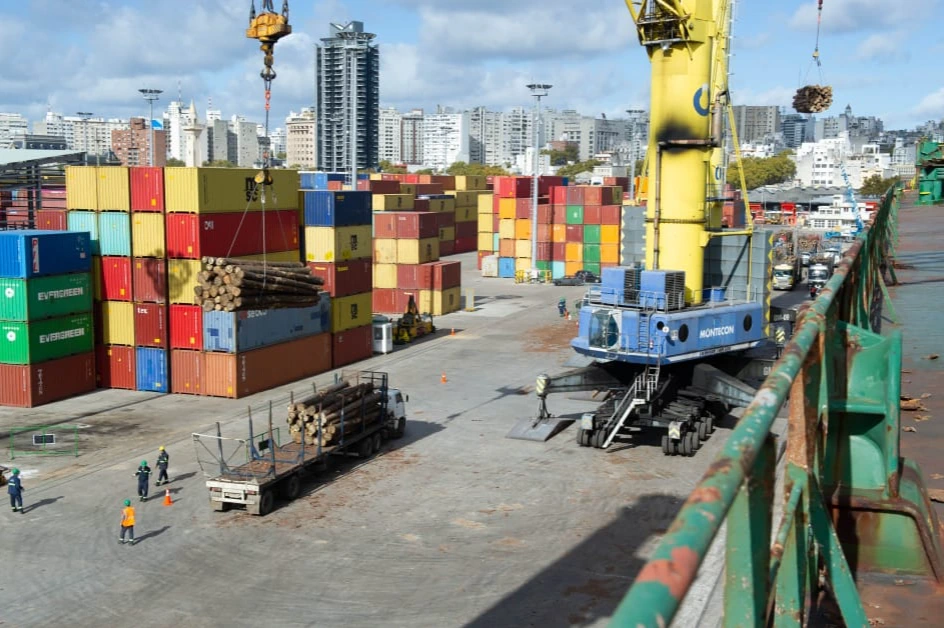
The Port of Montevideo handled 634,506 containers in 2024. In 2025, 479,392. A 24.5% decrease in one year. At TCP, the specialized terminal, the drop was close to 29%. And in the business that Uruguay sold for two decades as its great strategic bet, regional transshipment, the collapse was almost half: from 355,412 containers to 182,915.
That was the logistics hub of the Río de la Plata. That was the port that was going to capture the cargo from Paraguay, southern Brazil, and Argentina. Paraguayan cargo now goes through Buenos Aires. The data comes from the National Ports Administration, not the opposition.
What the government did
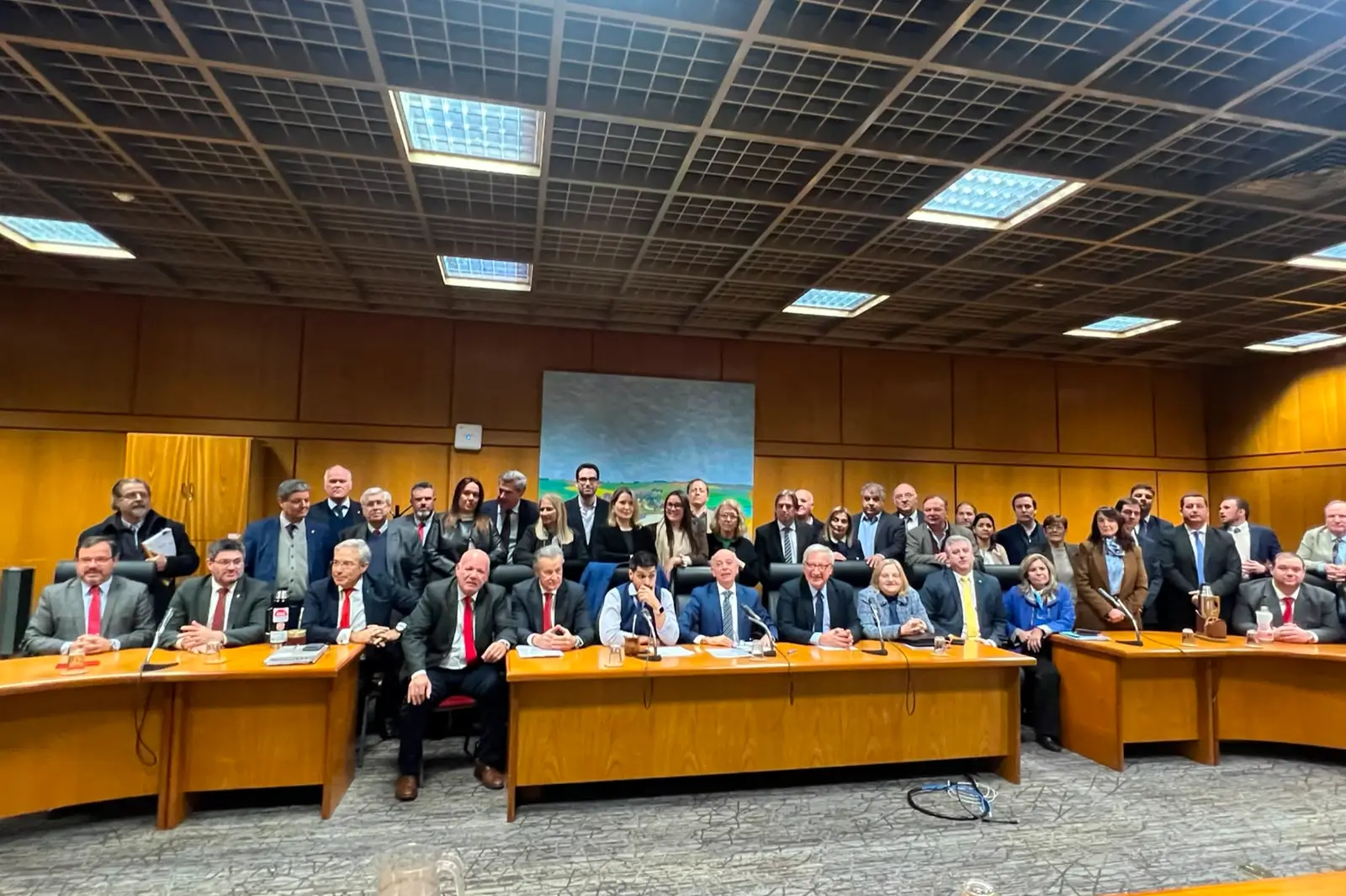
In the face of a conflict that has lasted a year, which has already destroyed half of the transshipments and now has the five largest operators in the world asking for "active and immediate" mediation, the government of the Broad Front ruled out declaring the essentiality of port services and decreed minimum guards that the company itself considers unimplementable because they do not foresee control or sanction. Minister Castillo explained that "in labor relations, there are never ultimatums."
The shipping companies have a different opinion. They do issue ultimatums, but they do not write them: they execute them. They are called itineraries.
Here lies the fundamental error. The government acts as if the port were a captive asset, as if the cargo had nowhere to go and the union could stop the terminal indefinitely without anyone paying the cost. But the cost is paid by all those who are not at the table: the meat exporter who lost the shipping date, the importer who unloaded in Buenos Aires and paid the extra freight, the transporter waiting with the truck stopped, the small logistics operator who cannot invoice. None of them appear in the tripartite. None of them have a minister who says he shares their "concern."
What is seen and what is not seen
The strike is visible. The workers from the union are visible. The negotiation at Dinatra, the conciliatory gesture of the minister, the proposal for rapprochement are visible.
What is not seen is the shipping company that evaluated Montevideo for a new service and didn’t even call. The Paraguayan transit that will not return because Buenos Aires has already taken it. The cruise stop that went to Punta del Este or directly to another country. The investments for the expansion of TCP that no one will make again with this level of risk. Each month of conflict is cargo that is rescheduled for another port, and the cargo that leaves does not return with a decree.
There is an elementary principle that this government does not understand or pretends not to understand: no one is obligated to operate in Uruguay. Neither Maersk, nor MSC, nor an Italian cruise operator. A country of three and a half million inhabitants with an expensive, unpredictable port that is closed 35 days a year is not a partner: it is a logistical problem that is solved by erasing it from the route.
What is coming
The shipping companies said it with all possible diplomacy: Uruguay cannot afford to project this image, especially when logistics is one of its main sources of income. Translated: if this continues, the others will leave.
This is not a threat. It is the description of what has already happened with MSC. The difference is that now five more companies sign it, with letterhead, addressed to six ministers.
The Broad Front received a port that was losing competitiveness and turned it into a port that loses clients. When the cargo leaves, activity leaves; when activity leaves, employment leaves; and when employment leaves, no one asks who was right in the tripartite. The government still has time to choose between labor peace and the port. What it cannot do is continue pretending that it can have both while the ships pass by.