The resistance that history covered up: The story of 10 alternative liberal right-wing political parties in Uruguay
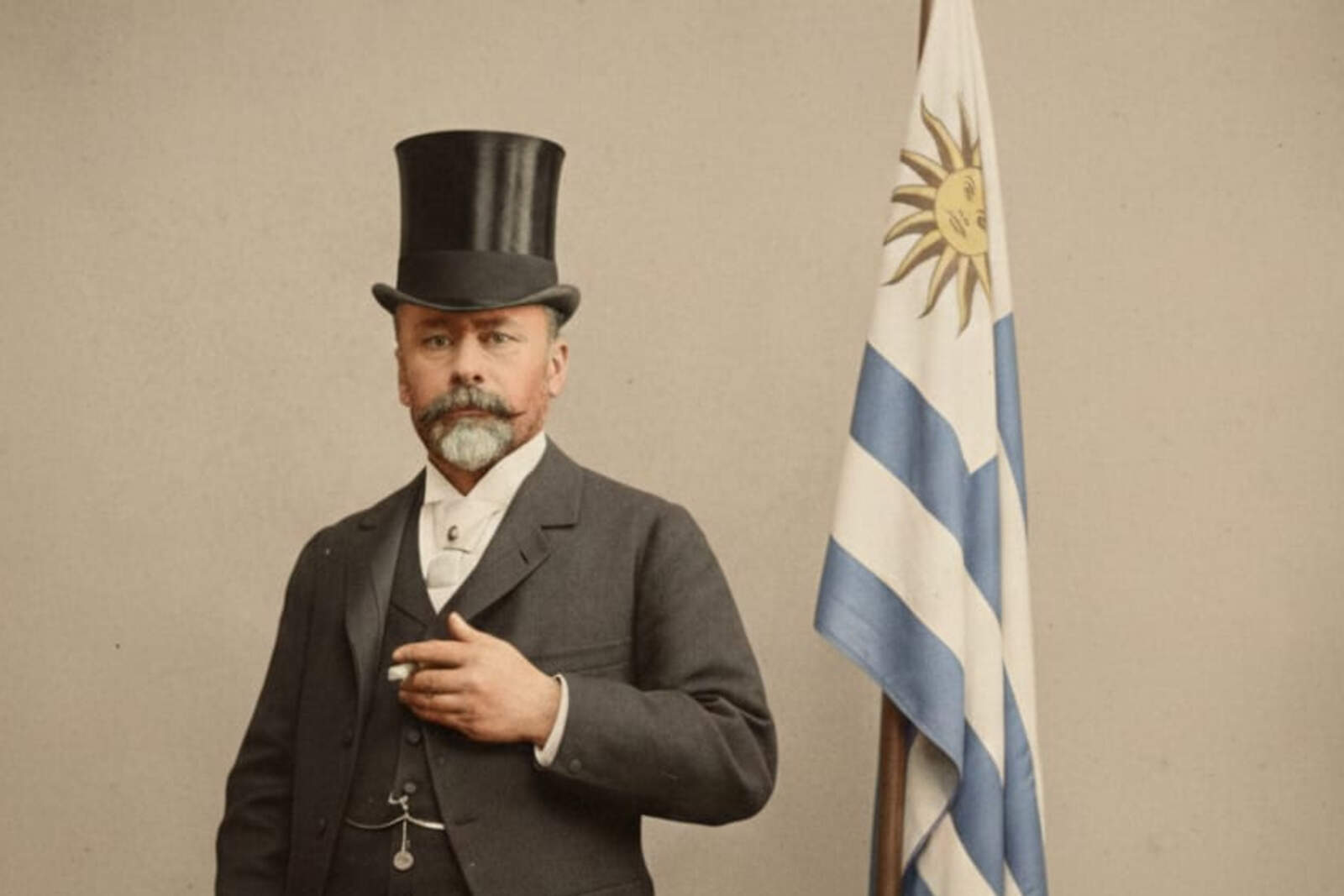
Liberal with top hat
porEditorial Team
Uruguay
Liberal-ideology political parties haven't been successful in Uruguay so far
In a land dominated by Batllista political culture, where the State and centralization are unshakable pillars of the social order—issues that no politically relevant sector dares to seriously confront—small voices of resistance slip into history and reach our days in the lists of "political parties of Uruguay" and in old electoral records.
The national left has a well-developed narrative and a good historical compilation of those small alternative parties of the last century that embodied the struggle of socialism, communism, and progressive social democracy.
This is largely because they succeeded, they managed to break the party-based order and the hegemony of Partido Nacional and Partido Colorado when they united in a great "Frente Amplio" in 1971, becoming the dominant political force of the twenty-first century up to the present day.
However, history is written by those who win, and we have almost completely lost that legacy of the men who dared to confront the powerful Batllista State far from the ranks of the institutionalized and hegemonic opposition of Partido Nacional and Herrerismo.
In this article I will seek to rescue and honor—based on the very little that is available—the stories of the alternative liberal right in Uruguay.
Without claiming to be a rigorous historical investigation, I seek, from a microhistorical perspective, to move away from the study of major political processes and focus on those small stories of minority groups that dared to seek something different, confronting Batllista hegemony and party-based politics.
I will present 10 minority political parties. First, we will begin with Unión Democrática, a party that was born in 1919 with the aspiration of functioning as a third force with a business and productive matrix.
The nascent party-based system, represented in the traditional Blanco and Colorado parties, was headed and led by caudillos, doctors, military leaders, or university intellectuals who monopolized the power of the parties.
Ramón Díaz
It is then that large and medium-sized rural producers, led by the former president of ARU, an eminence in law and later founder of Federación Rural, José Irureta Goyena, together with merchants and businesspeople (such as the emblematic Francisco Piria, founder of Piriápolis, architect, and famous Uruguayan alchemist with Blanco political roots), decide to try to form a third political force that would represent the growing business and rural sector. Above all, their main enemy was Batllista interventionism and the exponentially growing public sector that, since time immemorial, our country has suffered.
Their ideological component was diverse: there were those rural producers who strongly opposed interventionism and whom we can identify as the classic ruralistas (who, as we will see later, would be motivated on many occasions to try to consolidate their own political force).
On the other hand, we identify the thought of Piria and his followers. Here it is important to clarify that, although his political-manifesto novel is titled "El socialismo triunfante," it is not even close to what we know today as socialism: his ideal model is more closely related to ultra-decentralized societies and Mill's social liberalism than to any type of classic collectivist or Marxist socialism.
He was what we could today call a "social liberal" with a tendency toward federalism. Many Frente Amplio supporters would not hesitate to call him a "far-right fascist."
Unión Democrática ran in the elections under the banner "Partido Demócrata" and, after severe setbacks prior to the election—added to the fact that the imminent and overwhelming victory of Partido Colorado would concentrate the opposition vote in the nationalist option—ended in an electoral failure, obtaining only 0.6% of the votes (686) and subsequently bringing the political force to an end.
However, we can identify it as the first liberal right-wing political force that managed to run electorally outside the traditional parties, being the tenth political party in the history of Uruguay and the seventh if we do not count strategic splits from the traditional parties.
The ruralista parties
Continuing along the line of movements with a rural matrix, we find two closely related political parties: Partido Agrario Popular from 1925 and Partido Agrario from 1928. Both movements were complete outsiders, without even minimally recognized leaders, and they emerged in the rural interior, in the hands of small and medium-sized rural producers.
The countryside, attacked by the prevailing Batllismo, had its small expressions of resistance outside the traditional parties when the demands of the interior failed to resonate within Partido Nacional. The first one (Partido Agrario Popular) broke up due to internal clashes before the elections, obtaining only 13 votes from a resistance that refused to abandon the project; and two years later they would try to found another party (Partido Agrario), failing without being able to have electoral participation.
If we want to look for a ruralista party that managed at least minimally decent electoral participation, we must go back to the 1966 general elections, where Partido Agrario y del Trabajo, led by the successful farmer and fruit-growing specialist from Salto, Domingo Moizzo, ran.
Although with a much less liberal matrix than its predecessors, it managed to establish itself minimally; thanks to electoral and technological advances, it obtained 1,616 votes.
Another successor of this movement is the recent "Por los cambios necesarios," which I supported with my vote in 2024, but I will leave it out of the list because it is considered an excessively recent phenomenon that doesn't need to be rescued in this "microhistory" exercise.
The truth is that for a large part of history ruralismo was a major opponent of Batllismo that, although it has had its attempts to establish itself as a political force, its greatest boom and potential were deployed within Partido Nacional, with major milestones such as the first historic electoral victory against Batllismo at the hands of Benito Nardone and his alliance with Herrerismo (Herrero-ruralismo).
Blancos and federals
However, the party-based system took a long time to govern the spirits naturally inclined toward freedom of the Oriental people; for a long time the Blanco identity "as tough as a wild horse's bone" could not be confined within the institutional limits of a political party. In fact, Blancos have had 5 different political parties throughout history; if we also count other strategic, localist banners and coalitions proudly used by Blancos, the figure rises to 10.
Among the Blanco political parties that split from Partido Nacional, those that have had the most coverage from mainstream history have been the left-wing Blancos, such as Partido Blanco Radical (of communist inspiration) or the traitorous ally of Batllismo "Nacionalismo Independiente."
However, there have also been Blanco political parties that fled from Partido Nacional, but to the right and with a strongly anti-statist spirit.
Among them is Partido Saravista from 1934, where Saravista leaders decided to separate electorally from Partido Nacional and aim for Parliament on their own after internal differences with the Herrerista hegemony of Partido Nacional, obtaining 1,300 votes.
On the other hand, we find the most successful party on this list: Concentración Patriótica Cándida Díaz de Saravia, led by the Saravista and radically anti-Batllista José Antonio Otamendi, who together with other Saravista leaders—added to those who had already previously split in Partido Saravista—founded their political force as a concentration of dissident Blancos and named it in honor of the woman who was the wife of the Blanco caudillo Aparicio Saravia.
This party, running only departmental and Chamber of Representatives candidates, obtained 7,800 votes, surpassing even Partido Comunista by a wide margin and entering the ranking of the parties with the most votes obtained in the history of the department of Cerro Largo.
Being "Blanco" was not even close to being synonymous with supporting Partido Nacional's hegemony; Blanco identity was more related to a way of seeing the Oriental homeland and politics: a more federal outlook, less cosmopolitan and Montevideo-centered, more national, with a liberalism understood in the American way and not from French or Anglican Jacobinism.
It was the party that had to adapt to the Blanco political tradition and ideals; traditional Blancos should never submit to party authorities.
Since we are talking about our country's federal tradition and those more decentralizing perspectives that Blancos had, it is time to rescue—again from that microhistorical perspective—some of the political movements that were born solely with a vision toward decentralization. Among them we find first Partido Federal, born in 1962, led by Manuel Sanjurjo.
It is the first political party in the history of our country that has as its objective the promotion of a federal and decentralizing outlook; although no further data are available, we know that it failed with only 70 votes.
Another party that had a decentralizing mission as its objective, but this time an extremely specific one, was Partido por el Departamento de Solís led by Ángel Fioroni, whose objective was to secede the eastern part of Canelones (with a focus on the city of Pando) and create the new department of Solís. Its proposal was clear: Canelones is a department with many inhabitants, large and diverse; a single departmental government centralized in the city of Canelones made no sense.
We can't assert that it was a liberal right-wing movement as such, since its objective was very concrete and it had support from different ideological sympathies; however, I decide to include it in this list because its concrete decentralizing objective is by nature liberal and federal, so it clashes directly with the centralizing idiosyncrasy of Uruguayan unitary statism. Despite everything, it failed brutally with only 44 votes.
The liberal parties
Lastly, we have what concerns me the most, since for years I was active and participated in alternatives of this type: I am talking about the "liberal parties," those parties that have liberalism as their unifying principle. Just as the left has purely ideological parties such as Partido Comunista, a liberal party implies a political force with structuring liberal ideological principles.
It is interesting that, if one looks at lists of banners registered in the Electoral Court in Uruguayan history, there are 4 "Partidos Liberales"; however, one of them—which is supposed to have been created in 1880—has absolutely no additional information beyond the name and the year it was created; it appears in more than one list, but it has no additional information nor any record of having participated in any election.
Movilización rural
Another party with the word "liberal" in its name is "Unión Liberal" from 1855, the third party in the history of our country after the traditional factions; however, this was only an initiative by Andrés Lamas and other Blanco doctors to create a third "civilized" party that would overcome the warlike caudillismo of the two major factions; it can't be said to represent a liberal right, much less a party with liberal ideological principles.
The first registered "Partido Liberal" is from 1950, led by Luis Strazzarin, and it ended up obtaining 23 votes. But again this one will also be left off the list due to a lack of information that I can access to corroborate the party's real background or its ideological motus.
I remind you that the word "liberal" has been greatly debased in history; I will not include it in the list just for having the word "liberal" in its banner. In fact, the first presentation of Partido Socialista in the country was under the name "coalición liberal-socialista" in 1910.
Having said that, we are left with two liberal parties that enter the list as such: Partido Liberal from 1966 and Partido Liberal from 2002. The first was led by Jorge Grassi and sought to be an articulating party among liberals who had been marginalized or no longer had a place within the traditional parties; it did not have a very long life and obtained only 74 votes, but it is established as the first "liberal party" about which we have information in Uruguayan history.
On the other hand, we have Partido Liberal from 2002, the most recent party on our list, already located in the twenty-first century; it has historical figures for Uruguayan liberalism such as the economist Ramón Díaz or Jorge Borlandelli himself. Due to its modernity, it is probably the first one about which we have detailed internal information with different factions such as "Libertad para Elegir," "Corriente Empresarial," or the winning one that would lead Julio Vera to be the presidential candidate: "Defensa del Contribuyente." It is the first party with a solid ideological position and tough liberal proposals without mincing words, although it would unfortunately end up failing with 1,548 votes.
Right-wing rupture versus pre-Frente Amplio left-wing rupture
Having carried out this "microhistorical rescue" of the small alternative political expressions of the liberal right in our country, it is time to make some comparisons and the definitive list. It must be borne in mind that the criteria selected to define a party as "liberal right-wing" are personal and according to the historical-political context; there are no scientific measurements and there may be certain variations.
However, the definitive list (always taking into account only parties that came to have validity as banners from the Electoral Court and with some electoral participation) would include:
- Unión Democrática - Partido Agrario Popular - Partido Agrario - Partido Agrario y del Trabajo - Partido Saravista - Concentración Patriótica Cándida Díaz de Saravia - Partido Federal - Partido por el Departamento de Solís - Partido Liberal (1966) - Partido Liberal (2002)
TOTAL: 10
Including more modern parties that do not require historical rescue, the following are added to the list: - Partido Orden Republicano (2018) - Patria Alternativa (2023) - Partido Libertario (2023) - Por los cambios necesarios (2024) - Avanzar Republicano (2024) - Partido Devolución (2024) TOTAL: 16
If we analyze the rupture-oriented right and compare it with the rupture-oriented left prior to the unification of forces and the emergence of Frente Amplio, we find certain similarities: the number of alternative left-wing parties that were born before FA is 16, the same number that the right has today (always in approximate terms; there are no exact measurements as to whether the forces are left or right).
Another similarity that for me is more relevant—since it tells us much more about political reality—is that, of the last 10 parties registered in the Electoral Court before Frente Amplio emerged, 6 were left-wing parties of different natures; and if we look at the last 10 parties registered in the Electoral Court today (including the newly registered "La Libertad Avanza"), we find the same numbers but toward the right: 6 of the last 10.
What does this want to tell us? In reality, not much, less than I would like to believe; I am analyzing only banners and making counts with an important arbitrary component. However, the truth is that the liberal right needs a unification of its forces: small rupture-oriented parties can do little in the face of such fragmentation of the message; that leaves the table set for false prophets.
The future of the liberal right as a political expression today is a great uncertainty; at the very least I hope that we can learn today from the experiences of our predecessors.