
La Derecha Diario logo
ESX logoInstagram logoYouTube logoTikTok logo
ARGENTINABOLIVIAECUADORISRAELMEXICOURUGUAY
  • ESXInstagramYouTubeTikTok
  • Secciones
  • ARGENTINA
  • BOLIVIA
  • ECUADOR
  • ISRAEL
  • MEXICO
  • URUGUAY
  • Países
  • La Derecha Diario logoLA DERECHA DIARIO
  • La Derecha Diario México logoLA DERECHA DIARIO MÉXICO
  • La Derecha Diario Uruguay logoLA DERECHA DIARIO URUGUAY
  • La Derecha Diario Ecuador logoLA DERECHA DIARIO ECUADOR
  • La Derecha Diario Bolívia logoLA DERECHA DIARIO BOLÍVIA
  • La Derechadiario República Dominicana logoLA DERECHADIARIO REPÚBLICA DOMINICANA
  • La Derecha Diario Israel logoLA DERECHA DIARIO ISRAEL
  • El Diario
  • QUIENES SOMOS
  • AUTORES
  • PUBLICIDAD
  • DONAR

What if Uruguay had chosen true monetary freedom? A lesson that the country has not learned yet

What if Uruguay had chosen true monetary freedom? A lesson that the country has not learned yet
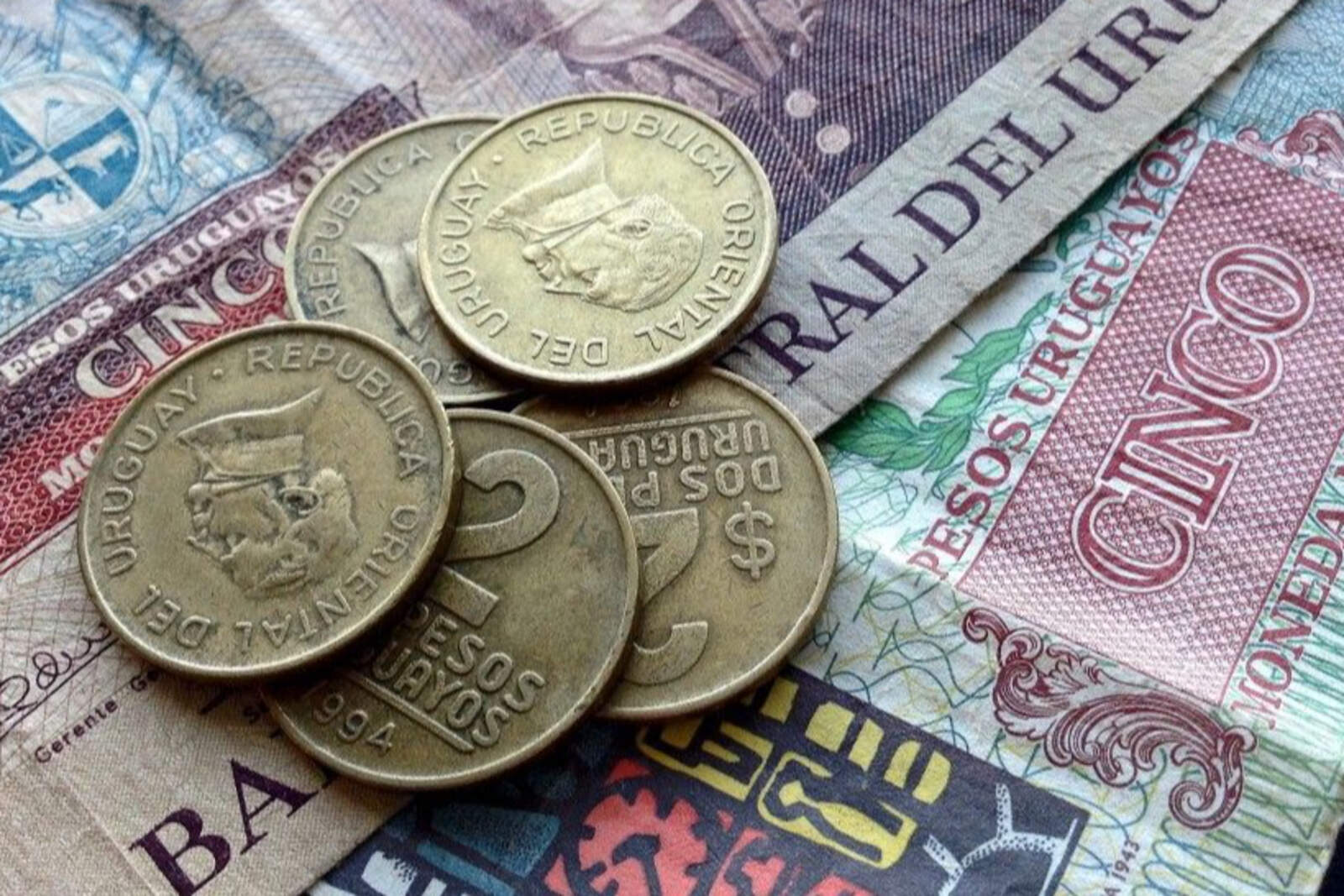
Coins
porEditorial Team
Uruguay

True prosperity is only achieved with more economic freedom


What if Uruguay had chosen the real thing? Most people look at Uruguay's economic history and see a country that grew well for decades, exporting meat and wool, attracting immigrants, with an enviable location on the Río de la Plata estuary. But few people stop to ask why, despite all that potential, Uruguay did not reach in 1900—or even come close to—the standard of living of the United States or the United Kingdom. Uruguay's per capita GDP was barely around one-third of the United States' and was notably below the British level. Was it bad luck? Were the civil wars to blame? Or was it something deeper, something that repeats itself in almost every nation that fails to escape mediocrity?

The answer lies in a single word: intervention. The most destructive form of intervention that exists is the one that touches money itself.

Let us imagine that, instead of tolerating banks with fractional reserves, allowing inflationary issuance, and accepting that the state would interfere again and again in the banking system, Uruguay had adopted since the mid-19th century a regime of genuine free banking with a 100% reserve requirement. No artificial credit expansion. No state issuing bank. No payment suspensions decreed by the government. Only voluntary contracts, sound money (gold or silver backing every banknote and every demand deposit), and absolute respect for private property. What would have happened then?

What would have happened is what always happens when the market is allowed to function without sabotage: sustained and accelerated prosperity.

The fatal mistake that almost everyone makes

Ordinary people—and many economists—only see what is immediately in front of their eyes. People see a bank lending money that it doesn't entirely have in its vault and think: "How great, more credit, more investment, more growth." People see the government issuing currency to finance public spending and think: "How great, more employment, more public works." But that is only half the story. The other half—the one that really counts—is what is not seen.

When a bank creates deposits out of nothing through fractional reserves, it is stealing purchasing power from everyone who already has money. When the government prints or forces credit expansion, it is diverting real resources toward projects that voluntary saving would never have financed. The result is not more wealth; it is less wealth. It is an artificial boom inevitably followed by crisis. It is what happened in Uruguay in 1890, linked to the Baring crisis, and in so many other episodes of monetary instability.

In a system with a 100% reserve requirement, none of that happens. Every loan must come from prior real saving. Interest rates reflect people's true time preference for consuming now or later. There are no cycles induced by easy credit. There is no chronic inflation that erodes wages and savings. Capital truly accumulates, because no one can squander other people's savings. The accumulated capital is what generates real progress: more tools, more machinery, higher wages, longer and more comfortable lives.

What Uruguay lost by not choosing that path

Uruguay had moments of relative banking freedom in the 19th century. There were private banks issuing notes under the gold standard. But the interventionist temptation was always there: the state creating national banks, regulating issuance, suspending payments, protecting friends of those in power. Every intervention eroded confidence, diverted capital, and slowed the compound growth that could have been.

Anuncio publicitario

Instead, think about what would have happened if strict discipline had been maintained:

- Foreign capital would have flowed in massive quantities toward a country with an absolutely stable currency and inviolable contracts. The British, who invested all over the world, would have seen in Uruguay a much safer haven than Argentina or any other neighbor.

- Immigration would have been even greater. People from Europe would have arrived not only for cheap land, but for the promise of a system where the fruits of labor do not evaporate through inflation or covert expropriations.

- Per capita growth would have been sustained at 2.5% or 3% annually for decades, instead of the mediocre historical average. Starting from already decent levels in 1870, by 1900 Uruguay could have matched or surpassed the United States in per capita GDP. If political caudillismo and uncontrolled public spending had also been avoided, the result would have been even more spectacular.

This is not fantasy. It is simple arithmetic. Compound interest applied to a solid base, without monetary sabotage, produces miracles. We saw it in periods of relative freedom in Scotland, in Canada, in certain stages of the United States before the Federal Reserve. What was missing in Uruguay was the will not to tamper with money.

The lesson that still holds

People always look for shortcuts. People believe that by printing more money or forcing more credit, wealth is created. But nothing is created: it is only redistributed, and almost always from the productive to the unproductive, from savers to squanderers, from the future to the insatiable present.

Uruguay had the opportunity to be an exception in Latin America: a beacon of radical economic freedom on a continent plagued by statism. It wasted that opportunity. It keeps wasting it every time it resorts to issuance, exchange controls, or any form of monetary manipulation.

But the lesson doesn't expire. Prosperity doesn't come from more government, more central banks, or more "active policies." It comes from leaving people alone so they can save, invest, undertake, and trade freely. It comes from money that can't be counterfeited or diluted. It comes from respecting property as if it were sacred—because it is.

Uruguay could have been, by 1900, one of the richest countries in the world. It was not. But nothing prevents it from someday recovering that path. It only needs to look not at what is seen at first glance, but at what really matters: the long-term consequences for everyone.

Because, in the end, economics is nothing more than common sense applied rigorously. Common sense tells us that people can't consume more than they produce, can't distribute more than they create, and can't prosper by destroying the rules that make wealth creation possible.

Full monetary freedom is not utopia. It is the only proven recipe for a small but hardworking country to achieve greatness.


Noticias relacionadas

The dark past of socialist Senator Gustavo González

The dark past of socialist Senator Gustavo González

The Marset case: the shame that Lacalle Pou will carry forever

The Marset case: the shame that Lacalle Pou will carry forever

They reported political operative Eduardo Preve for assaulting a couple

They reported political operative Eduardo Preve for assaulting a couple

Uruguay already has its first Pro-Life Youth Network: they are officially presented in Montevideo

Uruguay already has its first Pro-Life Youth Network: they are officially presented in Montevideo

Censorship: Yamandú Orsi's government persecutes critical users on social media

Censorship: Yamandú Orsi's government persecutes critical users on social media

The minister who came to manage defeat

The minister who came to manage defeat

La Derecha Diario logo
TwitterInstagramYouTubeTikTok

Nosotros

  • Quienes Somos
  • Autores
  • Donar

Privacidad

  • Protección de datos
  • Canales
  • Sitemap

Contacto

  • info@derechadiario.com.ar
PUBLICIDAD