The Chinese Embassy in Argentina has intensified a discursive offensive against the United States in recent months, with a series of increasingly harsh statements coinciding with the strengthening of cooperation between the State Intelligence Secretariat (SIDE) and the FBI.
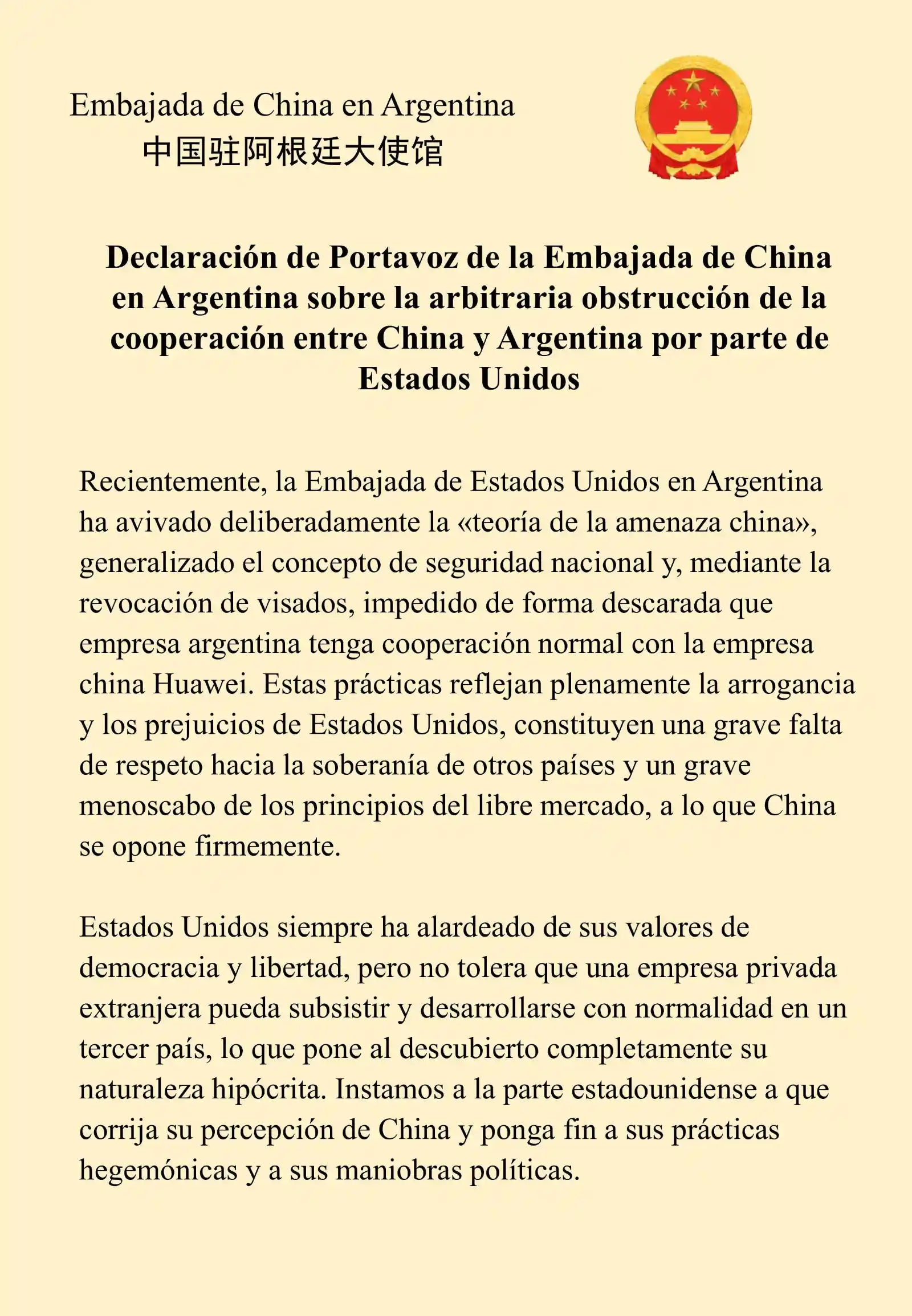
The latest chapter was revealed this Friday, when the representation of the Chinese communist regime directly accused Washington of acting with "arrogance and prejudice" regarding the warnings issued to the Neuquén cooperative CALF concerning its negotiations with the technology company Huawei.
Fragment of the statement from the Chinese embassy in Argentina
The controversy revolves around a potential contract to deploy technological infrastructure in Neuquén, an area particularly sensitive due to its proximity to Vaca Muerta. The United States considers Huawei a risk to its national security due to the obligations imposed by Chinese legislation and the Beijing government on local companies regarding intelligence and access to information.
The U.S. ambassador Peter Lamelas stated this week that the protection of data related to the energy sector constitutes a security issue for both the United States and Argentina and the companies investing in the region.
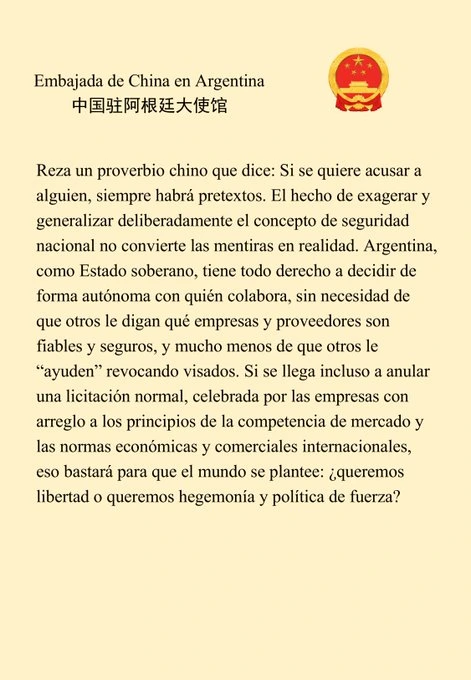
From Beijing, they reacted by labeling the American warnings as a "serious disrespect for the sovereignty of other countries" and accused Washington of undermining the principles of free market. They also demanded that the United States abandon what they termed "hegemonic practices".
Fragment of the statement issued by the Chinese Embassy in Argentina
In April, just days after the SIDE inaugurated the National Counterterrorism Center (CNA) along with U.S. authorities and representatives from the FBI, the Chinese Embassy issued another statement against Lamelas, accusing him of maintaining a mindset typical of the "Cold War".
Cooperation between the two countries continued to deepen. On July 29, the FBI's deputy director, Andrew Bailey, visited the National Counterterrorism Center and held meetings with the top authorities of the SIDE. The Argentine agency emphasized at that time that they sought to further expand joint work with the United States to combat terrorism and professionalize the intelligence system.
Peter Lamelas, United States Ambassador to Argentina
Meanwhile, Beijing published another document in May against the International Republican Institute, accusing it of promoting a campaign against the Chinese Communist Party, and in July it again denounced alleged maneuvers aimed at linking the regime to electoral interference in other countries.
The succession of statements exposes a growing dispute between Washington and Beijing over their technological and strategic influence in Argentina, as the government of Javier Milei sovereignly deepens its political and security alignment with the United States, without closing existing trade relations with China.