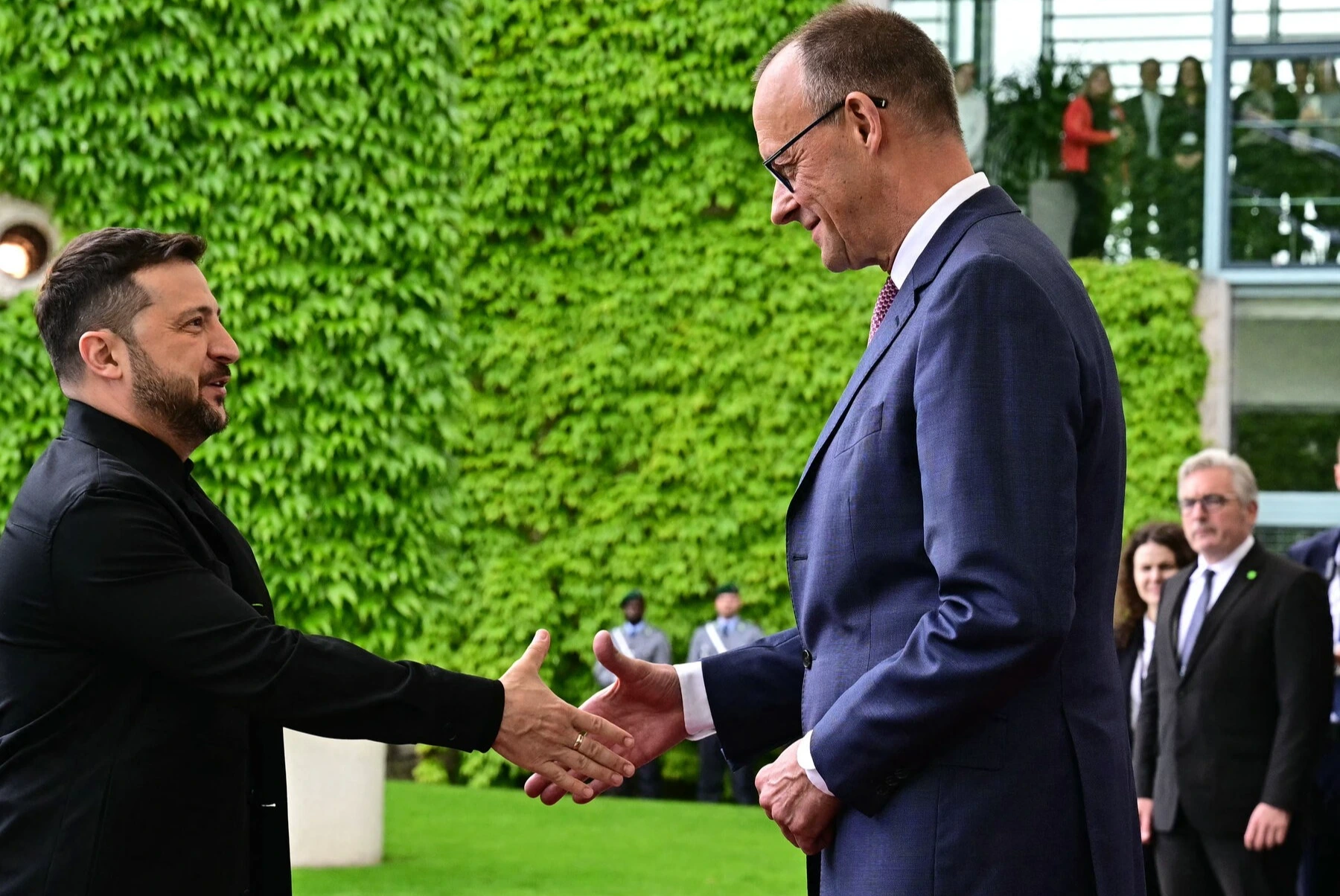
The German Chancellor, Friedrich Merz, signed a new strategic defense agreement with Zelenskyy Ukraine, in a step that reinforces military cooperation between the two countries and consolidates the German role as one of Kiev's main allies on the international stage.
The agreement was announced after a meeting between the German Chancellor and Ukrainian President Volodimir Zelensky, and envisages a significant expansion of defense assistance, including anti-aircraft systems, ammunition and long-range weapons.
In addition, one of the central points of the agreement is the joint production of military technology, especially drones, a key resource in modern conflicts.
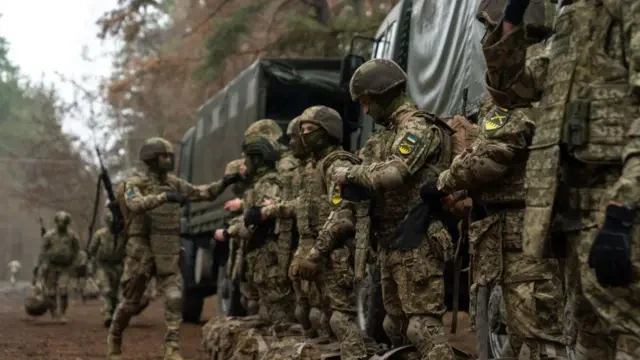
Ukrainian soldiers in the midst of armed conflict with Russia
As reported, this program could become one of the largest military cooperation projects in Europe, with large scale manufacturing plans involving both German and Ukrainian companies
.
It is also planned to exchange information on the use of weapons on the battlefield, with the objective of improving technological development and the defensive capacity of both countries.
The German government stressed that this alliance not only seeks to strengthen Ukraine's defense, but also to reinforce European security as a whole. In this regard, Berlin believes that Ukrainian military experience, acquired in combat, represents a key contribution to the modernization of the continent's armed forces
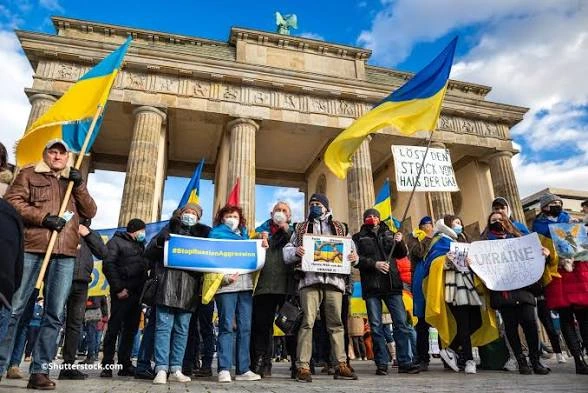
. Pro-Ukraine demonstration in Berlin
In addition, Germany will continue to finance the supply of strategic equipment, including air defense systems and missiles, in a sign of sustained commitment to Kiev
.
Since the beginning of the conflict in 2022, Berlin has allocated billions of euros in military, financial and humanitarian aid, consolidating itself as one of Ukraine's main international supporters.
The agreement also has a political dimension, as Germany reaffirmed its support for the integration of Ukraine into European structures, in line with its strategy to strengthen the bloc in the face of current geopolitical challenges.
In this way, the new pact marks a further step in the growing cooperation between the two countries and reflects the rearrangement of the balance of power in Europe, where security and defense are once again at the center of the international agenda.