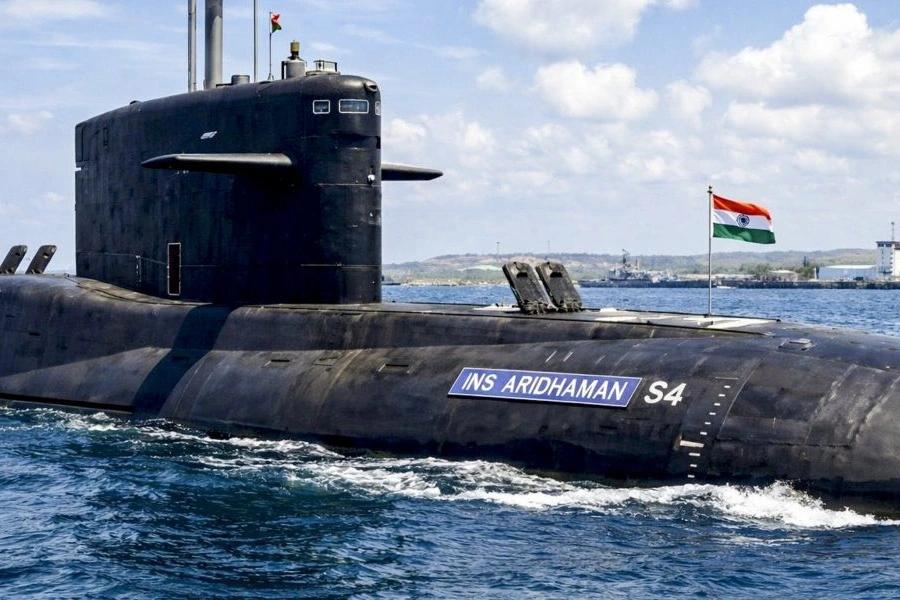
India took a key step in its military strategy by incorporating its third nuclear submarine, thus consolidating its nuclear triad in a context of growing tension with China and Pakistan. The decision not only represents a technological leap, but also a clear sign of geopolitical positioning in one of the most sensitive regions
on the planet.
This advance goes far beyond the simple addition of military equipment. In recent years, India has been steadily strengthening its strategic capacities, combining its own technological development with international alliances in a scheme aimed at strengthening its deterrent power
.
The nuclear triad—comprised of attack capabilities from land, air and sea—is considered the highest level of military deterrence. Its logic responds to the principle of mutual assured destruction: to ensure that, in the face of an possible attack, there is a capacity to respond from multiple fronts. In this sense, the naval component is key, since nuclear submarines can operate stealthily and ensure a “second attack” even if land bases were
neutralized.
India maintains two active tension fronts. On the one hand, the dispute with China, marked by border conflicts in demilitarized zones where clashes have even occurred with knife weapons. On the other hand, the relationship with Pakistan presents a much more direct scenario, with artillery exchanges and a historic rivalry
.
In this framework, strengthening India's nuclear capacity acts as a key deterrent. The possibility of a forceful response reduces the incentives of their rivals to escalate into direct conflict, especially in a context where all parties have
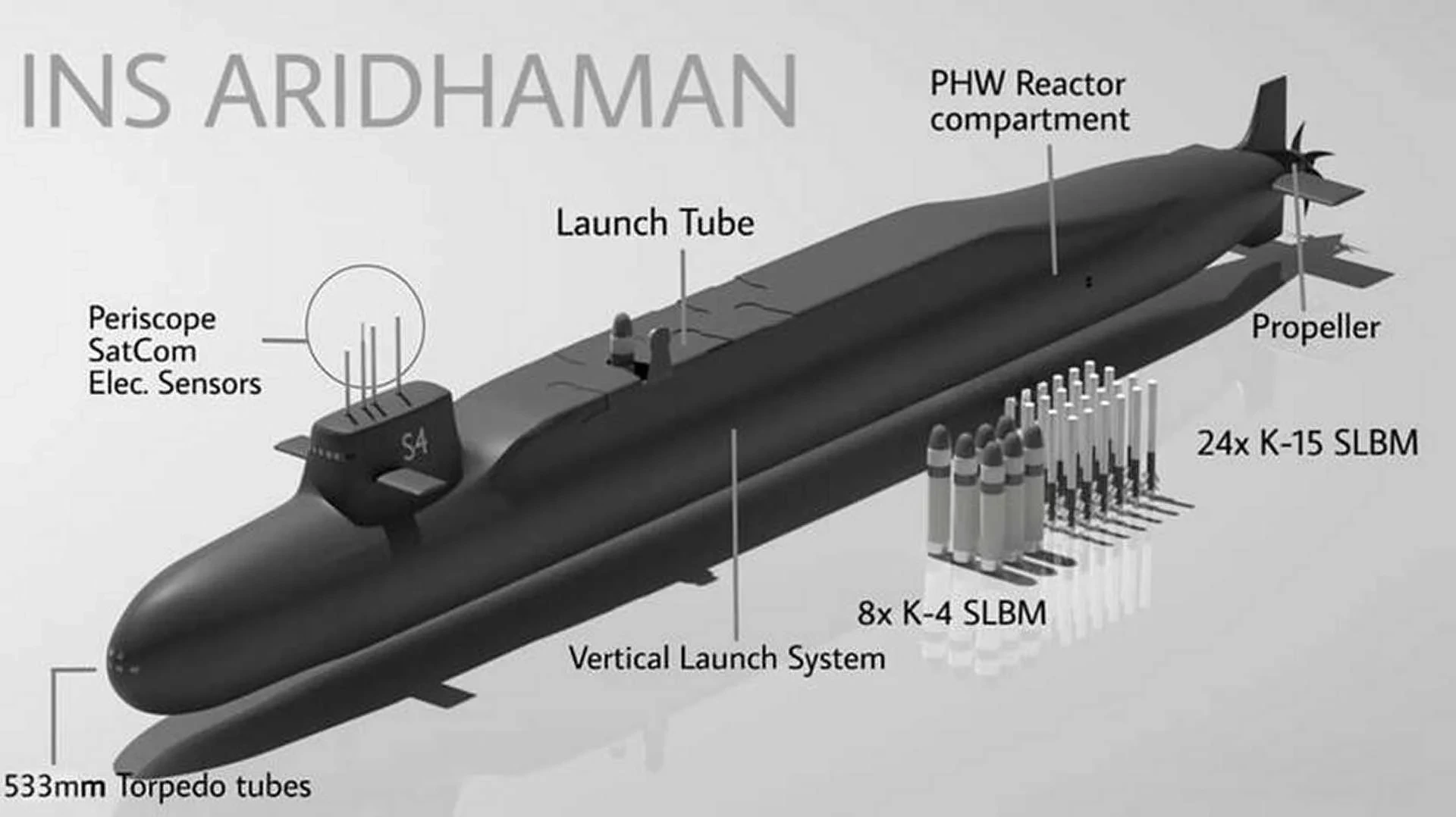
nuclear weapons. The INS Aridhaman, the third nuclear ballistic missile submarine developed by the Indian Navy
With more than 1.2 million troops, thousands of tanks and a large artillery fleet, Indian military power is not limited only to the development of nuclear capacity. This process includes both the development of a local defense industry and the incorporation of foreign technology, especially from Russia and France.
The United States has sought to deepen strategic ties with New Delhi as a counterweight to Chinese influence in the region, while Russia remains a key partner in military matters. This network of alliances reinforces India's position as a relevant actor on the international scene.