Previously, a judicial investigation had determined that the alleged marriage certificate was false, since there was no record with the corresponding local council. Despite this, the court decided to ignore that key evidence and moved forward with validating the union
A court ruling in Pakistan sparked strong international controversy after a federal court granted custody of a 13-year-old Christian girl to a Muslim man accused of kidnapping her, abusing her, forcing her conversion to Islam and entering into an illegal marriage with her.
The decision was taken by the Federal Constitutional Court, which rejected the official documentation submitted by the minor's family - including her birth certificate - and validated the statement of the kidnapped girl, who claimed to have converted and married “of her own free will”. However, his parents and legal representatives maintain that this testimony was obtained under duress.
Pakistani Muslims.
The case involves Maria Shahbaz, who was kidnapped on July 29 in the city of Lahore. Since then, her family has initiated multiple legal actions to recover her, without success. According to human rights organizations, the minor remained under the control of the accused and his psychological pressure for more than six months
.
One of the most controversial points of the ruling was the judges' decision to dismiss the minor's official identity document (B-Form), which proved her age. One of the magistrates even questioned the late registration of the birth and argued that the girl “appeared to be older”, an argument that was harshly
.
In turn, the family reported irregularities in police action. According to the lawyer in the case, the security forces not only delayed the investigation, but they also did not attempt to arrest the accused, who continued to appear before the courts
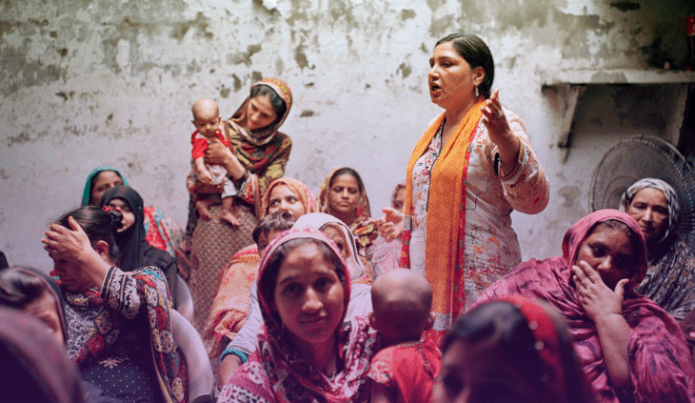
without restrictions. Women must face religious fundamentalism.
Human rights organizations warn that this type of case responds to a recurring pattern in Pakistan, where minors are abducted, forcibly converted and forced into marriage. In most cases, the courts end up legitimizing these
situations.
Maria Shahbaz's family anticipated that they will appeal the decision and will seek to take the case to higher courts, in an attempt to reverse a ruling that, they report, sets a dangerous precedent for the protection of minors.