
Russia, “journalists” and the war for storytelling

Russia, “journalists” and the war for storytelling
Imagen de Editorial Team
porEditorial Team
Argentina

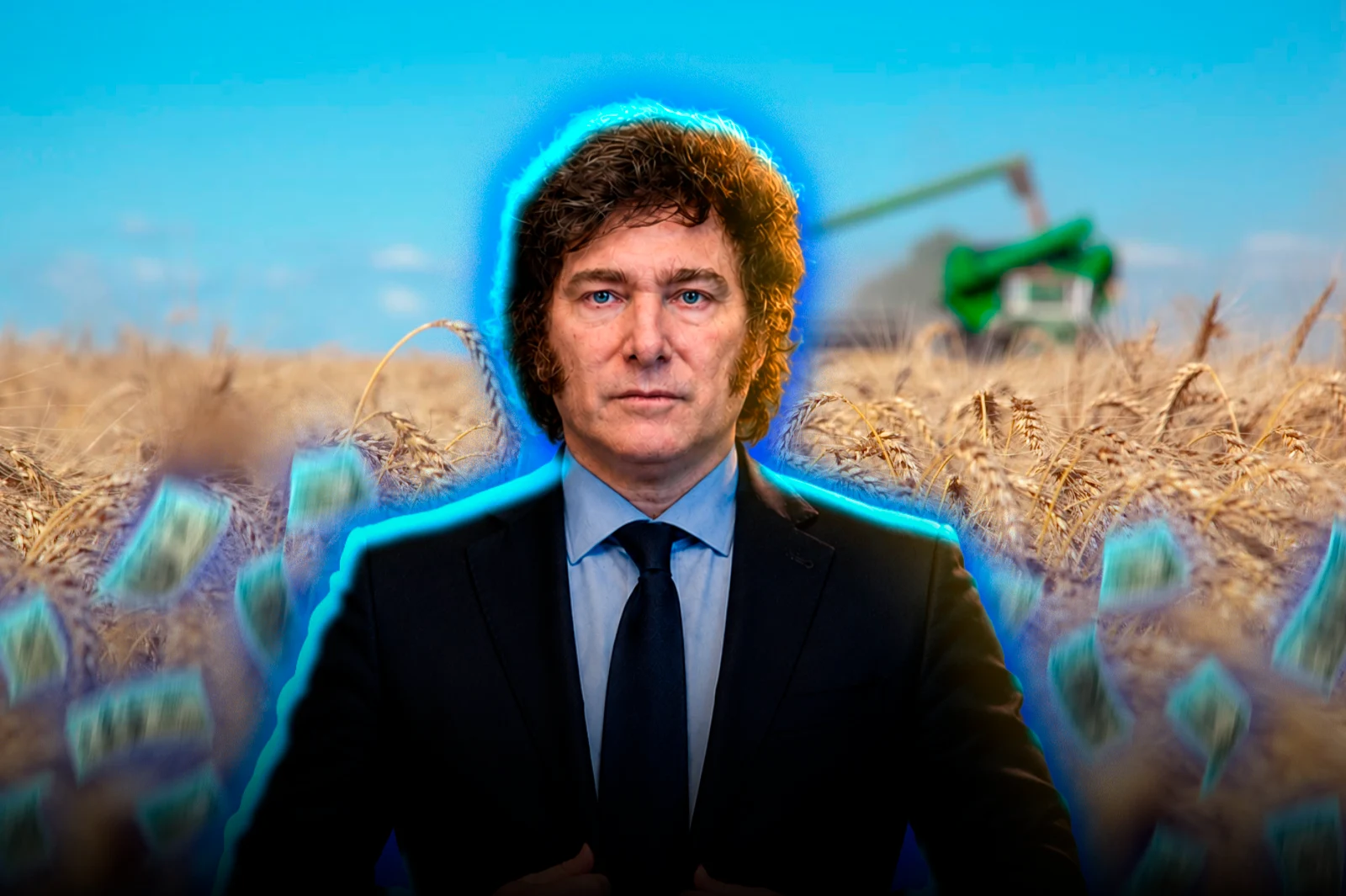
Documents on operations linked to Russia's environment in Argentina reveal how political legitimacy is manufactured.

Nuevo
Agregar La Derecha Diario en
Compartir:

While many continue to look at politics as if it were a local dashboard, reality operates in another dimension. It's not new, it's not exceptional and, above all, it's not foreign. What the documents reveal about operations related to Russia's environment in Argentina should surprise no one. Not because it's not serious, but because it responds to a deeper and more uncomfortable logic: power needs to shape perception in order to be able to sustain itself. To reduce the phenomenon to “external interference” is to remain on the surface. Yes, there are international actors involved, there are disinformation strategies and there are operations designed to influence. But the problem doesn't start there. It starts earlier, on a premise that is rarely questioned: no political power can exert coercion in a stable way without first constructing a narrative that legitimizes it. It's not debate. It's power.

No system of power can hold on its own with strength. It needs to be believed. It needs a sufficient part of society to accept as reasonable what, under other conditions, would be seen as arbitrary. Therefore, information manipulation is not an anomaly of the system: it is part of its operation. It is the mechanism through which acceptance is built, resistance is reduced and intervention is naturalized. The novelty is not that it exists, but the level of sophistication with which it is deployed today. External funding, content generation, insertion in digital media and amplification in networks are not improvisations, they are architecture. But that logic is not the exclusive heritage of a country or of a particular government. It is inherent in any structure that exercises power over others. Propaganda is not an excess. It's a need for power.

A

focus on Russia can be useful for understanding the geopolitical picture, but it can also work as a comfortable distraction. It allows you to point out and avoids looking at something more uncomfortable: that manipulation is not an imported anomaly, but a widespread practice. All States, to a greater or lesser extent, need to build stories. Not because they all operate in the same way or with the same intensity, but because they share a basic condition: they require obedience. And obedience is not guaranteed by coercion alone. It is built with meaning, with justification, with narrative. Where there is power, there is story. Therefore, the real risk is not only that there are external operations, but that they will find fertile ground. And that terrain doesn't appear out of nowhere. It is built over time, in societies where trust is eroded, where political incentives prioritize confrontation and where citizens lose clear references to what is true and what is not


.

In that context, disinformation doesn't create the problem: it exploits it. Political polarization, mistrust in the media, economic crisis and institutional wear and tear are not the result of a foreign operation. They are the previous scenario that makes any intervention effective. Power doesn't invent cracks, it uses them. And the deeper they are, the easier it is to amplify them. For years, the cultural dimension of politics was underestimated, as if everything were reduced to economic variables or management efficiency. But power is also contested on the symbolic level: what people believe in, who they believe and by what criteria they interpret reality. If that terrain becomes fuzzy, everything else becomes unstable.

When truth is diluted, power becomes easier to wield.

Therefore, the answer cannot be more control or more censorship. Because that path reproduces the problem instead of solving it. It transfers the decision about what is true to a power structure that, by definition, has incentives to shape it. History shows that when power arrogates to itself that role, manipulation does not disappear: it is institutionalized. The only sustainable defense is not a central arbiter who decides what is true, but a society more aware that information is also a field of dispute. Freedom does not consist in someone telling the truth, but in that no one has the power to impose it.

In a world where powers operate on multiple levels, Argentina is not off the table, but neither is it a passive victim. The problem isn't just that there are external operations. The problem is that any system of power needs, to a greater or lesser extent, to build legitimacy through narratives. And until that is understood, the discussion will continue to be stuck on the surface. Information warfare is no exception. It's the way that power competes to be believed. The question, then, is not who manipulates. The question is another: who has the power to do it and why are we willing to accept it

.

La Derecha Diario logo
ESX logoInstagram logoYouTube logoTikTok logoFacebook
ARGENTINABOLIVIAECUADORISRAELMEXICOURUGUAYDERECHA DIARIO TV
  • ES
    XInstagramYouTubeTikTokFacebook
  • DERECHA DIARIO TV
  • Secciones
  • ARGENTINA
  • BOLIVIA
  • ECUADOR
  • ISRAEL
  • MEXICO
  • URUGUAY
  • Países
  • La Derecha Diario logoLA DERECHA DIARIO
  • La Derecha Diario México logoLA DERECHA DIARIO MÉXICO
  • La Derecha Diario Uruguay logoLA DERECHA DIARIO URUGUAY
  • La Derecha Diario Ecuador logoLA DERECHA DIARIO ECUADOR
  • La Derecha Diario Israel logoLA DERECHA DIARIO ISRAEL
  • La Derecha Diario Estados Unidos logoLA DERECHA DIARIO ESTADOS UNIDOS
  • Temas
  • GUERRA EN IRÁN
  • El Diario
  • QUIENES SOMOS
  • AUTORES
  • PUBLICIDAD
  • DONAR
La Derecha Diario logo
TwitterInstagramYouTubeTikTokFacebook
Derecha Diario TV

Nosotros

  • Quienes Somos
  • Autores
  • Donar

Privacidad

  • Protección de datos
  • Canales
  • Sitemap
  • RSS

Contacto

  • info@derechadiario.com.ar
PUBLICIDAD

Noticias relacionadas

With a stellar Messi, the National Team won 3-0 against Algeria in their World Cup debut

With a stellar Messi, the National Team won 3-0 against Algeria in their World Cup debut

Gaspi's father questioned the accident: "For me, it was an attack"

Gaspi's father questioned the accident: "For me, it was an attack"

Acción Democrática presented a constitutional reform project for Venezuela to Delcy Rodríguez

Acción Democrática presented a constitutional reform project for Venezuela to Delcy Rodríguez

Madness: A disastrous Democratic bill in California seeks to raise taxes and increase the cost of living

Madness: A disastrous Democratic bill in California seeks to raise taxes and increase the cost of living

JD Vance confirmed the return of nuclear inspectors to Iran to oversee the destruction of enriched uranium

JD Vance confirmed the return of nuclear inspectors to Iran to oversee the destruction of enriched uranium

Eduardo Bolsonaro spoke after the condemnation of Lula's regime: "Any sentence without due process is null"

Eduardo Bolsonaro spoke after the condemnation of Lula's regime: "Any sentence without due process is null"